

Egersund
About
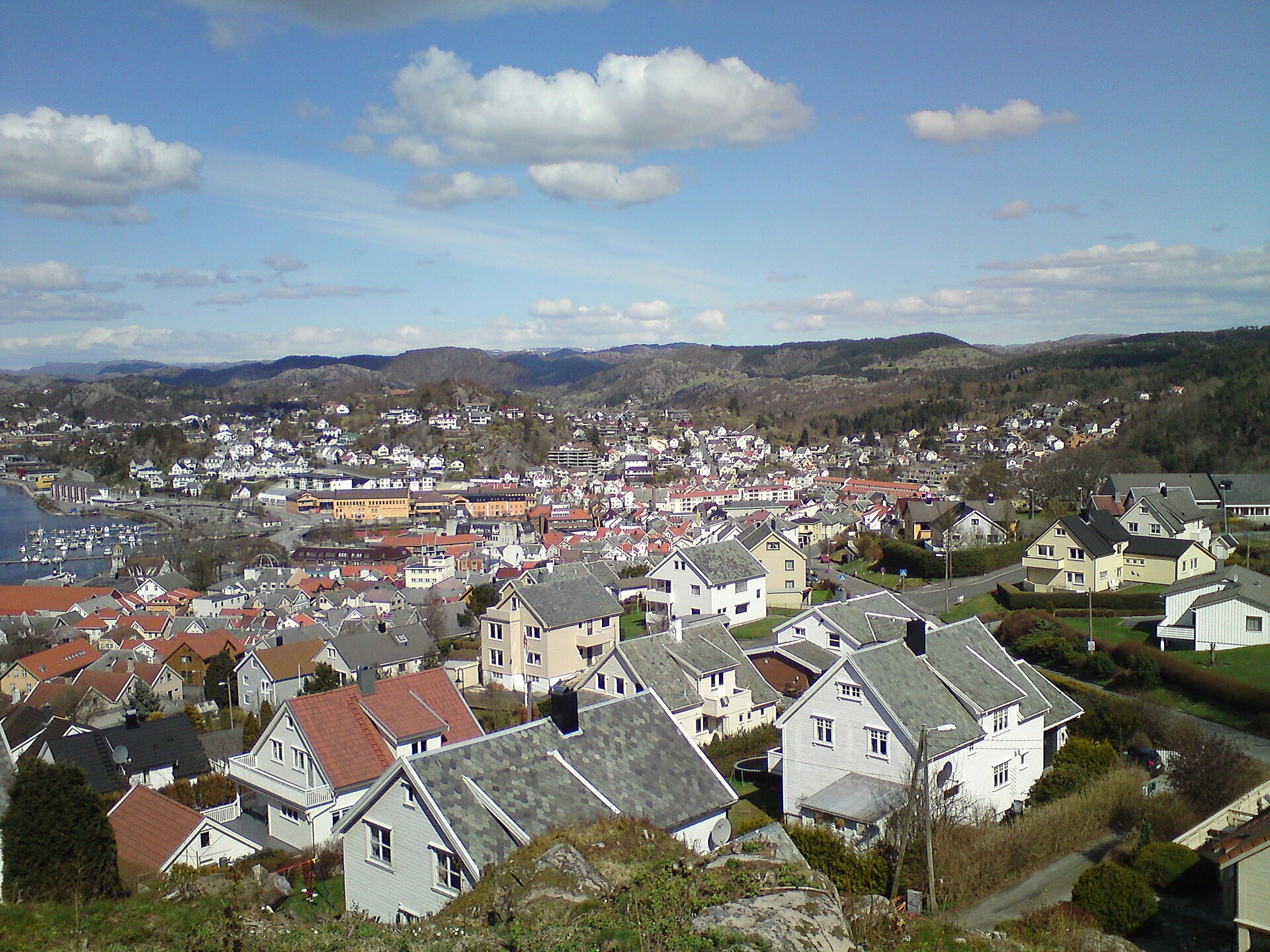
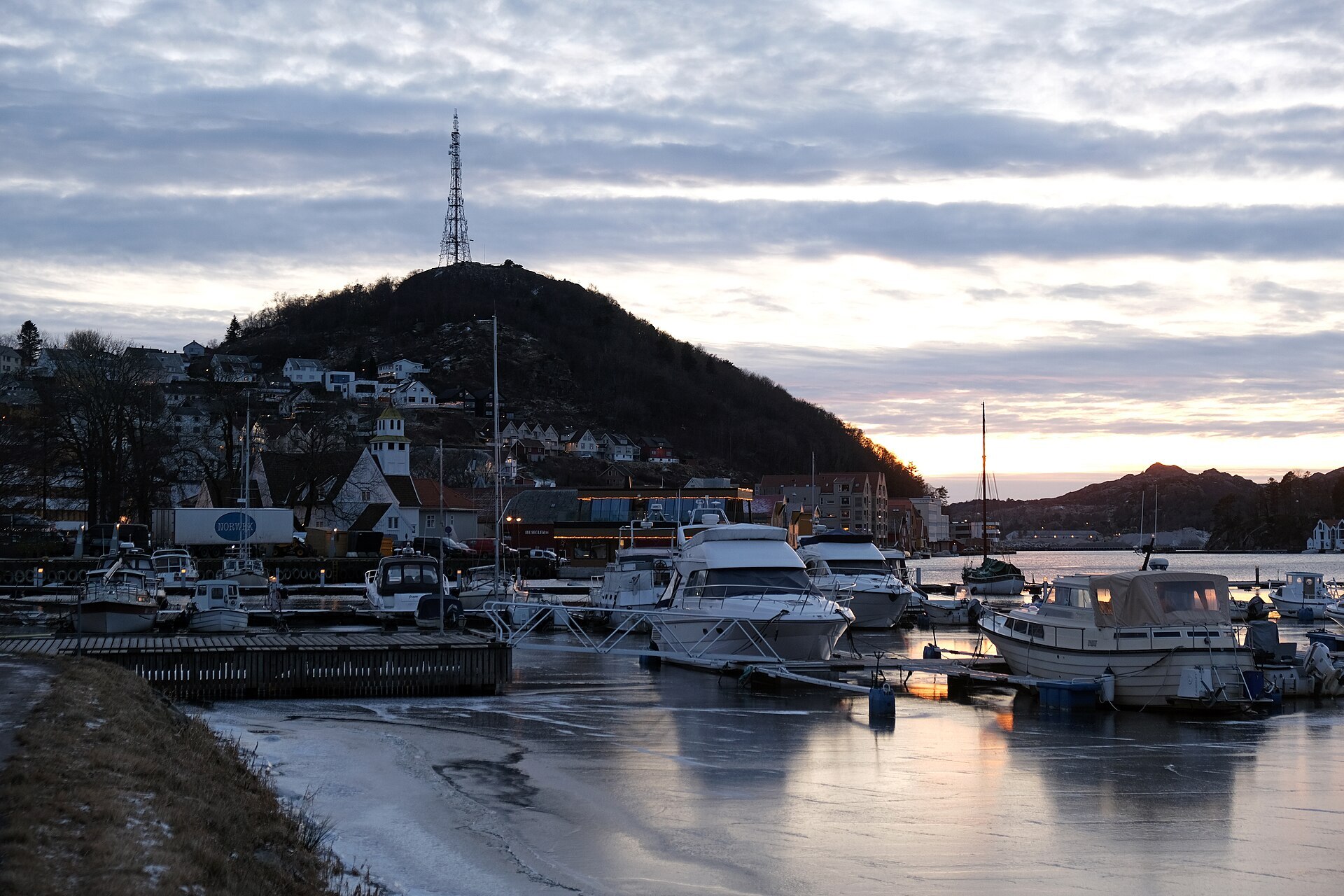
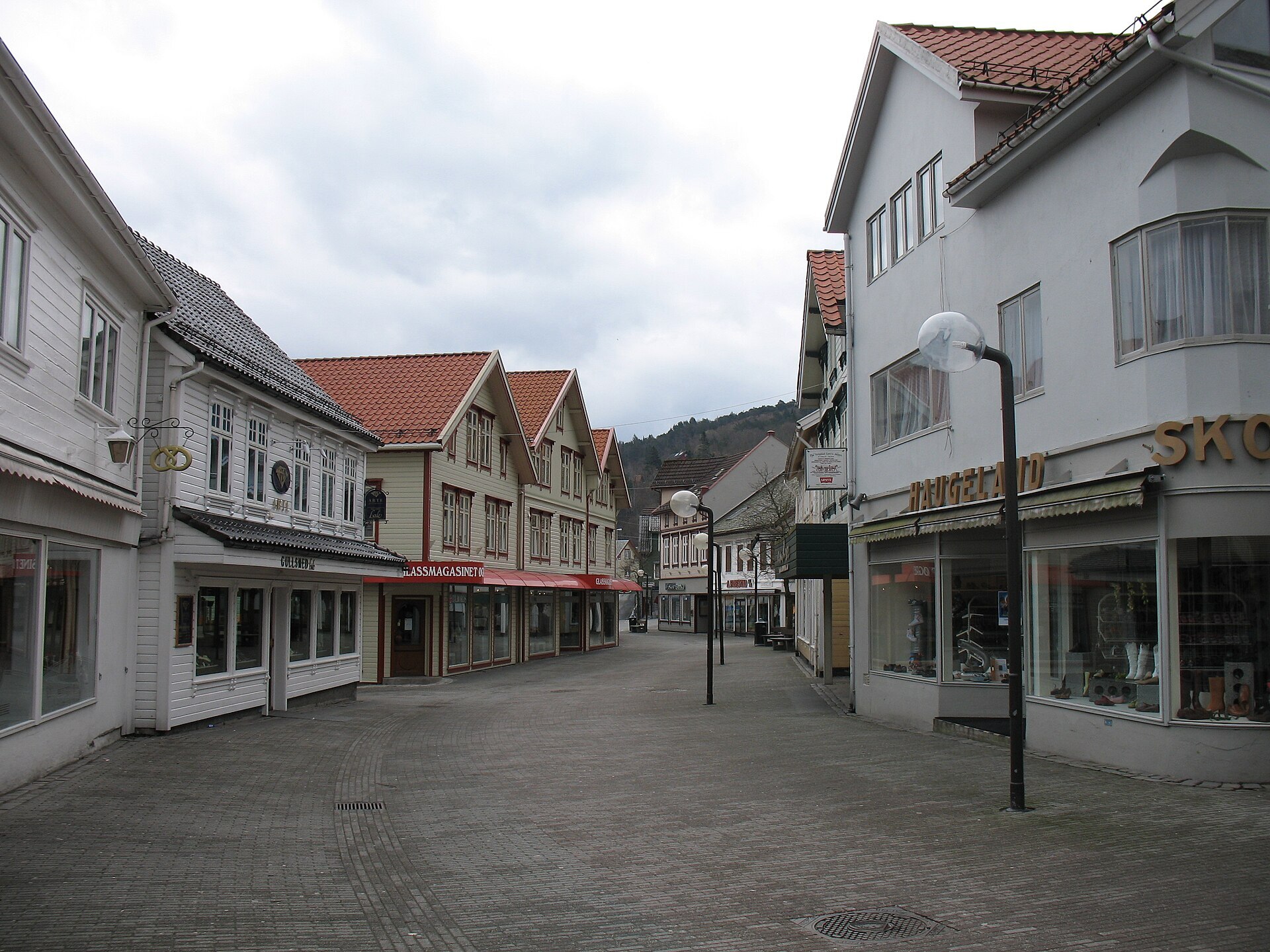
Egersund sits around Vågen, a bay off the sound between the mainland and the island Eigerøya, and it has the only good natural harbour on the coast between Stavanger and Flekkefjord. The ground is hilly, with rocky knolls everywhere, and the old town is a mix of painted wooden houses, straight streets, narrow lanes and the pedestrian street Storgaten.
The harbour still matters. Egersund is one of the biggest fishing ports in Norway by catch landed, and fish processing, a slaughterhouse and yards building ships and platforms keep the town busy. The name comes from Old Norse Eikundarsund, the sound by Eikund, the island with many oaks, which is why an oak leaf sits on the arms. The municipality is still spelled Eigersund.
Local knowledge: Egersund counts its town status from 1798, when it became a ladested with its own customs office. Forty-five years later it almost disappeared. On the afternoon of Thursday 14 September 1843 a fire broke out and spread from house to house through the packed wooden buildings. By seven in the evening it was stopped, just short of the church, but two thirds of the town had burned and 700 people had no home. Nobody died. A planning commission then did away with the crooked lanes and laid out a grid with wide streets, and Strandgaten along the water became the new main street. In the 1900s the town planned to swap the old houses for concrete blocks more than once. There was never money for it, and that is why so much of the wooden town is still here.
Born here: Peder Claussøn Friis (1545–1614), a priest and scholar, translated Snorri's sagas of the Norwegian kings, printed in 1633 as Norske Kongers Chronica. Handball player Veronica Kristiansen (born 1990) became Olympic champion with Norway in 2024 and world champion three times.
Visiting: the pin points to Torget, the square by Egersund church. The church was built in the 1620s and got its present form in the 1780s, with an altarpiece from 1607 and richly decorated pew doors, and it is open in summer. Walk Strandgaten for the old merchants' houses and boathouses. On a rainy day, go to the Egersund Fayance Museum, open all year on the top floor of the old faience factory, which is a shopping centre now. The factory made stoneware for Norwegian kitchens from 1847 to 1979. Dalane Folkemuseum has its main site at Slettebø just outside town. For a swim, Skadbergsanden on Eigerøya has more than 500 metres of shallow sandy beach, and out on the island stands Eigerøy lighthouse from 1854, Norway's first lighthouse in cast iron. North of town at Ogna begins the Norwegian Scenic Route Jæren, along the flat sandy coast up to Bore.
Fact sheet
- People: 12.047 in Egersund, 15.546 in Eigersund municipality
- County: Rogaland
- Town since: 1798 (as a loading place)
- Typical industries: fish processing and other food industry, sheep and dairy farming, building trades
Population on 1 January 2026, from Statistics Norway. Typical industries are the ones with a much bigger share of the jobs here than in Norway as a whole (Statistics Norway, 2025).
Weather & Northern Lights
Now
In 24 hours
Northern Lights Chances
Weather forecast from MET Norway (yr.no). An indication, not a promise: aurora activity over this place (NOAA) times the clear sky in the best three-hour window of the night (MET Norway). The next nights rest on the Kp forecast only. More: our Northern Lights Forecast and the Northern Lights Map.
Getting there
Torget, 4370 Egersund, Norway
Nearby
- Kiwi Egersund SentrumNearest shop · 300 m
- Circle K EgersundFuel800 m
- Toilets200 m
- EgersundNearest townright here
- Vinmonopolet EgersundNearest Vinmonopolet · 200 m
- Launes Ferry QuayNearest ferry43 km
- PerrongenNearest motorhome park400 m
Data from OpenStreetMap (ODbL)
On the way
Road reports within 40 km and the nearest road cameras, from Statens vegvesen (NLOD). The pictures refresh every few minutes; the reports are put into English word by word. All road cameras
Reviews
Rate this place
You are, or have been here? Give it your stars.
Comments
Thank you! Your comment is shown once we have read it.
No comments yet.
Write a comment
Let us know your experience with this place -- did something change? Your comment is shown once we have read it.
Please write a few words.
Thank you -- that is enough for now. Please try again in an hour.