

Photos: Øyvind Holmstad (CC BY-SA 3.0), Øyvind Holmstad (CC BY-SA 4.0), Øyvind Holmstad (CC BY-SA 4.0) · Wikimedia Commons
1 / 3Gjøvik
About
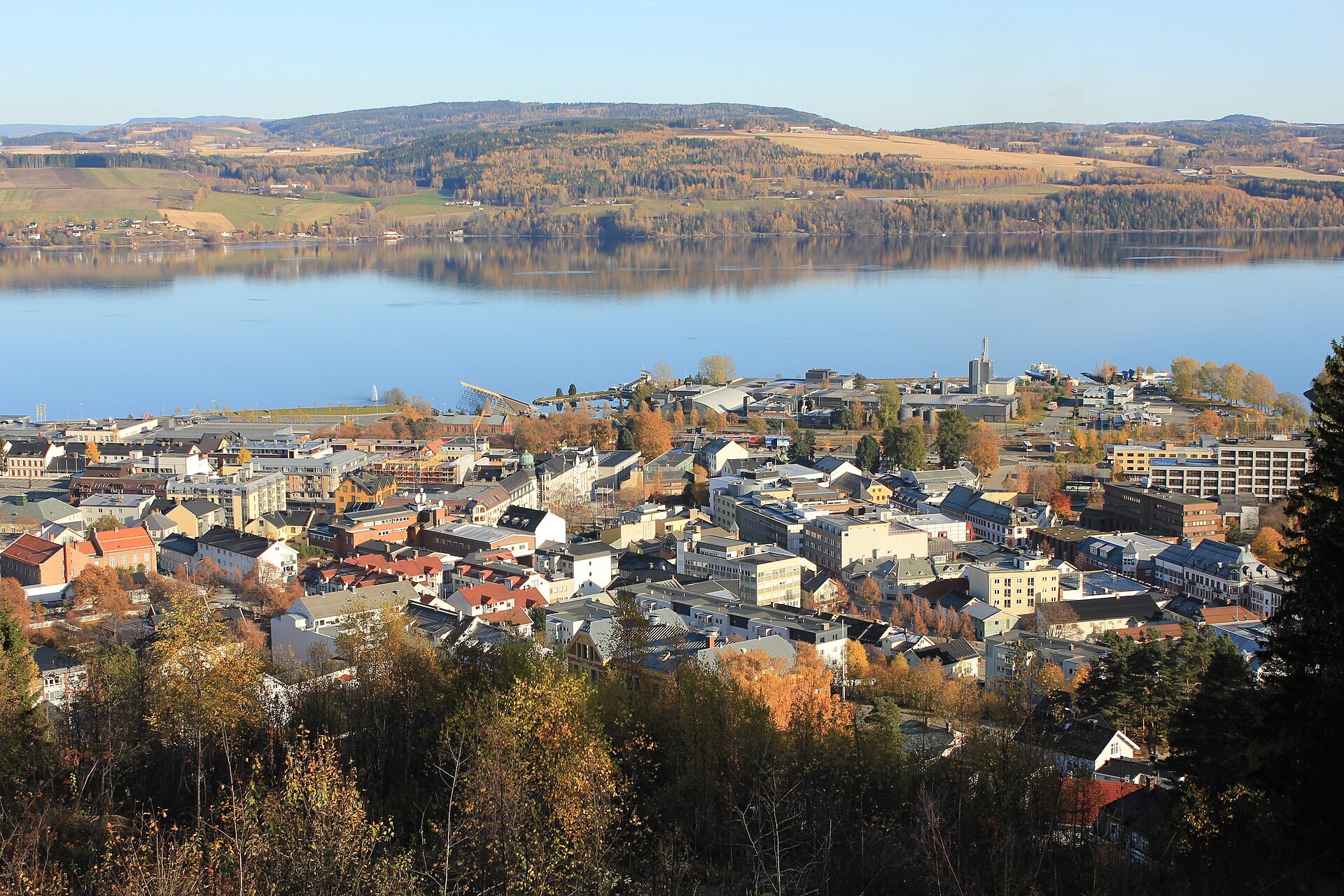
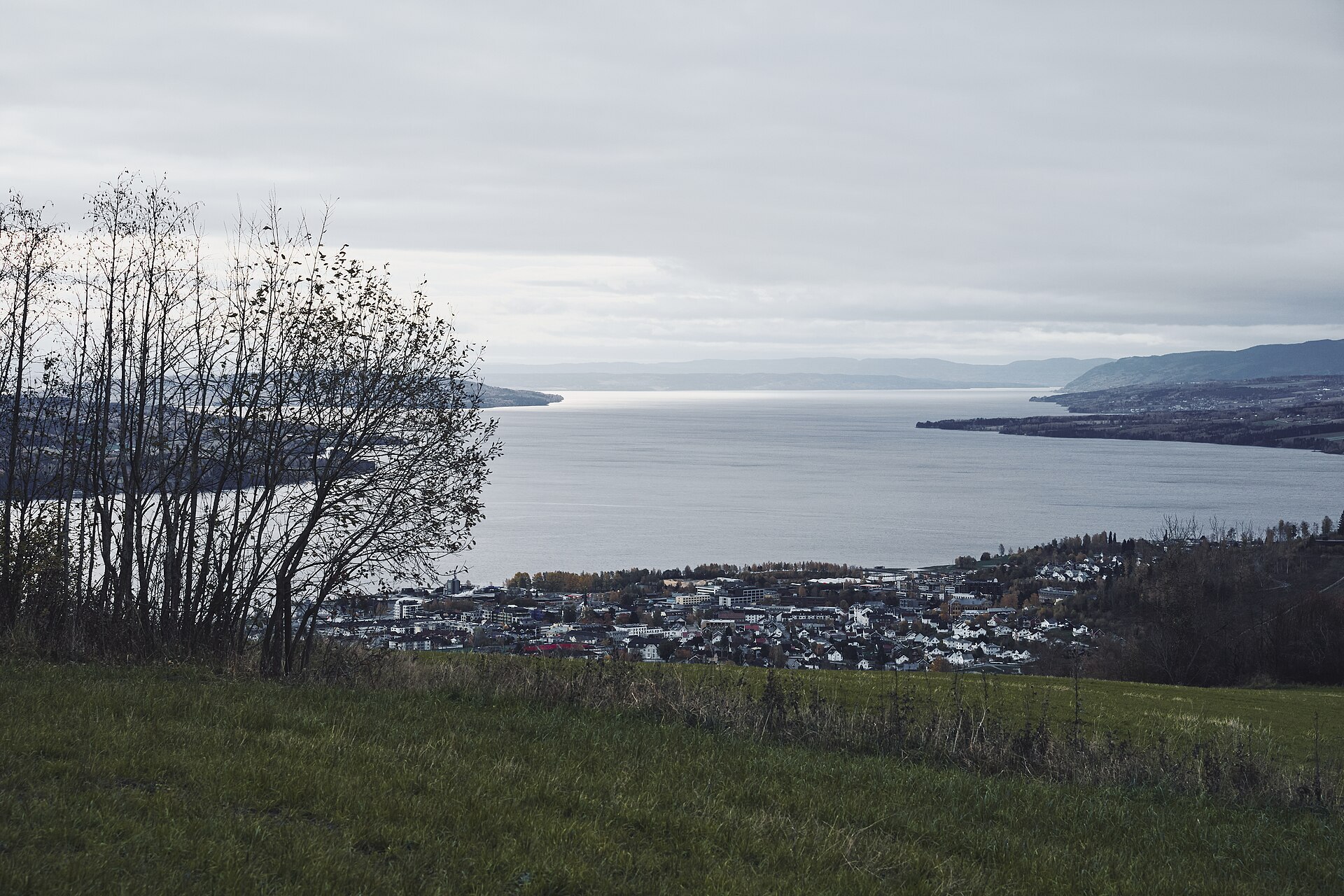
Gjøvik spreads up the slopes on the west side of Mjøsa, Norway's largest lake, where the river Hunnselva runs out into it. The centre sits on the flat ground by the river mouth, with Hovdetoppen behind, and Hamar lies straight across the water. It's called the white town by Mjøsa, after the white wooden houses that once lined its streets.
With 30.390 people it's the second biggest town in Innlandet, and it has always been an industrial town. Mustad, known for its fish hooks, grew up along the Hunnselva, and so did Hunton, which makes wood-fibre boards and insulation here. The hospital and NTNU's campus for nurses and engineers bring in people from the whole region.
Local knowledge: the name comes from the farm Gjøvik, in Old Norse Djúpvík, the deep bay. The town itself grew out of glass. In 1804 Caspar Kauffeldt bought land at the mouth of the Hunnselva, where firewood for the furnaces could be floated down from the forests. From 1807 Gjøvik Glassverk made window glass, then bottles, vases and lamps, many in the cobalt blue still called gjøvikblått. Around 1814 some 150 people lived off the works, but foreign glass kept winning, and in 1843 the furnaces went out for good. Caspar's son Wexel Kauffeldt died in 1860 and left his fortune to public causes on one condition: Gjøvik had to become a town within five years. It took a year. On 1 January 1861 Gjøvik became a kjøpstad, with 626 people.
Born here: Gro Hammerseng-Edin (born 1980) captained Norway's handball team, was named world player of the year in 2007 and won Olympic gold in 2008. Cross-country skier Ingvild Flugstad Østberg (born 1990) won Olympic gold in the relay in Pyeongchang in 2018.
Visiting: the pin points to the tourist office at the station on Jernbanetorvet, open on weekdays all year. The glassworks stood right here, where the town hall, Strandhotellet and Jernbaneparken are now. Close by is Gjøvik gård, an old farmhouse in a park, now used for art shows and outdoor concerts. Just west of the centre, 120 metres into the rock, is Fjellhallen, built for the ice hockey of the 1994 Olympics and still the world's largest cavern hall open to the public. The blasted rock went into the marina and the lakeside promenade. To see the hall inside, go to a Gjøvik Hockey home game or a concert. In summer the paddle steamer Skibladner, sailing since 1856, starts and ends each day here. On a rainy day, swim at Totenbadet in Raufoss, just south-west of town, or cross the lake to Ankerskogen in Hamar.
Fact sheet
- People: 30.390 in Gjøvik, 31.350 in Gjøvik municipality
- County: Innlandet
- Town since: 1861 (as a trading town)
- Typical industries: wood products (Hunton's wood-fibre boards and insulation, Moelven's sawmill at Biri), car sales and repair, nursing and care homes
Population on 1 January 2026, from Statistics Norway. Typical industries are the ones with a much bigger share of the jobs here than in Norway as a whole (Statistics Norway, 2025).
Weather & Northern Lights
Now
In 24 hours
Northern Lights Chances
Weather forecast from MET Norway (yr.no). An indication, not a promise: aurora activity over this place (NOAA) times the clear sky in the best three-hour window of the night (MET Norway). The next nights rest on the Kp forecast only. More: our Northern Lights Forecast and the Northern Lights Map.
Getting there
Jernbanetorvet 3, 2821 Gjøvik, Norway
Nearby
- ASIA kioskenNearest shop · 200 m
- Uno-X Gjøvik nordFuel200 m
- Toilets100 m
- GjøvikNearest town100 m
- Vinmonopolet GjøvikNearest Vinmonopolet · 300 m
- Horn Ferry QuayNearest ferry36 km
- Hekshusstranda CampingNearest campsite12 km
Data from OpenStreetMap (ODbL)
On the way
Road reports within 40 km and the nearest road cameras, from Statens vegvesen (NLOD). The pictures refresh every few minutes; the reports are put into English word by word. All road cameras
Reviews
Rate this place
You are, or have been here? Give it your stars.
Comments
Thank you! Your comment is shown once we have read it.
No comments yet.
Write a comment
Let us know your experience with this place -- did something change? Your comment is shown once we have read it.
Please write a few words.
Thank you -- that is enough for now. Please try again in an hour.