

Photos: Szilas (CC BY 4.0), Rüdiger Stehn (CC BY-SA 2.0) · Wikimedia Commons
Photos: Nihon Graphy · Unsplash
1 / 3Hamar
About
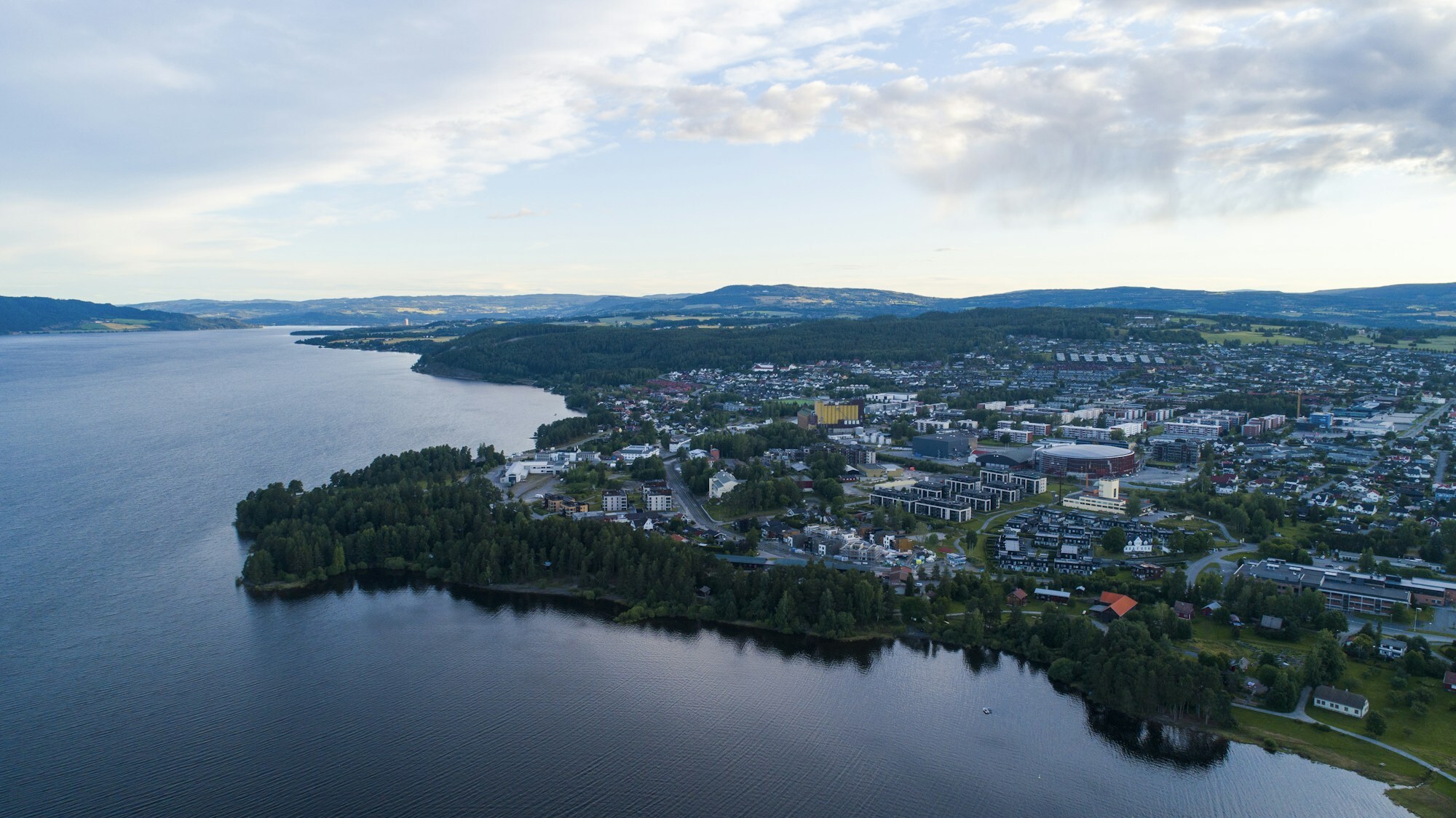
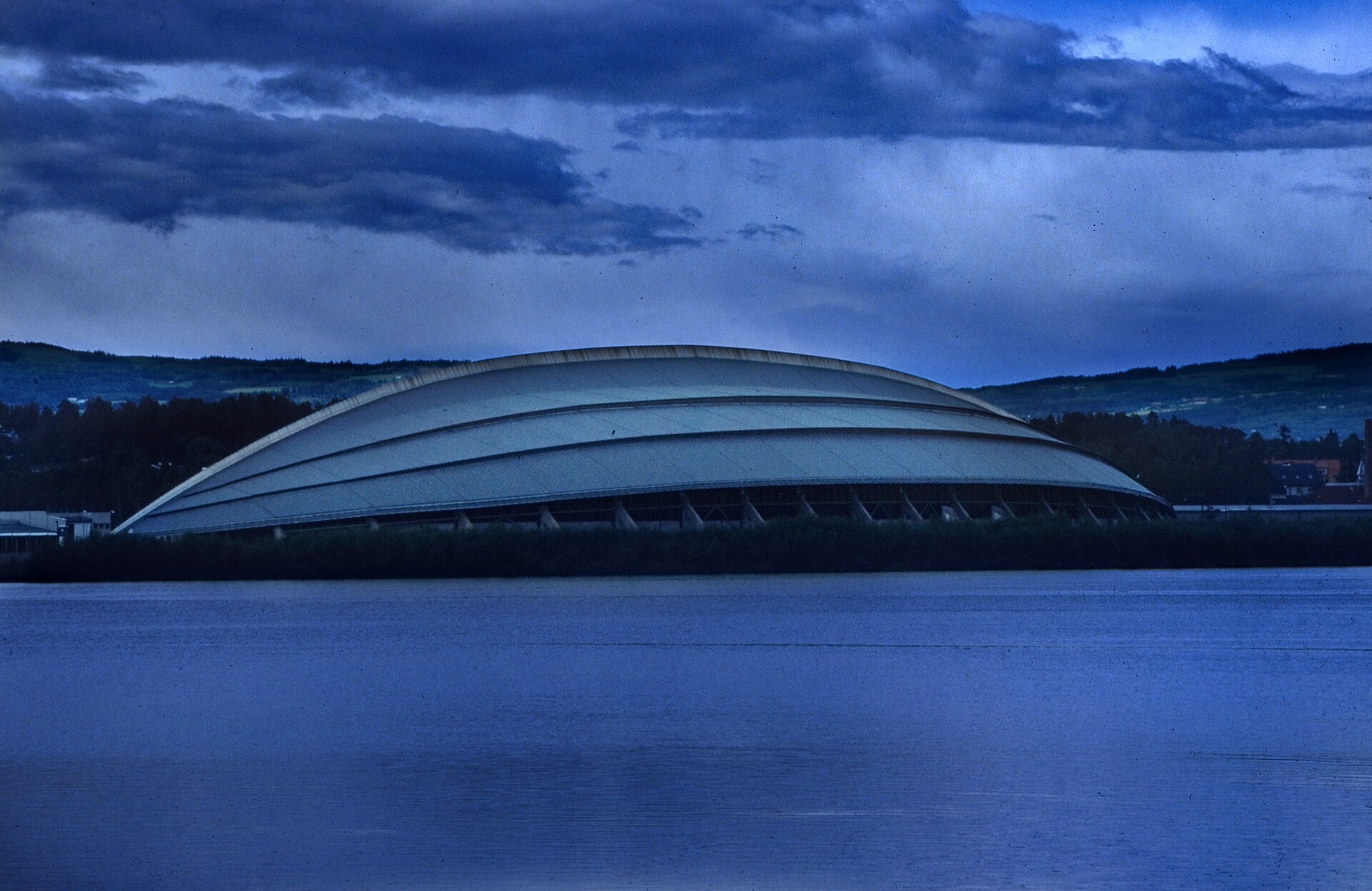
Hamar lies on the east shore of Mjøsa, on flat, rich farmland that rises gently from the lake. From the E6 you can't miss the long, curved roof of Vikingskipet, the speed skating hall from the 1994 Olympics, shaped like the keel of an upturned Viking ship. The centre is a grid from 1848, its long streets parallel to the shore, with a kink where the shoreline bends.
With 30.620 people it's the biggest town in Innlandet and the county's office town, home to the county administration, the courts and the bishop.
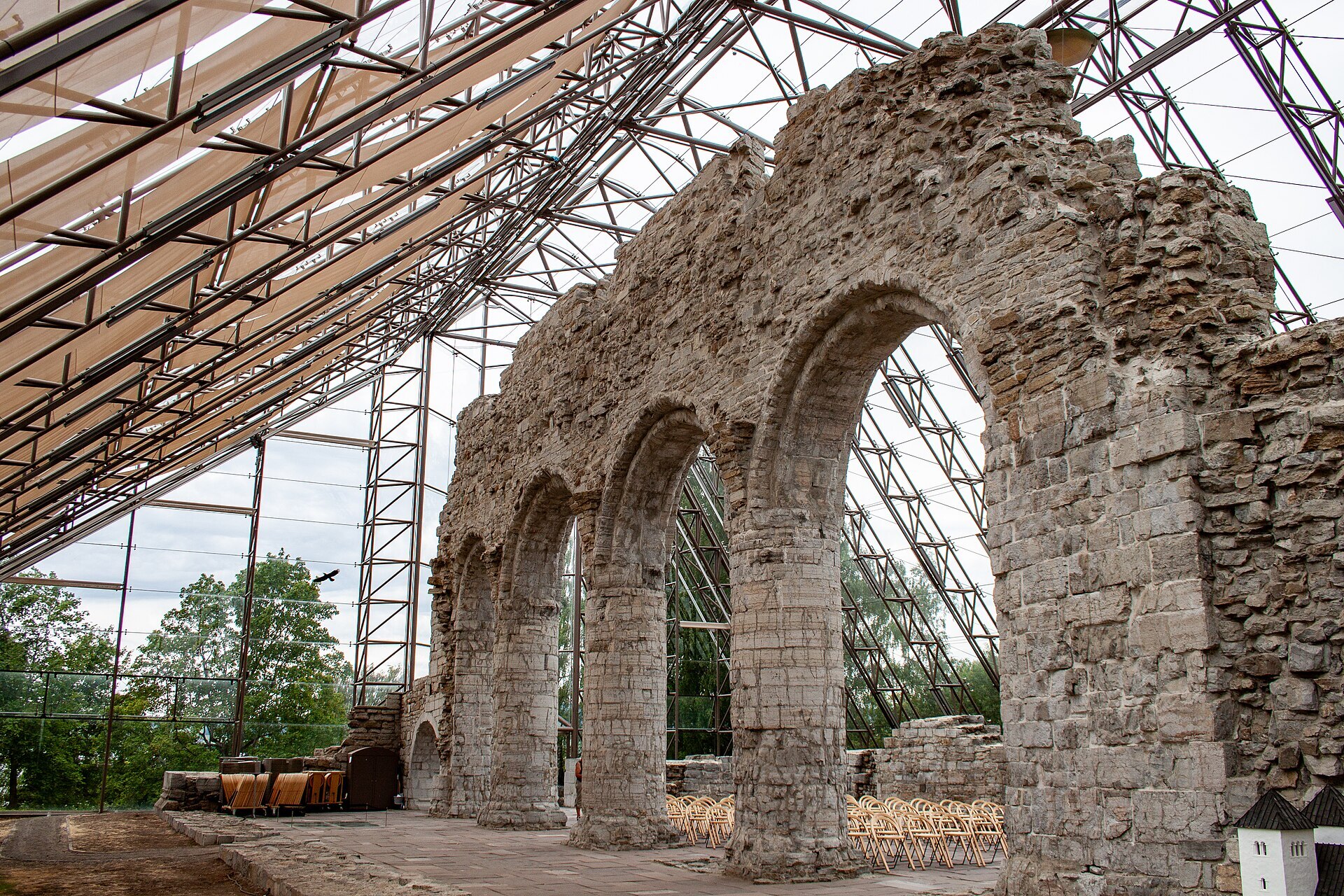
Local knowledge: the name comes from the farm Hamar, Old Norse hamarr, a rocky hill. Hamar is a town that disappeared and came back. In the Middle Ages it was a market town and from 1152 the seat of a bishop, with a stone cathedral, the bishop's castle and apple orchards on the headland now called Domkirkeodden. In 1567, in the Northern Seven Years' War, Swedish soldiers burned the cathedral and wrecked the bishop's castle, and in 1587 the market was shut down after pressure from merchants in Christiania. The streets became fields, and Hamar was the only medieval town in Norway that more or less vanished from the map. Only the south wall of the cathedral's nave stayed standing. In 1848 the Storting passed a law to found a new Hamar a little further east, and when it became a kjøpstad in 1849 there were five crofts on the site and about 25 people. Trade with the rich farming districts and the railways did the rest.
Born here: opera singer Kirsten Flagstad (1895–1962), the great Wagner soprano of the Metropolitan Opera, was born in Strandstuen, her grandparents' house a few steps from today's cathedral, and always called Hamar her town. Egil Danielsen (1933–2019), a firefighter in Hamar for over 30 years, won javelin gold at the Melbourne Olympics in 1956 with a world record throw of 85,71 metres.
Visiting: the pin is on Stortorget, the square in the centre. From there, walk west along the lake to Domkirkeodden. The cathedral ruin stands under a glass shelter from 1998, which has been closed for safety reasons since summer 2025, so check before you go. The museum next to it is open every day and makes a good rainy-day stop: architect Sverre Fehn turned the Storhamar barn, built over the ruins of the bishop's castle, into exhibition rooms. Outside are some 70 old houses and a herb garden. Flagstad's birthplace on Kirkebakken is a museum in summer, and north of Domkirkeodden is the Norwegian Railway Museum. For a swim, Ankerskogen is just north of the centre. In summer the paddle steamer Skibladner calls here too.
Fact sheet
- People: 30.620 in Hamar, 33.817 in Hamar municipality
- County: Innlandet
- Town since: 1849 (as a trading town)
- Typical industries: county and state offices (Innlandet county, the courts, the police district), car sales and repair
Population on 1 January 2026, from Statistics Norway. Typical industries are the ones with a much bigger share of the jobs here than in Norway as a whole (Statistics Norway, 2025).
Weather & Northern Lights
Now
In 24 hours
Northern Lights Chances
Weather forecast from MET Norway (yr.no). An indication, not a promise: aurora activity over this place (NOAA) times the clear sky in the best three-hour window of the night (MET Norway). The next nights rest on the Kp forecast only. More: our Northern Lights Forecast and the Northern Lights Map.
Getting there
Stortorget, 2317 Hamar, Norway
Nearby
- Rema 1000 Basarene HamarNearest shop · 100 m
- Circle K Automat FurnesveienFuel900 m
- Toilets100 m
- HamarNearest townright here
- Vinmonopolet HamarNearest Vinmonopolet · 1,2 km
- Horn Ferry QuayNearest ferry50 km
- Hedmarktoppen CampingNearest motorhome park2,9 km
Data from OpenStreetMap (ODbL)
On the way
Road reports within 40 km and the nearest road cameras, from Statens vegvesen (NLOD). The pictures refresh every few minutes; the reports are put into English word by word. All road cameras
Reviews
Rate this place
You are, or have been here? Give it your stars.
Comments
Thank you! Your comment is shown once we have read it.
No comments yet.
Write a comment
Let us know your experience with this place -- did something change? Your comment is shown once we have read it.
Please write a few words.
Thank you -- that is enough for now. Please try again in an hour.