

Photos: Holav (CC BY-SA 3.0), Helge Høifødt (CC BY-SA 4.0), Axel Lindahl (Public domain) · Wikimedia Commons
1 / 3Hønefoss
About
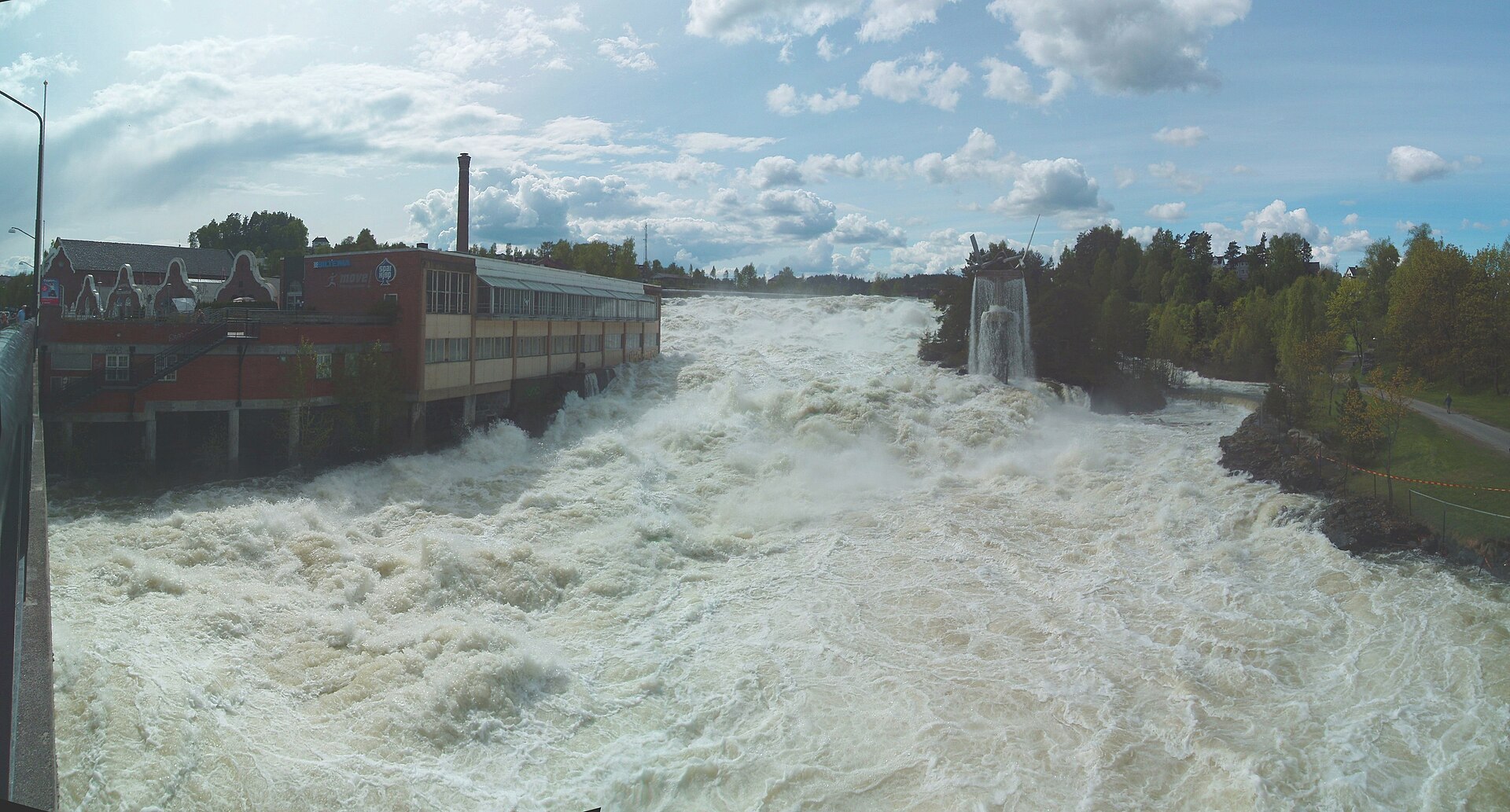
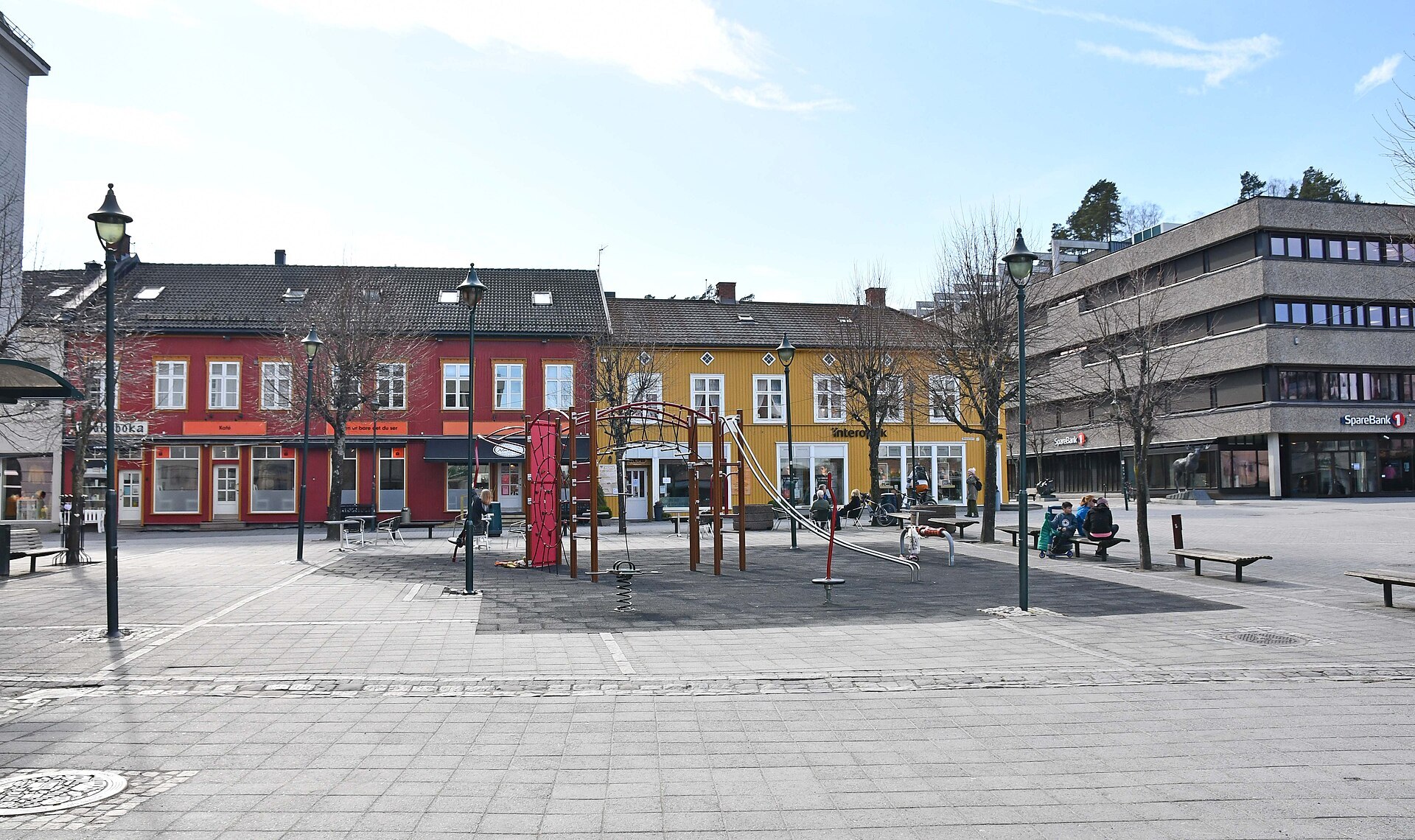
Hønefoss is built around its waterfall. The Begna, called Ådalselva on this stretch, drops 21,5 metres through the middle of town in Hønefossen, and just below it meets the Randselva. Together they become Storelva, which runs on to Tyrifjorden. The centre sits on the tongue of land between the rivers, with Søndre torv as its square, and two bears by the sculptor Ståle Kyllingstad guard the bridge over the falls.
It's the main town of Ringerike, a farming district of grain and fruit north and west of Tyrifjorden. The paper mill at Follum, for a long time the big employer, closed in 2012. The most unusual workplace today is Kartverket, the Norwegian Mapping Authority, which has its head office here. The official place names in our fact sheets come from its register.
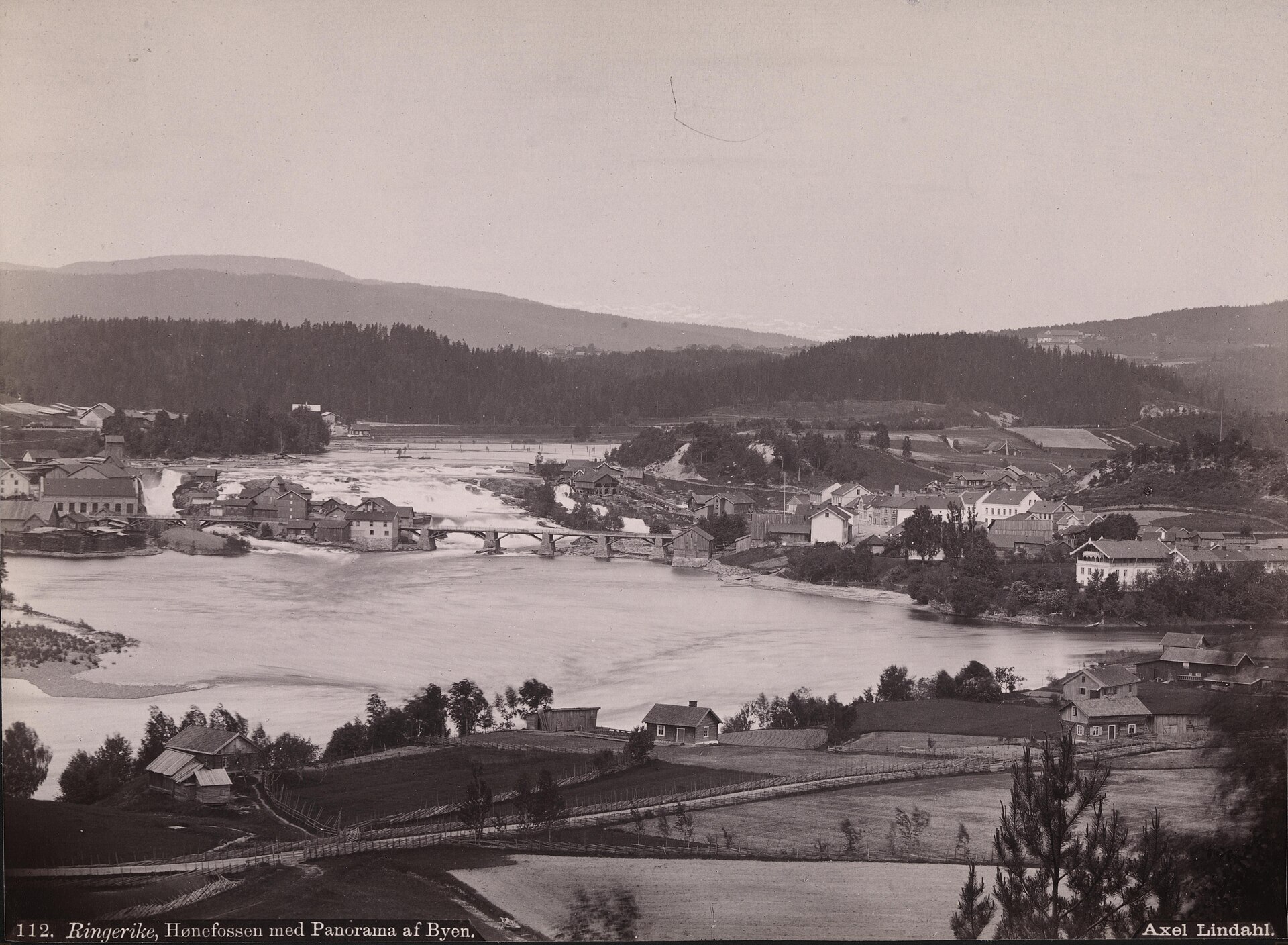
Local knowledge: the town is named after the falls, and the falls after the farm Hønen. Nobody knows what Hønen means, though one guess is the old god Hønir. The falls have worked for a long time: a mill was grinding here in 1337, and by the 1600s the rapids were lined with sawmills, up to 23 of them. The town grew around them, lived on as the market for the Ringerike farms when the timber trade slumped after 1814, and became a town in 1852. The turning point came in 1918. The falls belonged to Loyd Ltd, the English owners of the mill company Hønefoss Brug, and that year Hønefoss and its neighbour Norderhov bought the rights to the water. In 1920 the first publicly owned power station in the falls started up, and since 1936, when the last pulp grinding stopped, Hønefossen has only made electricity.
Born here: ski jumper Anders Jacobsen (born 1985) was working as a plumber not long before he won the Four Hills Tournament in his first World Cup season, 2006–07. Writer Karsten Alnæs (born 1938) grew up in Oslo and is best known for Historien om Norge, his five-volume history of Norway that NRK made into a TV series.
Visiting: the pin points to the tourist office in Fossveien, open in summer, a few steps from the falls. Part of the old power station is now inside Hønefoss kulturhus, and out in the falls stands Oppgangssaga, Knut Steen's sculpture of an old water-driven saw. In summer the falls must carry a minimum flow during the day, but they're at their biggest with the floods of spring and autumn. During the storm Hans in August 2023 about 1.200 cubic metres a second went through, and the bridge had to close. On a rainy day, Ringeriksbadet at Helgelandsmoen south of town is the big indoor pool for the district.
Fact sheet
- People: 17.342 in Hønefoss, 31.942 in Ringerike municipality
- County: Buskerud
- Town since: 1852 (as a trading town)
- Typical industries: the Norwegian Mapping Authority (Kartverket), car sales and repair, lawyers and accountants
Population on 1 January 2026, from Statistics Norway. Typical industries are the ones with a much bigger share of the jobs here than in Norway as a whole (Statistics Norway, 2025).
Weather & Northern Lights
Now
In 24 hours
Northern Lights Chances
Weather forecast from MET Norway (yr.no). An indication, not a promise: aurora activity over this place (NOAA) times the clear sky in the best three-hour window of the night (MET Norway). The next nights rest on the Kp forecast only. More: our Northern Lights Forecast and the Northern Lights Map.
Getting there
Fossveien 1, 3510 Hønefoss, Norway
Nearby
- Jin Cheng Frukt & GrøntNearest shop · right here
- Uno-X FossenFuel200 m
- Toilets200 m
- HønefossNearest town100 m
- Vinmonopolet HønefossNearest Vinmonopolet · 200 m
- Tangen Ferry QuayNearest ferry39 km
- Stall LislettaNearest motorhome park2,9 km
Data from OpenStreetMap (ODbL)
On the way
Road reports within 40 km and the nearest road cameras, from Statens vegvesen (NLOD). The pictures refresh every few minutes; the reports are put into English word by word. All road cameras
Reviews
Rate this place
You are, or have been here? Give it your stars.
Comments
Thank you! Your comment is shown once we have read it.
No comments yet.
Write a comment
Let us know your experience with this place -- did something change? Your comment is shown once we have read it.
Please write a few words.
Thank you -- that is enough for now. Please try again in an hour.