

Photos: Bjoertvedt (CC BY-SA 4.0), Bjoertvedt (CC BY-SA 4.0), Kongsvinger Kommune (CC BY 2.0) · Wikimedia Commons
1 / 3Kongsvinger
About
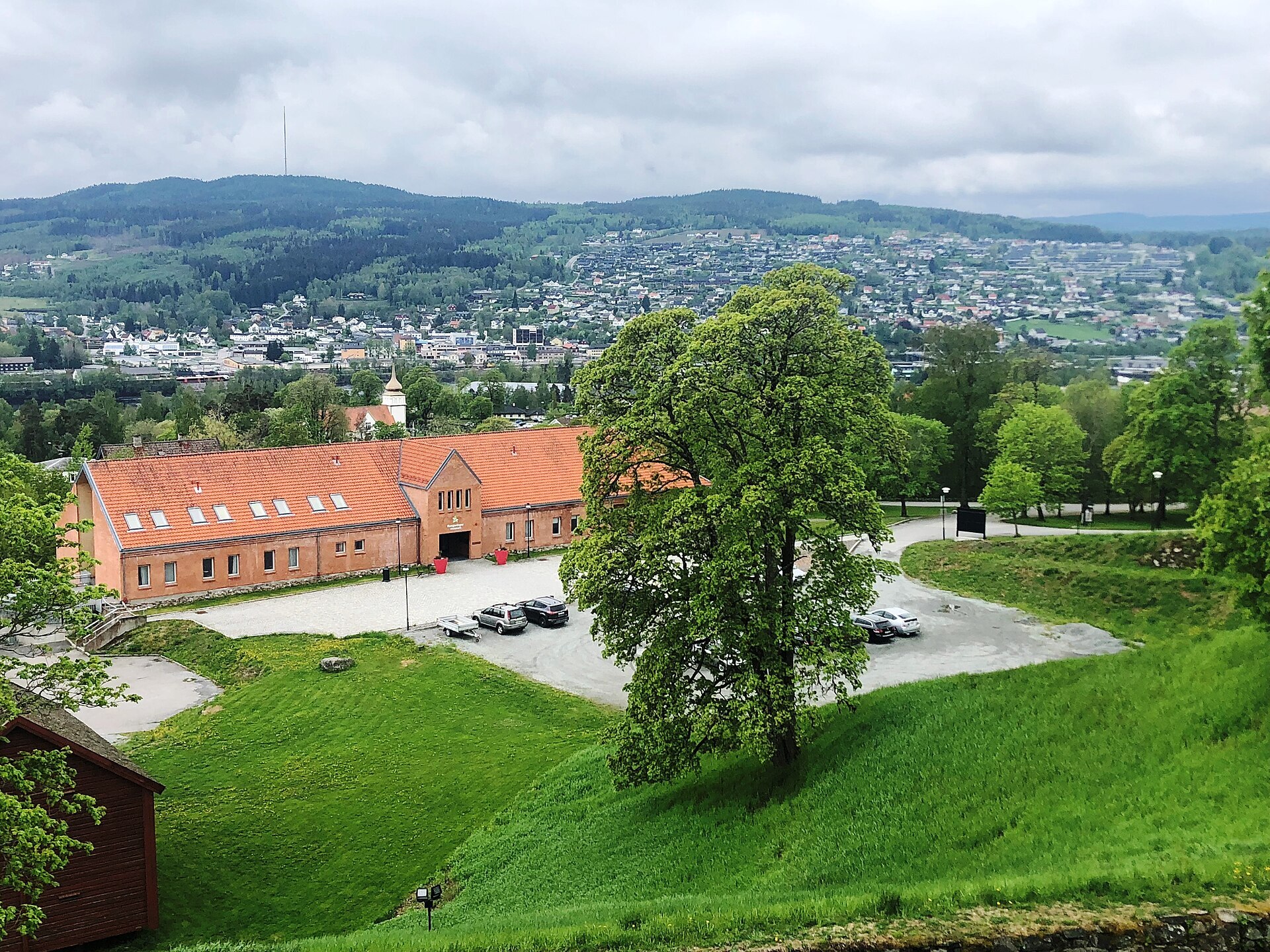
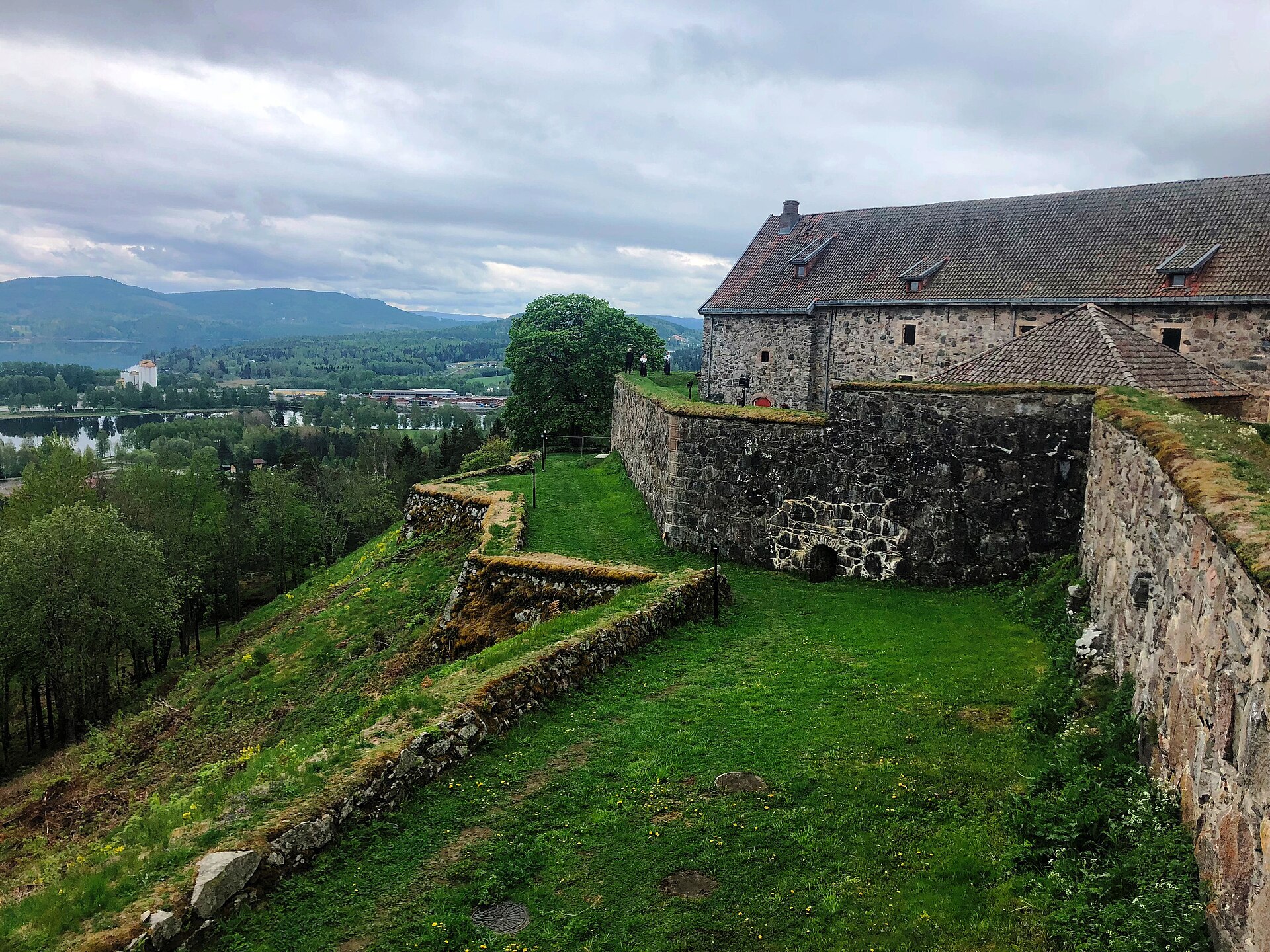
Kongsvinger sits where the Glomma, on its way south, swings hard to the west. The bend is known as Glåmakneet, the knee, and the old road from Sweden through Eidskog reached the river right here. On the hill above the north bank lies Kongsvinger fortress, an uneven star of stone walls, and on the slope below it is Øvrebyen, the old town: low wooden houses from the 1700s and 1800s along straight, quiet streets.
Midtbyen, with the shops and the hospital, is down by the river, and the station side grew up across the bridge after the railway came in 1862. The biggest workplace in town isn't a factory. Statistics Norway has a large office here, and the population figures under this text come from them.
Local knowledge: the fortress was begun in 1682 and named Kongens Vinger, the King's Vinger, after the old name of the district. What Vinger means, nobody knows. The town started as Leiren, the camp, where the people who served the fortress built their houses on a grid, and it became a kjøpstad only in 1854. The fortress itself was never attacked. The closest call came in the summer of 1814, when Norway refused to be handed over to the King of Sweden. A Swedish force crossed the border and marched on Kongsvinger. On 2 August Lieutenant Colonel Andreas Samuel Krebs held them off at Lier skanse, an earthwork just east of town. Three days later he went after them and caught them at Matrand, in the bloodiest battle of that war, and a Norwegian win.
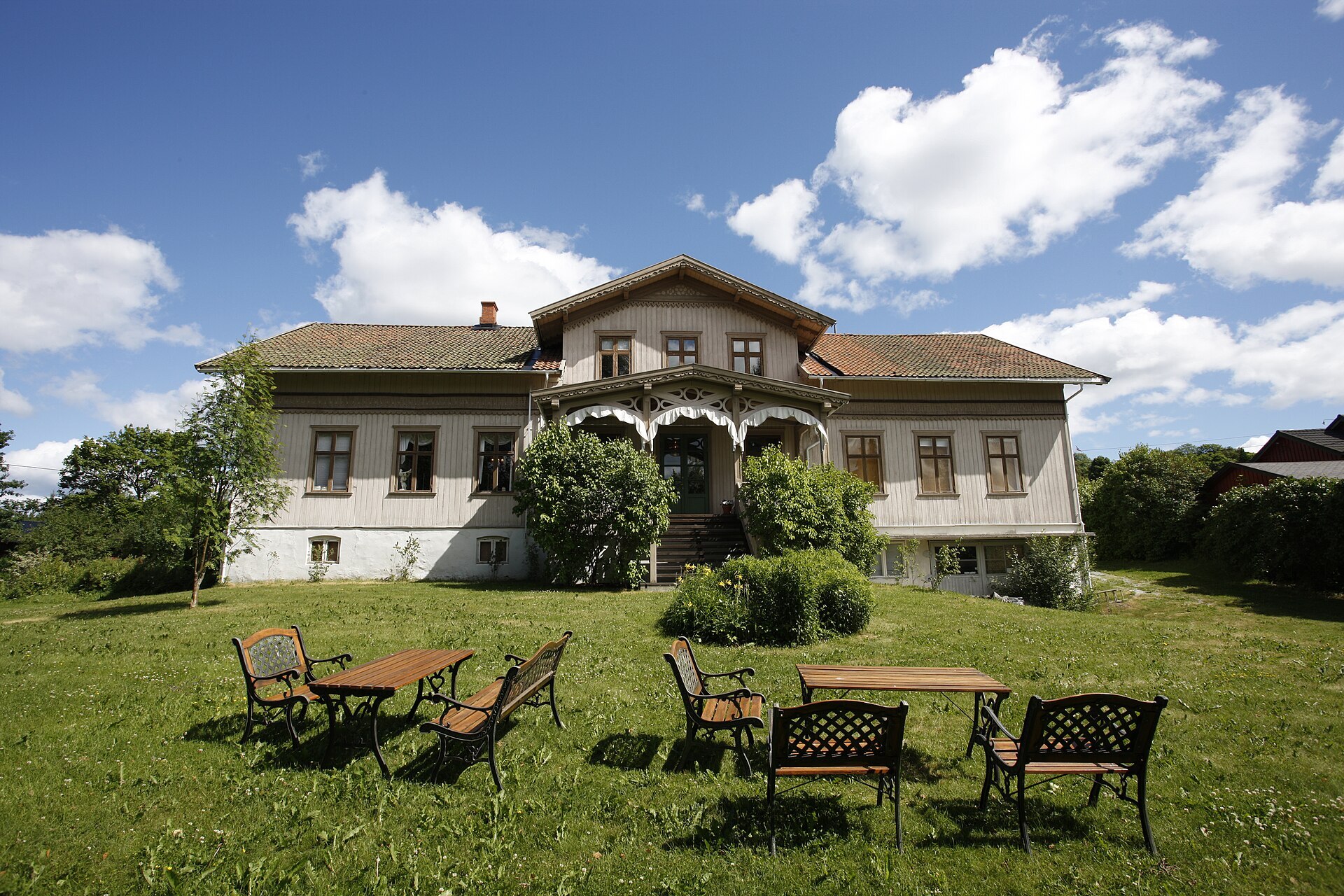
Born here: Dagny Juel (1867–1901) grew up in the villa Rolighed and became a writer and pianist at the heart of the Scandinavian artists in Berlin, where she knew Edvard Munch and August Strindberg. Ståle Solbakken (born 1968) grew up in Grue to the north and, as Norway's coach, took the men's team to the quarter-finals of the 2026 World Cup.
Visiting: the pin is on Kirketorget, the old square in Øvrebyen where the garrison once drilled. Vinger church beside it, a timber cross church from 1697, was built for town and soldiers together, and its first lead-glass windows kept breaking when the fortress fired its cannons. Walk up through the wooden streets to the fortress, which is open to all. The poet Aasmund Olavsson Vinje called the view down the Glomma from the walls one of the finest in the country. On a rainy day, go to Kvinnemuseet in Løkkegata, Norway's only museum of women's history, in Dagny Juel's childhood home. It's open Tuesday to Sunday in summer and at weekends in spring and autumn, and the ticket also covers Kongsvinger museum below the fortress walls.
Fact sheet
- People: 12.580 in Kongsvinger, 18.191 in Kongsvinger municipality
- County: Innlandet
- Town since: 1854 (as a trading town)
- Typical industries: car sales and repair, the hospital (Kongsvinger sykehus), Statistics Norway's office
Population on 1 January 2026, from Statistics Norway. Typical industries are the ones with a much bigger share of the jobs here than in Norway as a whole (Statistics Norway, 2025).
Weather & Northern Lights
Now
In 24 hours
Northern Lights Chances
Weather forecast from MET Norway (yr.no). An indication, not a promise: aurora activity over this place (NOAA) times the clear sky in the best three-hour window of the night (MET Norway). The next nights rest on the Kp forecast only. More: our Northern Lights Forecast and the Northern Lights Map.
Getting there
Kirketorget, 2213 Kongsvinger, Norway
Nearby
- Rema 1000 EpaNearest shop · 500 m
- Esso BrugataFuel900 m
- Toilets500 m
- KongsvingerNearest town700 m
- Vinmonopolet KongsvingerNearest Vinmonopolet · 1,0 km
- Sigernessjøen FamiliecampingNearest campsite8,8 km
Data from OpenStreetMap (ODbL)
On the way
Road reports within 40 km and the nearest road cameras, from Statens vegvesen (NLOD). The pictures refresh every few minutes; the reports are put into English word by word. All road cameras
Reviews
Rate this place
You are, or have been here? Give it your stars.
Comments
Thank you! Your comment is shown once we have read it.
No comments yet.
Write a comment
Let us know your experience with this place -- did something change? Your comment is shown once we have read it.
Please write a few words.
Thank you -- that is enough for now. Please try again in an hour.