

Photos: Jules Verne Times Two (CC BY-SA 4.0), Peter Fiskerstrand (CC BY-SA 4.0), Peter Fiskerstrand (CC BY-SA 4.0) · Wikimedia Commons
1 / 3Sandnes
About
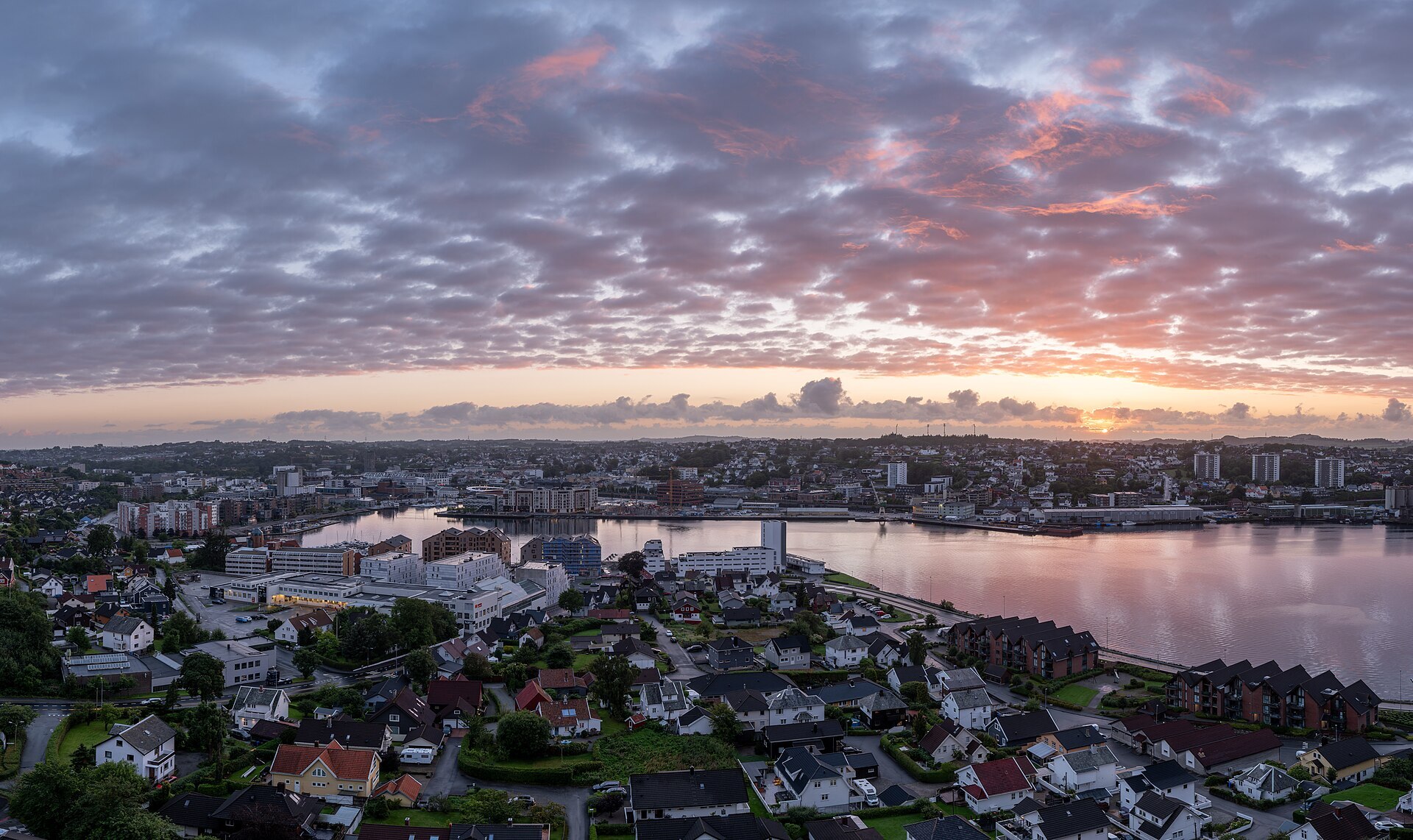
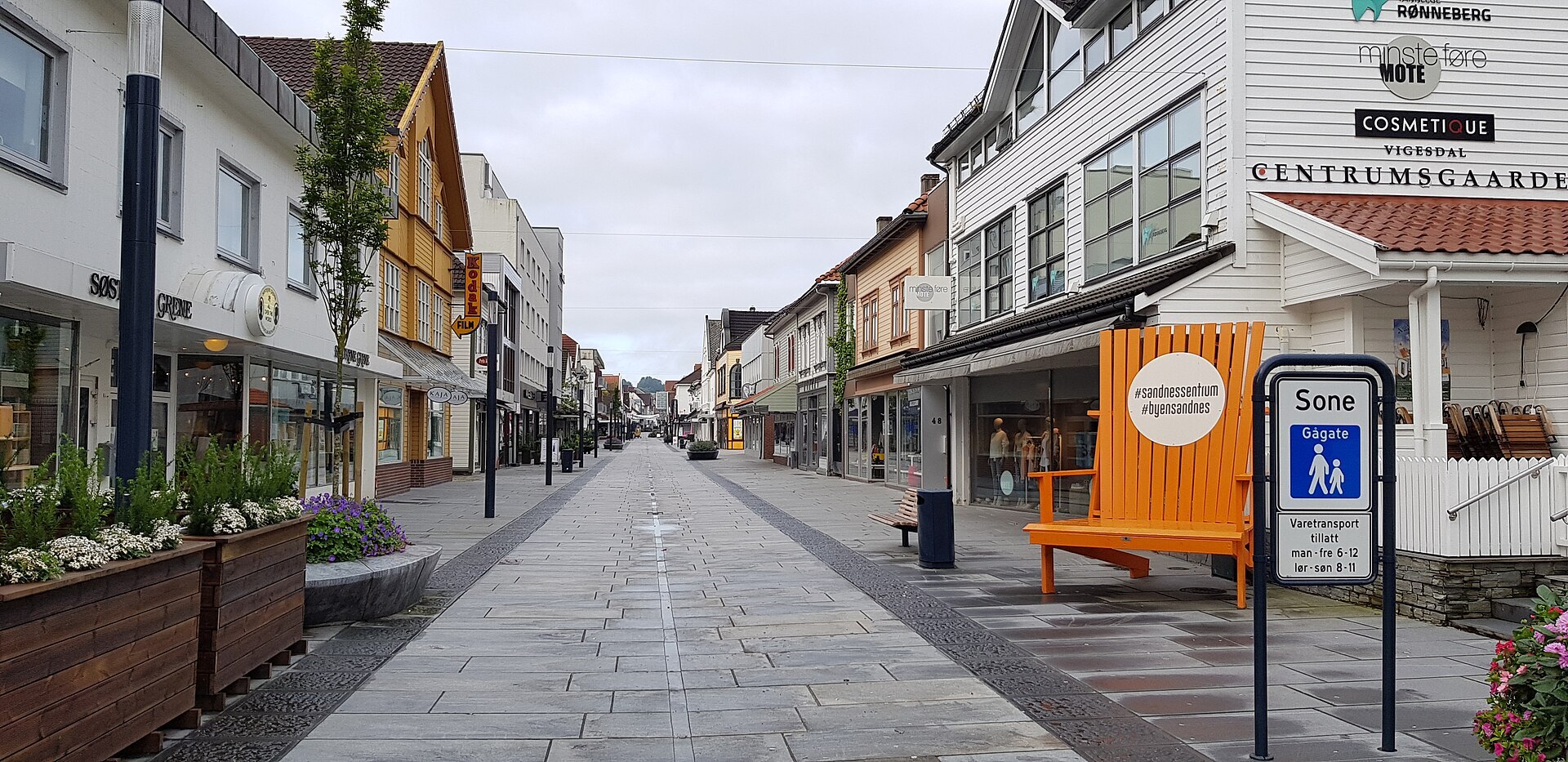
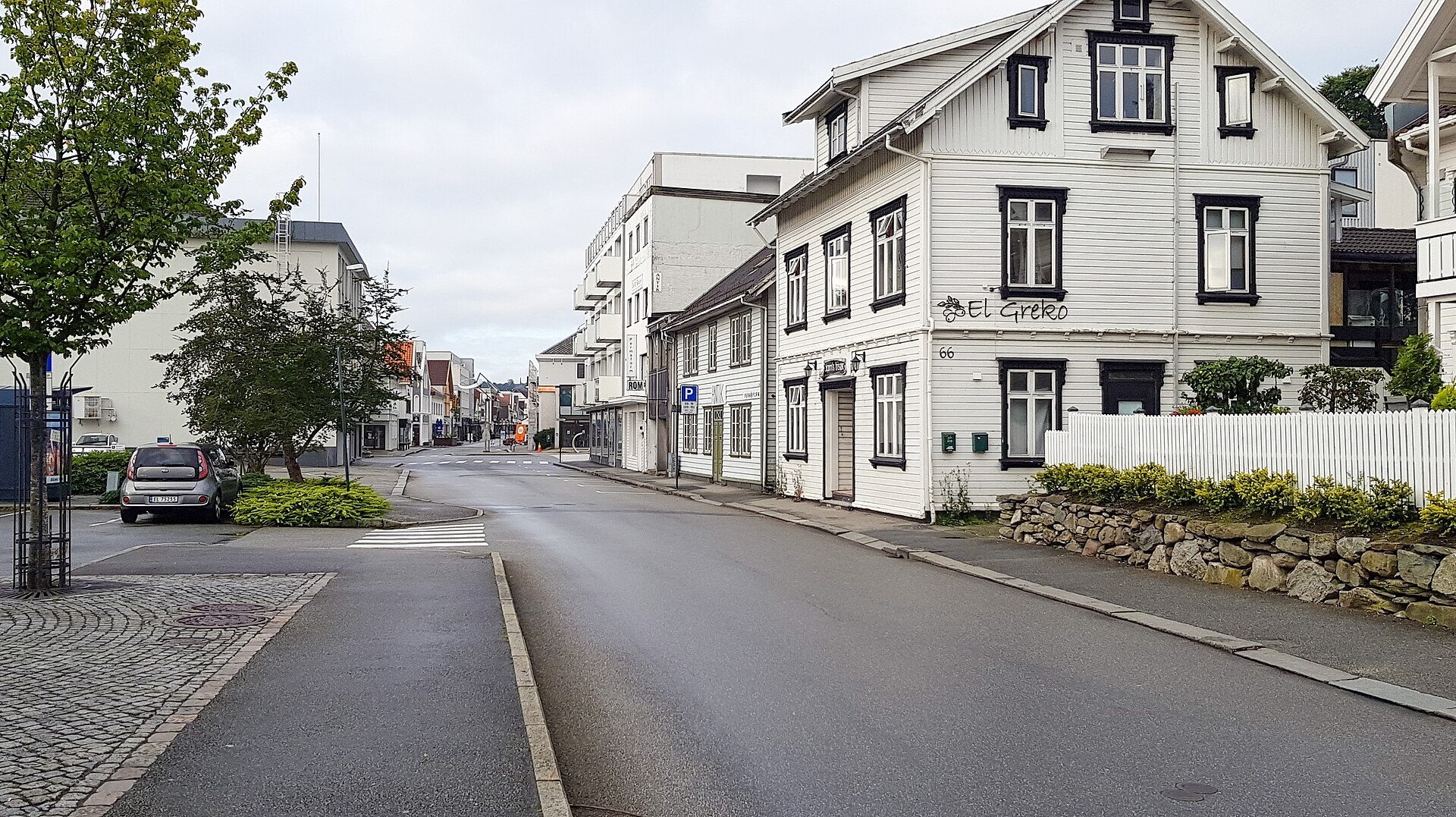
Sandnes lies at the very end of Gandsfjorden, where the flat farmland of Jæren meets the hills to the east. The old centre is a grid of streets laid out after it became a town in 1860, with Langgata, one of the longest pedestrian streets in Norway, as its spine. Swiss-style wooden houses still set the tone. The oldest, Nygaardshuset at Langgata 8, was built around 1835 and is older than the town itself.
Stavanger is just up the fjord, and the two have grown into one urban area of about 244.000 people, but Sandnes still feels like its own place. Many work in oil-related offices at Forus. The name is Old Norse, from sandr, a stretch of sand, and nes, a headland, though nobody is quite sure which headland.
Local knowledge: Sandnes became a ladested in 1860, against the wishes of Stavanger, which feared for its own trade. The town was built on clay: brickworks from the 1780s, then potteries, and the clay cuckoo whistle on the town arms. Then came the bicycles. Jonas Øglænd ran a shop in Sandnes from 1868, his sons got the Scandinavian agency for the American bicycle The World, and soon the family was building its own. In 1932 they held a contest to name the bike, and a 12-year-old boy, Knut Johansen, won with DBS, short for Den Beste Sykkel, the best bicycle. In the 1960s Øglænd had 90 % of the Norwegian market. The factory closed in 2000, but Sandnes still calls itself the bicycle town, with red-painted cycle lanes and city bikes to borrow.
Born here: Julie Ege (1943–2008), daughter of a brickworks worker, played in the Bond film On Her Majesty's Secret Service and later trained as a nurse. Ceramic designer Kåre Berven Fjeldsaa (1918–1992) won gold at the Milan Triennale in 1954.
Visiting: the pin points to the tourist information at Vågsgata 22, next to the train and bus station. It is open on weekdays all year, and lends out free city bikes in summer. On a rainy day, Vitenfabrikken in Storgata is a science centre with a planetarium and the town museum, full of local pottery and bicycles. It stands in the block where Øglænd made bikes, and the oat mill from 1912 inside still has its machinery as it was when work stopped in 1988. Since 2020 most of Lysefjorden belongs to Sandnes, Kjerag included, while Preikestolen on the north side went to Strand. Drive east to the ferry from Lauvvik to Oanes, where the Ryfylke Scenic Route begins.
Fact sheet
- People: 85.785 in Sandnes municipality (Sandnes itself is too small for Statistics Norway's count of urban settlements)
- County: Rogaland
- Town since: 1860 (as a loading place)
- Typical industries: oil and gas services, staffing and recruitment agencies, car sales and repair
Population on 1 January 2026, from Statistics Norway. Typical industries are the ones with a much bigger share of the jobs here than in Norway as a whole (Statistics Norway, 2025).
Weather & Northern Lights
Now
In 24 hours
Northern Lights Chances
Weather forecast from MET Norway (yr.no). An indication, not a promise: aurora activity over this place (NOAA) times the clear sky in the best three-hour window of the night (MET Norway). The next nights rest on the Kp forecast only. More: our Northern Lights Forecast and the Northern Lights Map.
Getting there
Vågsgata 22, 4306 Sandnes, Norway
Nearby
- Extra BystasjonenNearest shop · 100 m
- Uno-X SandnesFuel200 m
- Toilets200 m
- SandnesNearest townright here
- Vinmonopolet Sandnes, Sandnes SentrumNearest Vinmonopolet · 400 m
- Hommersåk Ferry QuayNearest ferry11 km
- Sandnes bobilparkeringNearest motorhome park600 m
Data from OpenStreetMap (ODbL)
On the way
Road reports within 40 km and the nearest road cameras, from Statens vegvesen (NLOD). The pictures refresh every few minutes; the reports are put into English word by word. All road cameras
Reviews
Rate this place
You are, or have been here? Give it your stars.
Comments
Thank you! Your comment is shown once we have read it.
No comments yet.
Write a comment
Let us know your experience with this place -- did something change? Your comment is shown once we have read it.
Please write a few words.
Thank you -- that is enough for now. Please try again in an hour.