

Photos: Alberto-g-rovi (CC BY 4.0), Jules Verne Times Two (CC BY-SA 4.0), Unknown photographer (National Library of Norway) (Public domain) · Wikimedia Commons
1 / 3Skudeneshavn
About
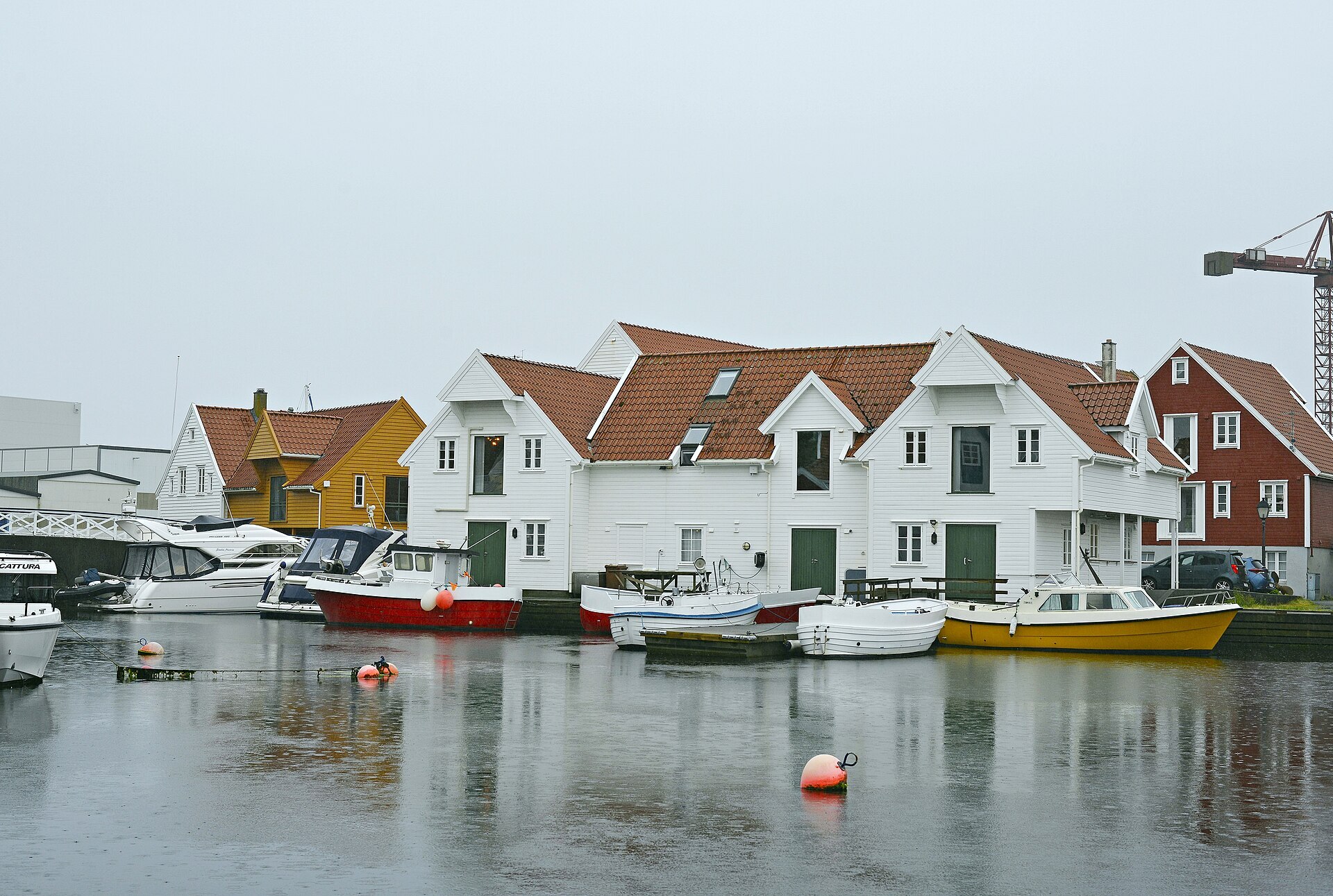
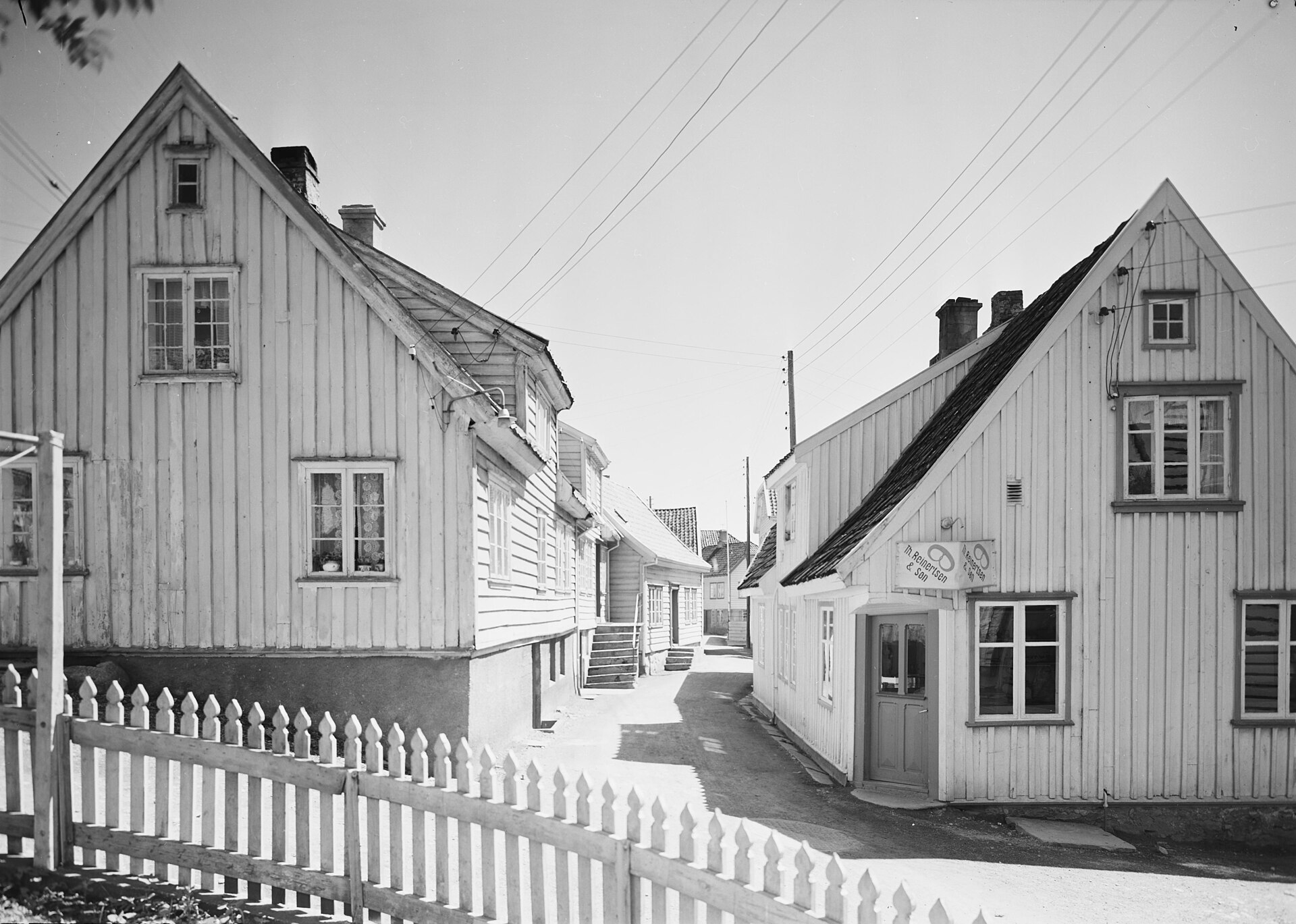
Skudeneshavn sits on the southern tip of Karmøy, where Karmsundet opens out to the Boknafjord and the sea. Around a small, sheltered harbour basin stand rows of white wooden houses and sea houses, most of them built between 1840 and 1870. Søragadå, the narrow main street of the old town, winds along the water behind them. Nearly all of the 125 houses and 100 sea houses that stood here in 1850 are still standing, and since 2018 the whole old town has been protected.
Many of the houses are in the Empire style, with columns and ornaments copied from the stone temples of antiquity, ideas that came home with the town's sailing ships. It's still a shipping town: Solstad Offshore runs its fleet of offshore vessels from here. The name comes from Old Norse skúta, a rock wall that juts out, for the headland Skudeneset at the tip of the island.
Local knowledge: in 1808, in the middle of the Napoleonic Wars and a trade blockade, the herring came back in enormous shoals. It spawned just off Skudeneshavn, and the catch kept famine away from much of Norway. This is when the town you see today grew up. In the winter of 1853–54 about 22.000 people took part in the fishing here, in a town of around 1.200 people. Salted herring went to Riga and other Baltic ports, and at the peak 77 sailing ships from Skudeneshavn were in foreign trade. The town became a ladested in 1857. After the spring herring ended around 1870 the ships kept sailing, but the skippers were slow to switch to steam, and from the 1880s others took over the Baltic trade. Around 1900 some 6.000 people, a quarter of the island, left Karmøy for America.
Born here: Marcus André Berg (born 1988) started playing the organ at 13 with the local cantor and in 2025 became the leading cathedral organist at Oslo Cathedral.
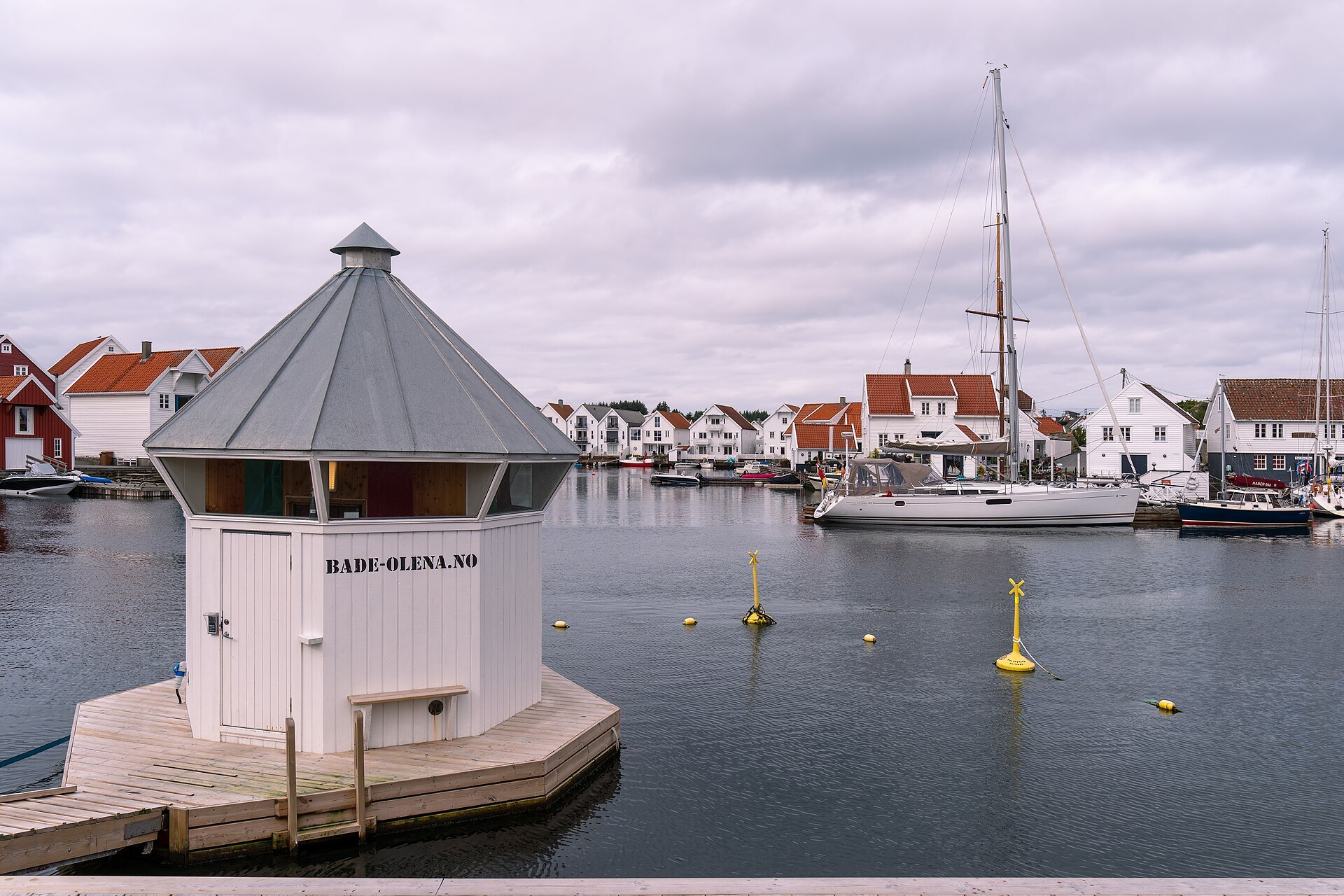
Visiting: the pin is on Torget, the small square by the harbour. Walk up to the town park on Havnafjellet. The figurehead there, Damå i Parken, is a copy. The original, from the barque Concordia, was used for target practice by German soldiers in the war and now stands in the museum. In a small factory in Søragadå, skipper Ole Christian Hansen made a hand-operated foghorn in the 1880s. More than 80.000 went out around the world. On a wet day in summer (late June to early August), the museum in Mælandsgården has rooms from 1818, a shop from 1843 and sea houses full of boats. Out of season, warm up in Bade-Olena, the little floating sauna in the harbour by Andersenbryggå. Skudenes Camping, open all year, is a short walk from the centre.
Fact sheet
- People: 3.359 in Skudeneshavn, 43.990 in Karmøy municipality
- County: Rogaland
- Town since: 1857 (as a loading place), by again 1996
- Typical industries: offshore supply shipping, building trades such as electricians and plumbers
Population on 1 January 2026, from Statistics Norway. Typical industries are the ones with a much bigger share of the jobs here than in Norway as a whole (Statistics Norway, 2025).
Weather & Northern Lights
Now
In 24 hours
Northern Lights Chances
Weather forecast from MET Norway (yr.no). An indication, not a promise: aurora activity over this place (NOAA) times the clear sky in the best three-hour window of the night (MET Norway). The next nights rest on the Kp forecast only. More: our Northern Lights Forecast and the Northern Lights Map.
Getting there
Torget, 4280 Skudeneshavn, Norway
Nearby
- Extra SkudenesNearest shop · 100 m
- Circle K SkudeneshavnFuel1,0 km
- Toilets100 m
- SkudeneshavnNearest townright here
- Vinmonopolet Karmøy, KopervikNearest Vinmonopolet · 15 km
- Arsvågen Ferry QuayNearest ferry11 km
- Skudenes CampingNearest campsite1,1 km
Data from OpenStreetMap (ODbL)
On the way
Road reports within 40 km and the nearest road cameras, from Statens vegvesen (NLOD). The pictures refresh every few minutes; the reports are put into English word by word. All road cameras
Reviews
Rate this place
You are, or have been here? Give it your stars.
Comments
Thank you! Your comment is shown once we have read it.
No comments yet.
Write a comment
Let us know your experience with this place -- did something change? Your comment is shown once we have read it.
Please write a few words.
Thank you -- that is enough for now. Please try again in an hour.