

Photos: Espen Franck-Nielsen (CC BY-SA 4.0), Chris Nyborg (CC BY-SA 3.0), Chris Nyborg (CC BY-SA 3.0) · Wikimedia Commons
1 / 3Son
About
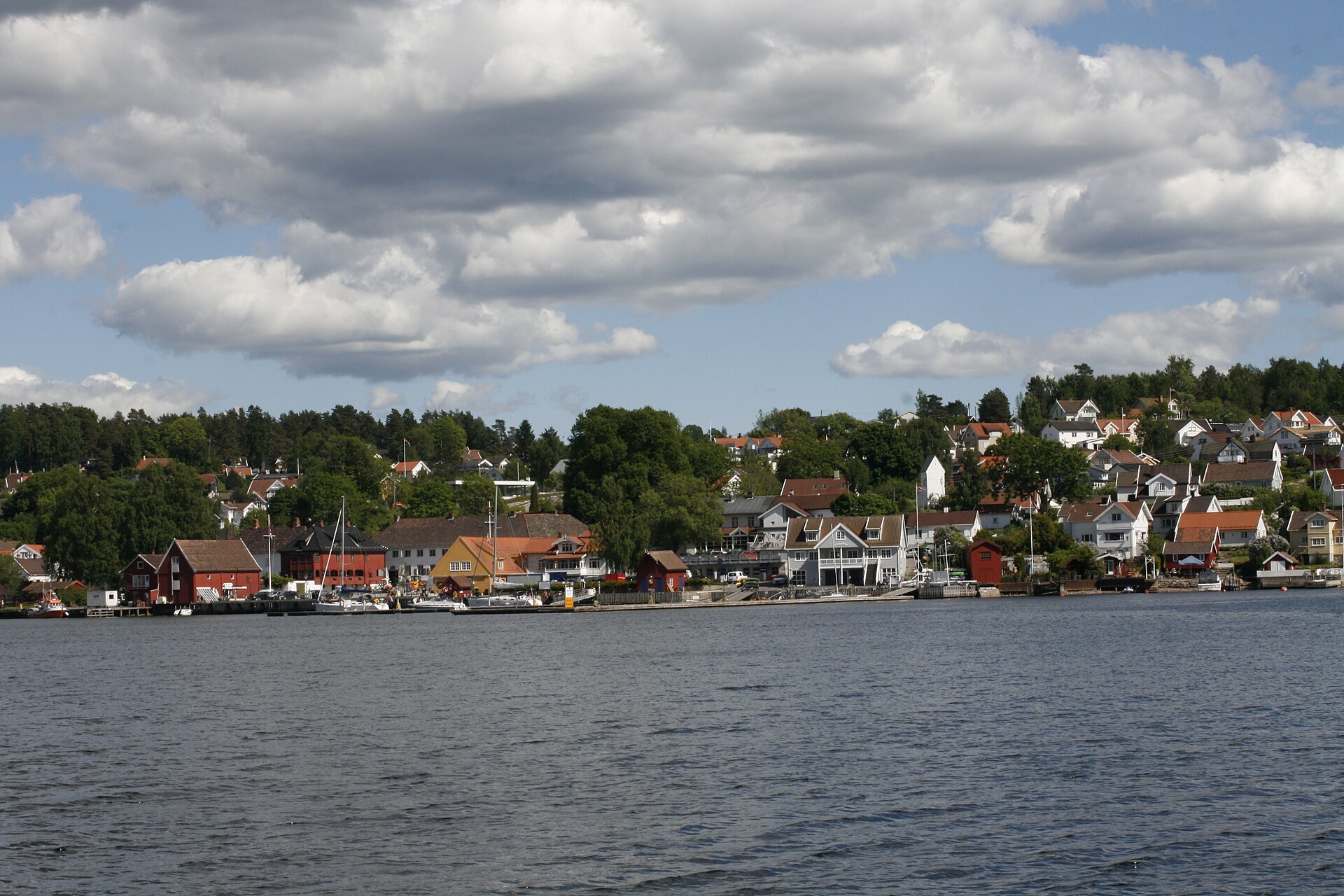
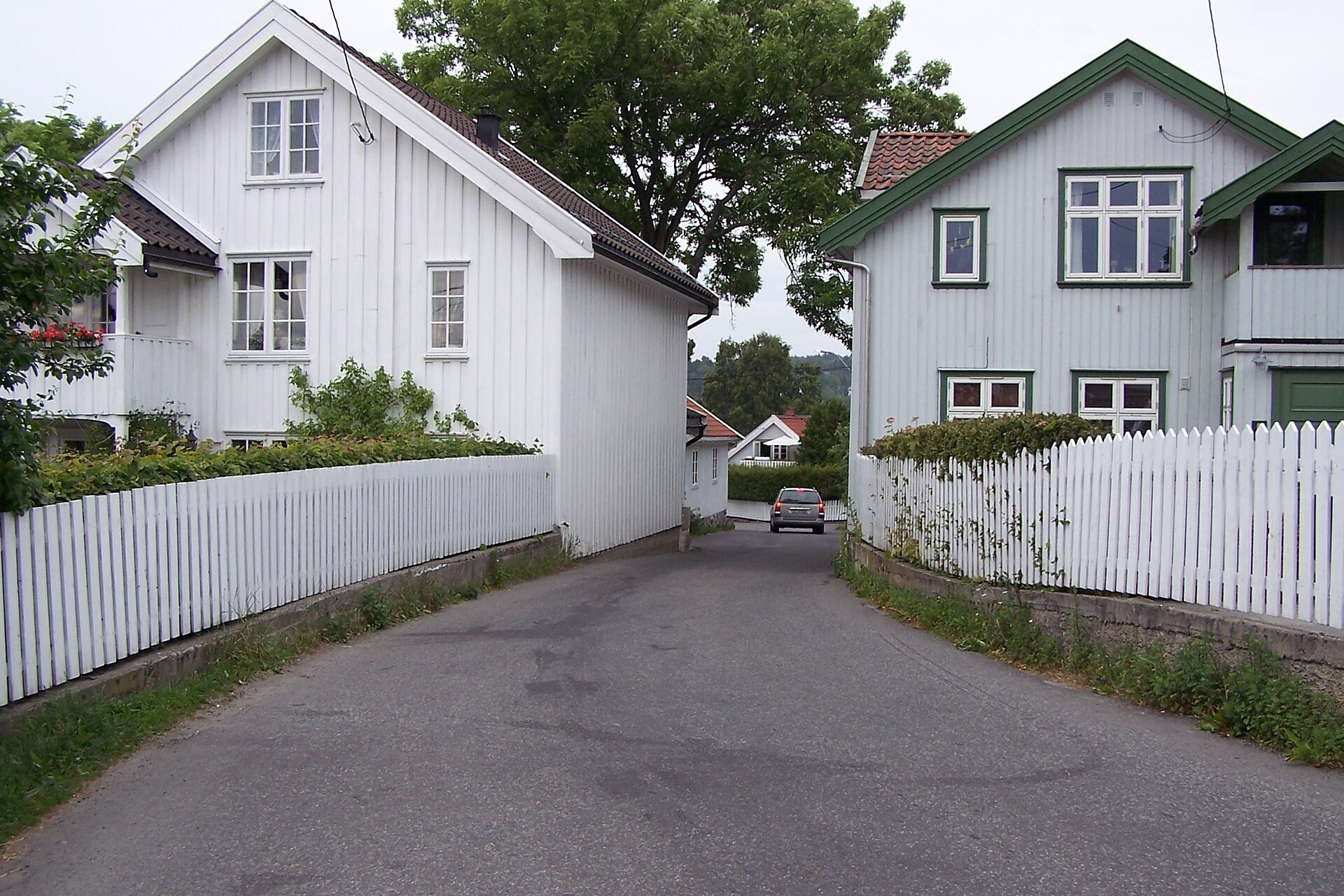
Son lies at the head of Sonskilen, an inlet on the east side of the Oslofjord, right on the border with Moss. The old centre is a tight cluster of mostly white wooden houses and narrow lanes between the harbour and a steep slope, and people often compare it with the small towns of Sørlandet on the south coast. Sonskilen is the deepest natural harbour in the fjord, so in summer even big yachts tie up at the quay in the middle of the village.
Son belongs to Vestby, and many people here commute to Oslo. Early in the 1900s it was an artists' town, home to the writers Nils Kjær and Herman Wildenvey and the painter Ludvig Karsten, and there are still galleries and craftspeople here. The name, long written Soon, probably comes from an old name for the river Hølenelva just north of the centre, but nobody knows what it meant.
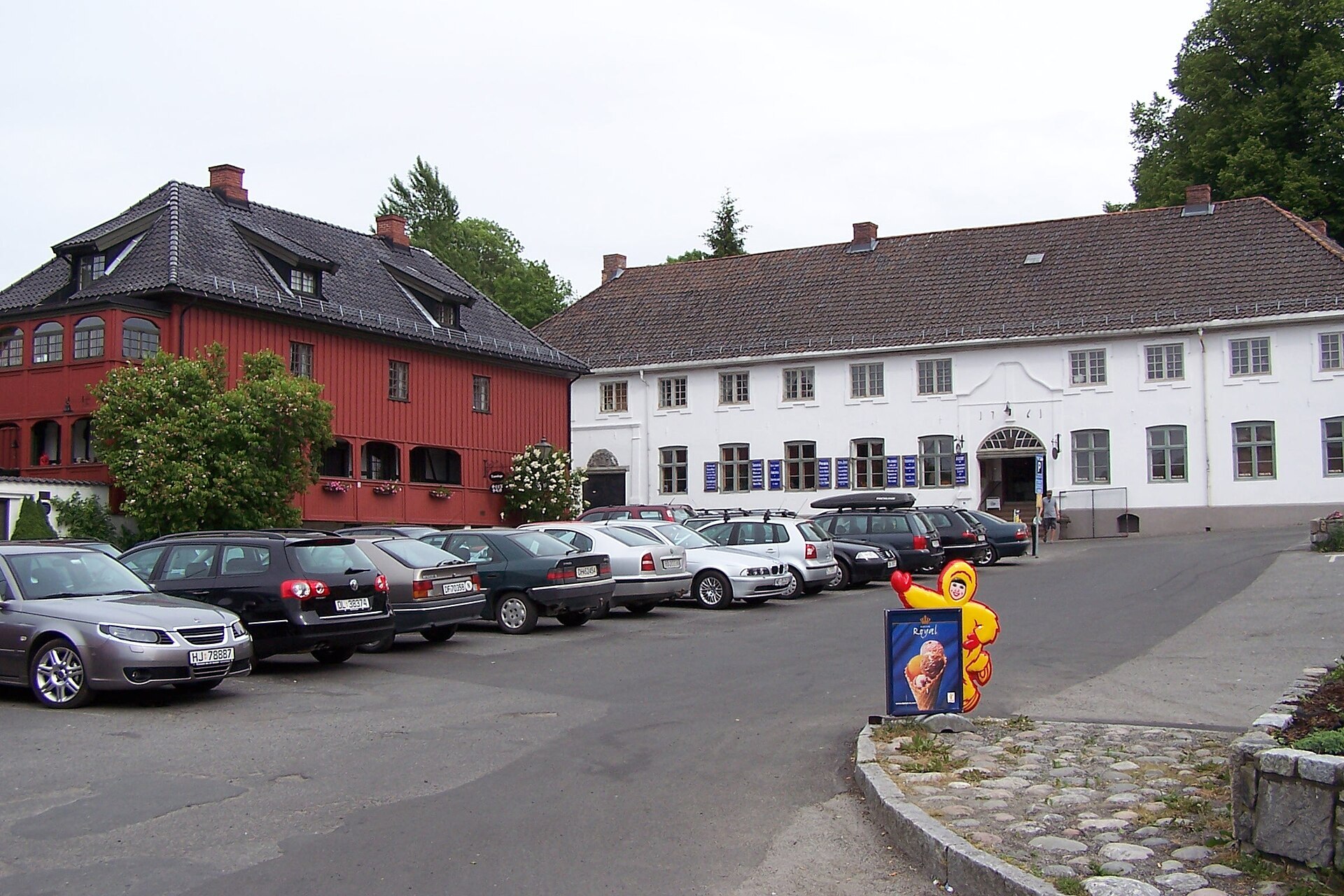
Local knowledge: Son was rich long before it was big, thanks to timber. From the 1500s Dutch ships came here for planks and logs from the sawmills at Hølen, and a Dutch sea chart from 1582 calls the whole Oslofjord Zoon Water. Son became a ladested, a small loading port with its own customs post, in 1604, and when the timber trade peaked in the early 1700s, the customs takings here could be twice those of Moss. You can still see that money around the square: Thornegården, built of Dutch brick in the 1640s, and the big timbered houses Spinnerigården and Stoltenberggården. Then Moss got its town charter in 1720 and took the timber from the much larger area around Vansjø, and Son went quiet.
Born here: painter Oluf Wold-Torne (born 1867) became one of Norway's great colourists after he saw the French Impressionists in Paris in 1900, and the National Museum owns several of his paintings. Edith Roger (1922–2023), whose father had a car workshop in Son, went from dancer to one of Norway's leading stage directors, many of them Ibsen plays at the Nationaltheatret.
Visiting: the pin is on Torget, the small square by the harbour, with Thornegården on one side. During prohibition, 1916 to 1927, cans of spirits were landed here more or less openly, since the sheriff lived up in Hølen. From the square it's a short walk to Glenneparken and Son kystkultursenter, with a museum harbour, a slipway for wooden boats and an old fisherman's cottage. Along Strandgata is Dørnbergerhuset, the black house of the eccentric painter Karl Dørnberger. On a rainy day, look into kunstSONen on Sagaveien, a gallery and open workshop run by six artists, or drive up to Bølgen Bad in Drøbak.
Fact sheet
- People: 20.167 in Vestby municipality (Son itself is too small for Statistics Norway's count of urban settlements)
- County: Akershus
- Town since: 1604 (as a loading place)
- Typical industries: warehousing and freight handling, wholesale trade (Deli Skog business park), trucking and road transport
Population on 1 January 2026, from Statistics Norway. Typical industries are the ones with a much bigger share of the jobs here than in Norway as a whole (Statistics Norway, 2025).
Weather & Northern Lights
Now
In 24 hours
Northern Lights Chances
Weather forecast from MET Norway (yr.no). An indication, not a promise: aurora activity over this place (NOAA) times the clear sky in the best three-hour window of the night (MET Norway). The next nights rest on the Kp forecast only. More: our Northern Lights Forecast and the Northern Lights Map.
Getting there
Torget, Storgata, 1555 Son, Norway
Nearby
- Kiwi SonNearest shop · 300 m
- Toiletsright here
- VestbyNearest town9,4 km
- Vinmonopolet SonNearest Vinmonopolet · 300 m
- Moss Ferry QuayNearest ferry11 km
- Nes CampingNearest campsite5,1 km
Data from OpenStreetMap (ODbL)
On the way
Road reports within 40 km and the nearest road cameras, from Statens vegvesen (NLOD). The pictures refresh every few minutes; the reports are put into English word by word. All road cameras
Reviews
Rate this place
You are, or have been here? Give it your stars.
Comments
Thank you! Your comment is shown once we have read it.
No comments yet.
Write a comment
Let us know your experience with this place -- did something change? Your comment is shown once we have read it.
Please write a few words.
Thank you -- that is enough for now. Please try again in an hour.