

Stavanger
About
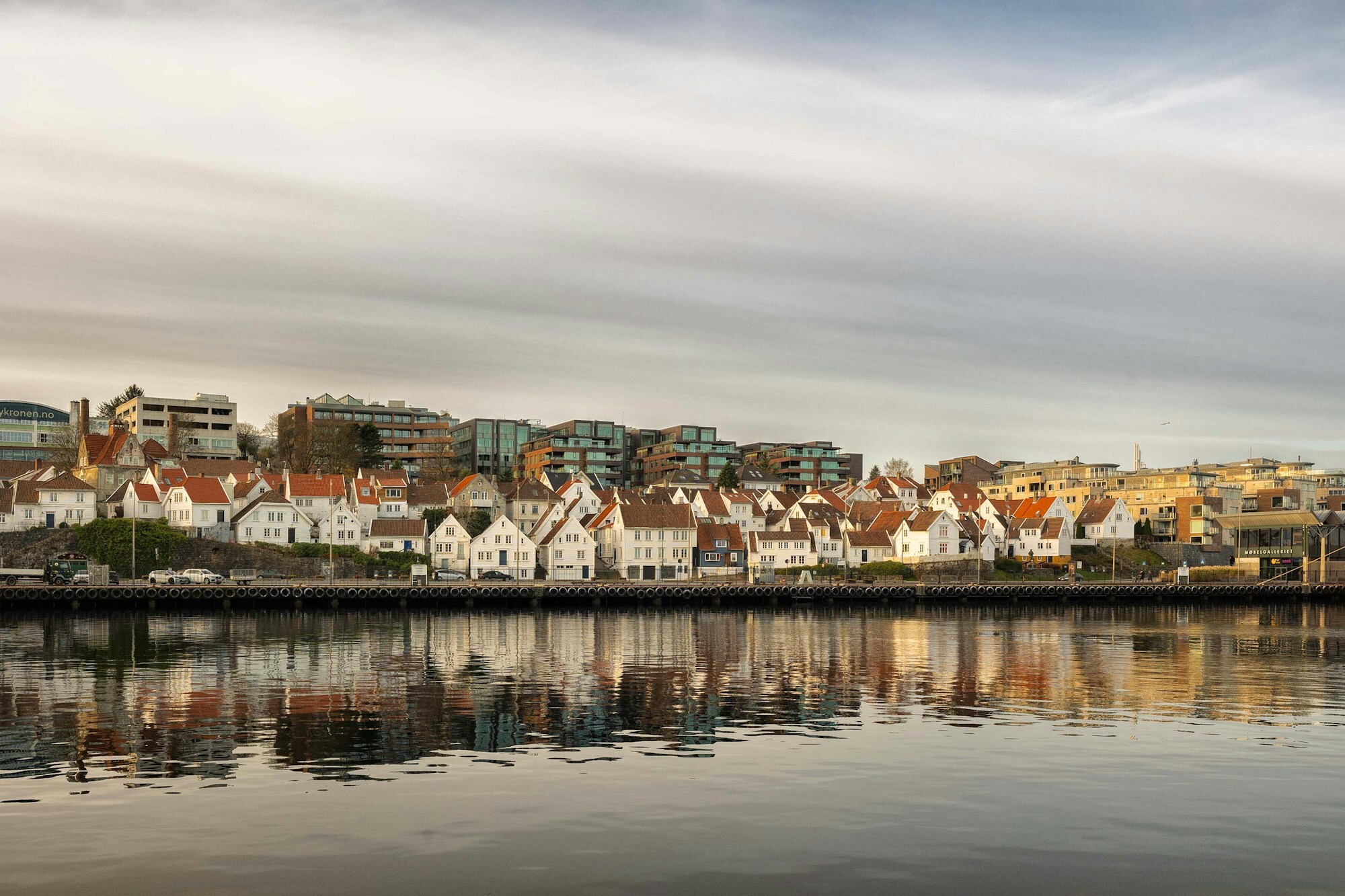
Stavanger's centre wraps around Vågen, a small harbour bay where the cruise ships moor right in town. On the west side of the bay the white wooden houses of Gamle Stavanger climb the slope. On the east side are the shops and cafés around Torget, and a block behind the market square the grey stone cathedral stands at the end of the town lake, Breiavatnet.
Stavanger and Sandnes have grown into one urban area of about 244.000 people, the third largest in Norway. Since the 1960s this has been the country's oil capital, with Equinor's head office at Forus. The name goes back to Old Norse Stafangr, from stafr, a staff, and angr, a fjord, probably for the straight run of water into Vågen.
Local knowledge: the town is counted from about 1125, when the cathedral was begun, and got full town rights in 1425. For centuries it lived on herring, and later on tin cans. Norway's first cannery opened here in 1873, and during the First World War 54 canneries with some 8.000 workers made 70 % of the country's canned exports. By 1960 that was over. Then came the autumn of 1969. Phillips Petroleum had drilled 32 more or less dry holes in the North Sea and was ready to give up, but it couldn't find anyone to hire its rig Ocean Viking, so it kept drilling. In October it hit Ekofisk, then the biggest oil field ever found at sea. In 1972 the new state oil company Statoil and the Petroleum Directorate both settled in Stavanger.
Born here: Alexander Kielland (1849–1906), one of the four great Norwegian writers of the 1800s, wrote Garman & Worse and Skipper Worse about the merchant families of his home town, and was later its mayor. Kjetil Jansrud (born 1985) grew up in Vinstra and won Olympic gold in super-G in 2014.
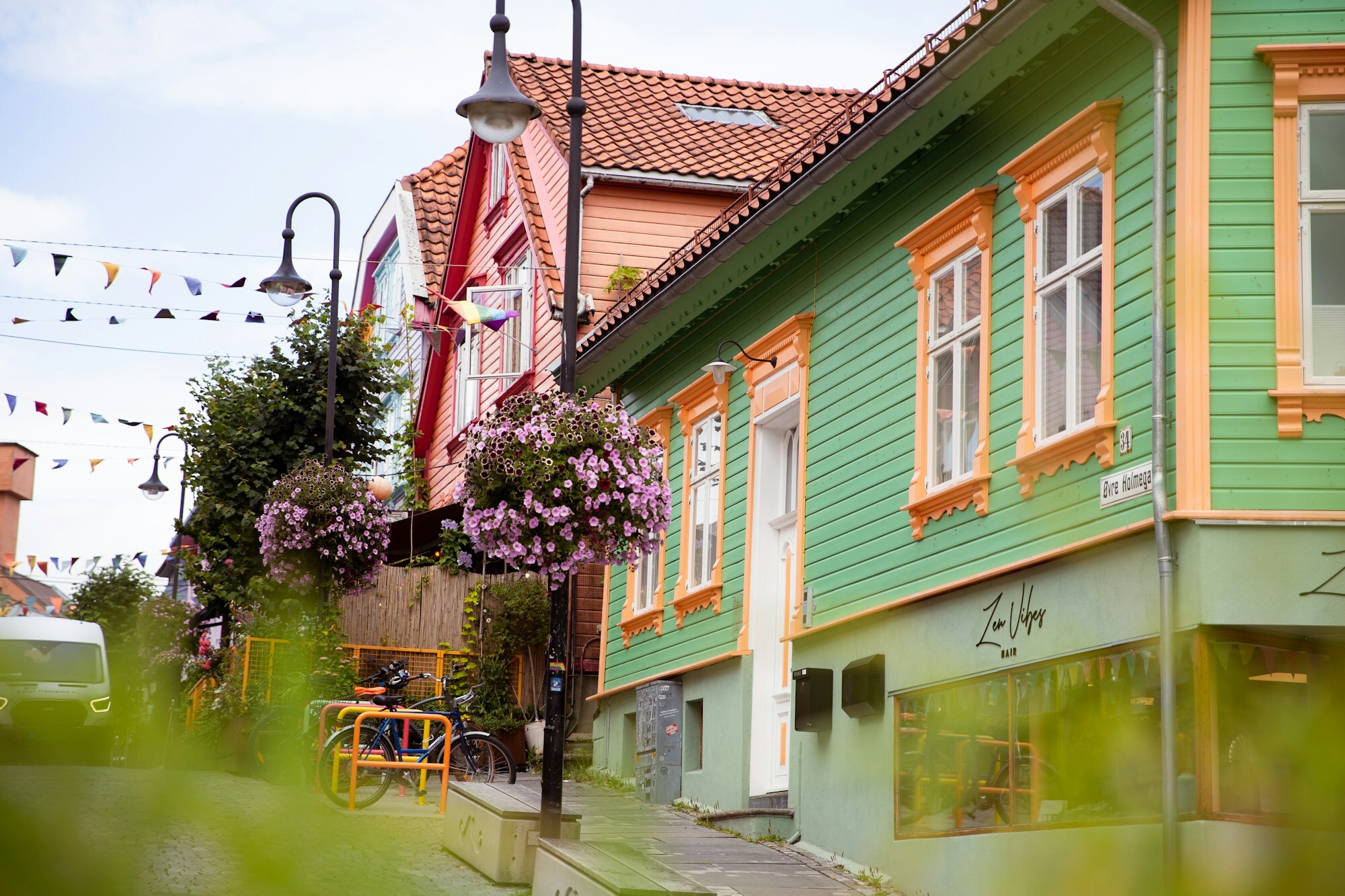
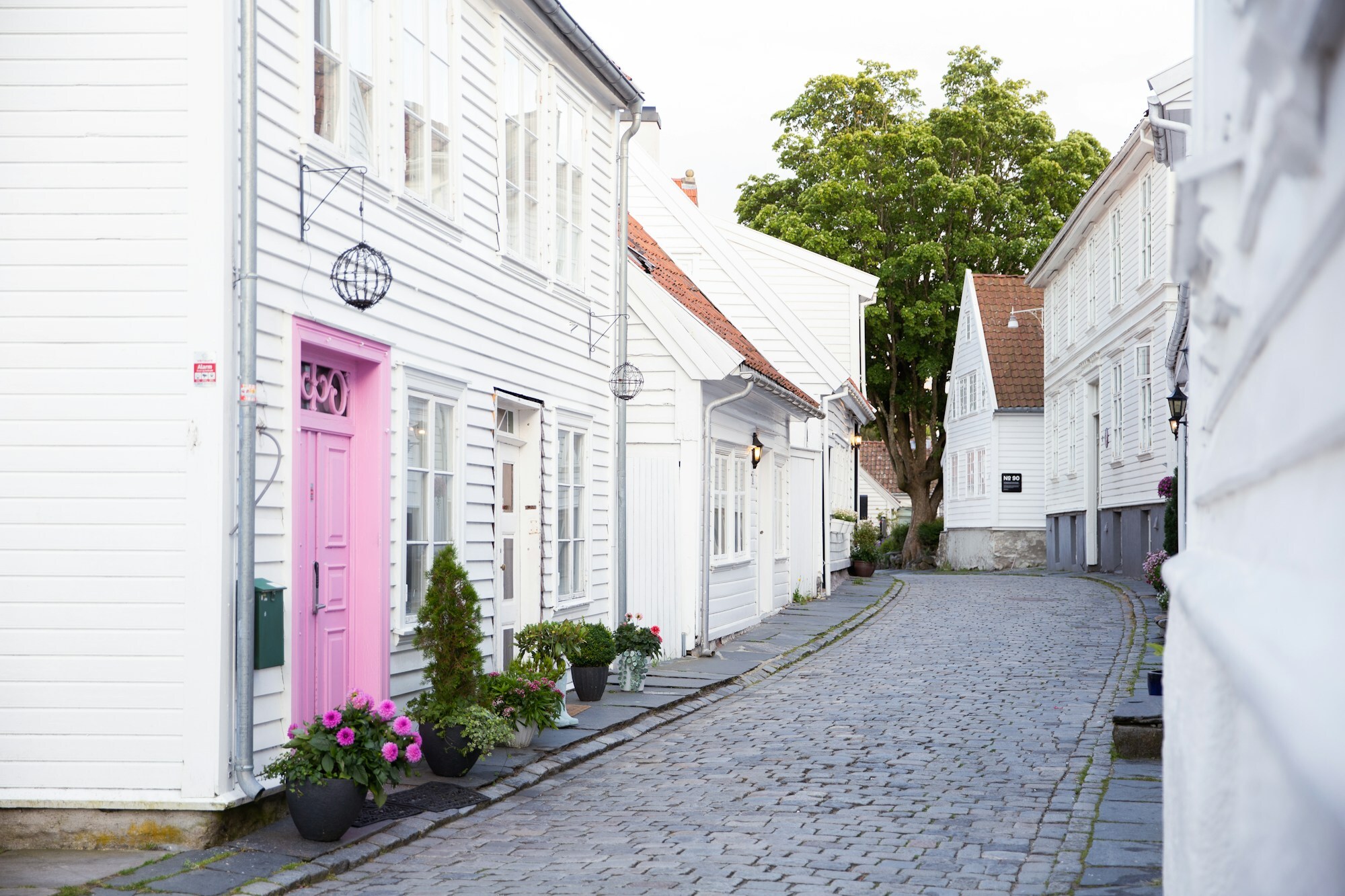
Visiting: the pin points to the tourist information on Strandkaien, between the cruise quay and Gamle Stavanger. It is open all year and sells Lysefjord cruises and transport to Preikestolen and Kjerag. Gamle Stavanger has 173 protected wooden houses from the late 1700s and 1800s, built for sailors, craftsmen and workers, and in the 1950s the plan was to tear them all down. Øvre Holmegate nearby is the opposite: a street painted in loud colours after an idea from a local hairdresser. The cathedral is Norway's oldest, in use without a break since the 1300s. On a rainy day, go to the Norwegian Petroleum Museum on Kjerringholmen, which from the sea looks like a small oil platform, or swim at Gamlingen, a heated outdoor pool open all year. The Ryfast tunnels take you under the fjord towards Preikestolen and the Ryfylke Scenic Route.
Fact sheet
- People: 151.669 in Stavanger municipality (Stavanger itself is too small for Statistics Norway's count of urban settlements)
- County: Rogaland
- Town since: 1425 (as a trading town)
- Typical industries: oil and gas services, staffing and recruitment agencies, IT and software companies
Population on 1 January 2026, from Statistics Norway. Typical industries are the ones with a much bigger share of the jobs here than in Norway as a whole (Statistics Norway, 2025).
Weather & Northern Lights
Now
In 24 hours
Northern Lights Chances
Weather forecast from MET Norway (yr.no). An indication, not a promise: aurora activity over this place (NOAA) times the clear sky in the best three-hour window of the night (MET Norway). The next nights rest on the Kp forecast only. More: our Northern Lights Forecast and the Northern Lights Map.
Getting there
Strandkaien 61, 4005 Stavanger, Norway
Nearby
- Extra BjergstedNearest shop · 300 m
- Tanken SvilandsgateFuel500 m
- Toilets200 m
- StavangerNearest town400 m
- Vinmonopolet Stavanger, HerbariumNearest Vinmonopolet · 300 m
- Fiskepirterminalen Ferry QuayNearest ferry800 m
- Sokn Camping & MarinaNearest campsite9,3 km
Data from OpenStreetMap (ODbL)
On the way
Road reports within 40 km and the nearest road cameras, from Statens vegvesen (NLOD). The pictures refresh every few minutes; the reports are put into English word by word. All road cameras
Reviews
Rate this place
You are, or have been here? Give it your stars.
Comments
Thank you! Your comment is shown once we have read it.
No comments yet.
Write a comment
Let us know your experience with this place -- did something change? Your comment is shown once we have read it.
Please write a few words.
Thank you -- that is enough for now. Please try again in an hour.