

Photos: Jkschriwer (CC BY-SA 3.0) · Wikimedia Commons
Photos: Daniel Charles Hextall · Unsplash
1 / 3Kragerø
About
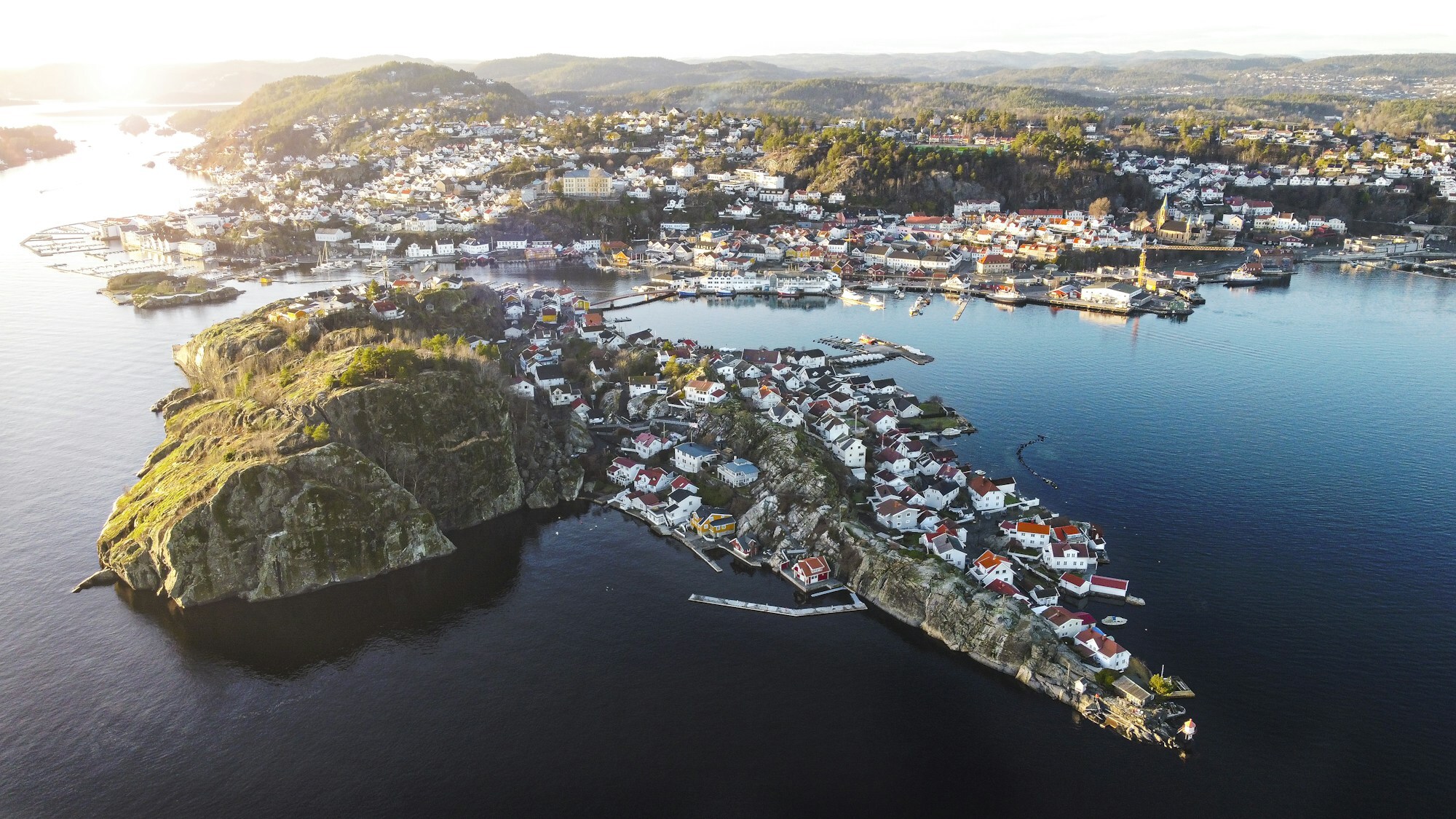
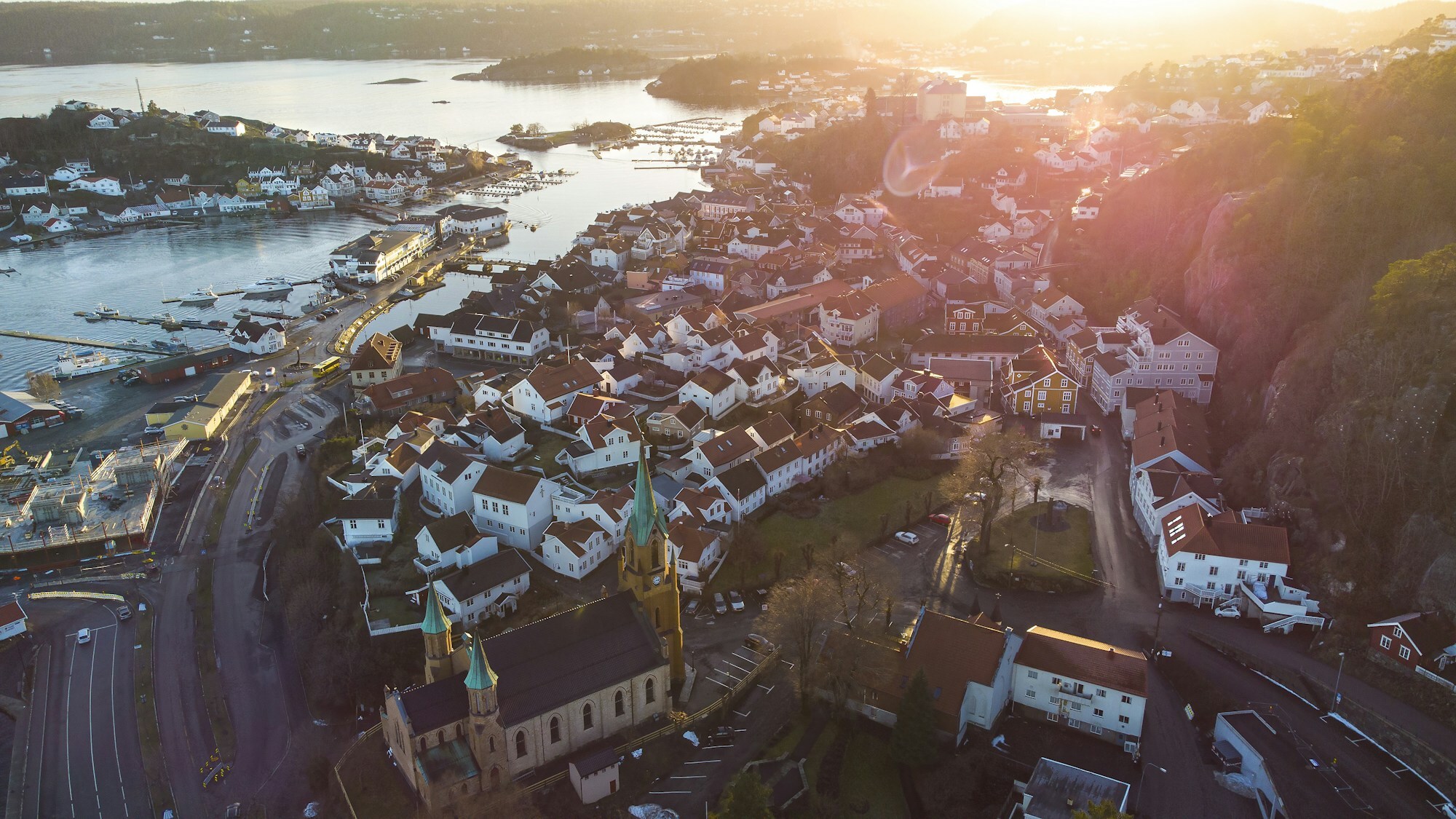
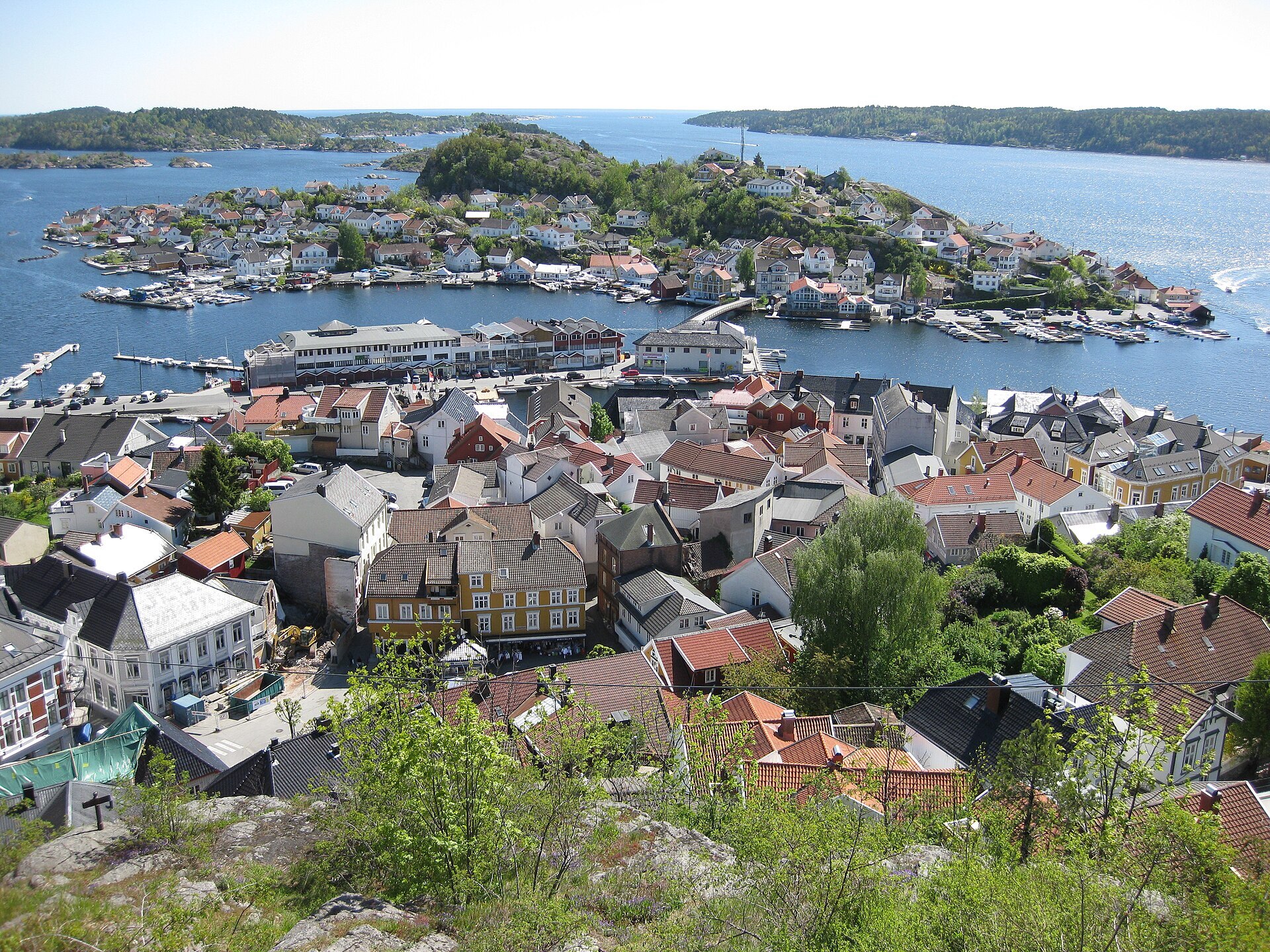
Kragerø sits at the tip of a peninsula between the Kilsfjord and the Hellefjord, with big islands outside sheltering the harbours. The old town climbs a steep slope above the water: white wooden houses packed along narrow, crooked streets, and small boats going in and out of Bysundet, the sound between the mainland and the island everyone just calls Øya. The municipality has 495 islands and skerries and almost 3.500 holiday homes, so you can guess what summer is like. It's a working town too: the biggest factory, Vistin Pharma, makes the diabetes drug metformin.
Local knowledge: Øya was probably the first Kragerø, a Danish spelling of Kråkerøy, crow island. The town got its charter in 1666 and was told to build a galley for the king, which is why there's a galley in its coat of arms, and in the late 1800s it was one of Norway's biggest shipping towns. The story people here like best starts on 5 May 1909. Edvard Munch, just out of eight months in a clinic in Copenhagen, came along the coast on the mail boat looking for somewhere to work. He checked in at the Victoria hotel, and on an evening walk found a big villa to rent at Skrubben, just west of the centre. He took it that same night. He came and went until 1915, painted friends and neighbours, and made the main paintings for the University Aula in Oslo here. He found the view for The Sun on a rock at Skrubben, and an old local seaman, Børre Nilsen, sat for History.
Born here: Theodor Kittelsen (1857–1914), the artist whose trolls most Norwegians grew up with in Asbjørnsen and Moe's fairy tales, was born in a small house in the centre. It's a museum now, Kittelsenhuset, open in the summer holidays.
Visiting: the pin is on Torvet, the square in the centre. Follow the Munch trail up to Skrubben, open all year, with copies of his paintings put up where he worked. A sculpture by Per Elsdorf stands on the knoll you can see at the right edge of The Sun. On a rainy day, Kragerø Biograf in the centre has been a cinema since 1904. Boats to Jomfruland leave from Kragerø Ferry Quay. The island is part of Jomfruland National Park: oak woods, a beach of round stones on the sea side, two lighthouses and Tårntjernet, the pond where Kittelsen drew Nøkken, the water spirit. You can't drive around the island, so walk or bring a bike.
Fact sheet
- People: 5.466 in Kragerø, 10.378 in Kragerø municipality
- County: Telemark
- Town since: 1666 (as a trading town)
- Typical industries: medicine production (Vistin Pharma's metformin plant), hotels and other accommodation, nursing and care homes
Population on 1 January 2026, from Statistics Norway. Typical industries are the ones with a much bigger share of the jobs here than in Norway as a whole (Statistics Norway, 2025).
Weather & Northern Lights
Now
In 24 hours
Northern Lights Chances
Weather forecast from MET Norway (yr.no). An indication, not a promise: aurora activity over this place (NOAA) times the clear sky in the best three-hour window of the night (MET Norway). The next nights rest on the Kp forecast only. More: our Northern Lights Forecast and the Northern Lights Map.
Getting there
Torvet, 3770 Kragerø, Norway
Nearby
- Kiwi KragerøNearest shop · 200 m
- Esso Kragerø MarinaFuel400 m
- Toilets200 m
- KragerøNearest town200 m
- Vinmonopolet KragerøNearest Vinmonopolet · 200 m
- Kragerø Ferry QuayNearest ferry300 m
- Kragerøfjorden CampingNearest campsite4,7 km
Data from OpenStreetMap (ODbL)
On the way
Road reports within 40 km and the nearest road cameras, from Statens vegvesen (NLOD). The pictures refresh every few minutes; the reports are put into English word by word. All road cameras
Reviews
Rate this place
You are, or have been here? Give it your stars.
Comments
Thank you! Your comment is shown once we have read it.
No comments yet.
Write a comment
Let us know your experience with this place -- did something change? Your comment is shown once we have read it.
Please write a few words.
Thank you -- that is enough for now. Please try again in an hour.