

Photos: Basketbread (CC BY 3.0), Tevollen (CC BY-SA 4.0), DXR (CC BY-SA 4.0) · Wikimedia Commons
1 / 3Mosjøen
About
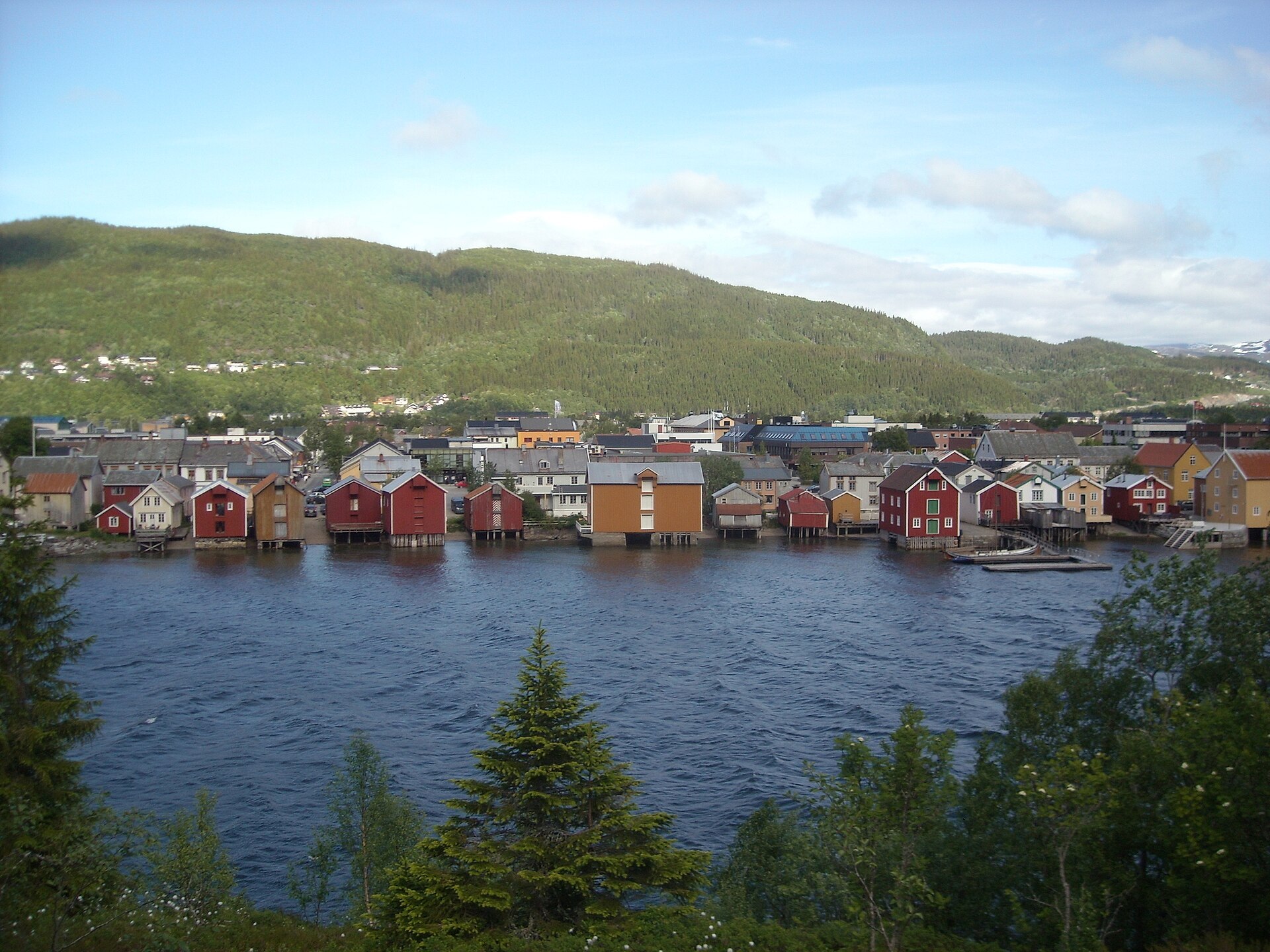
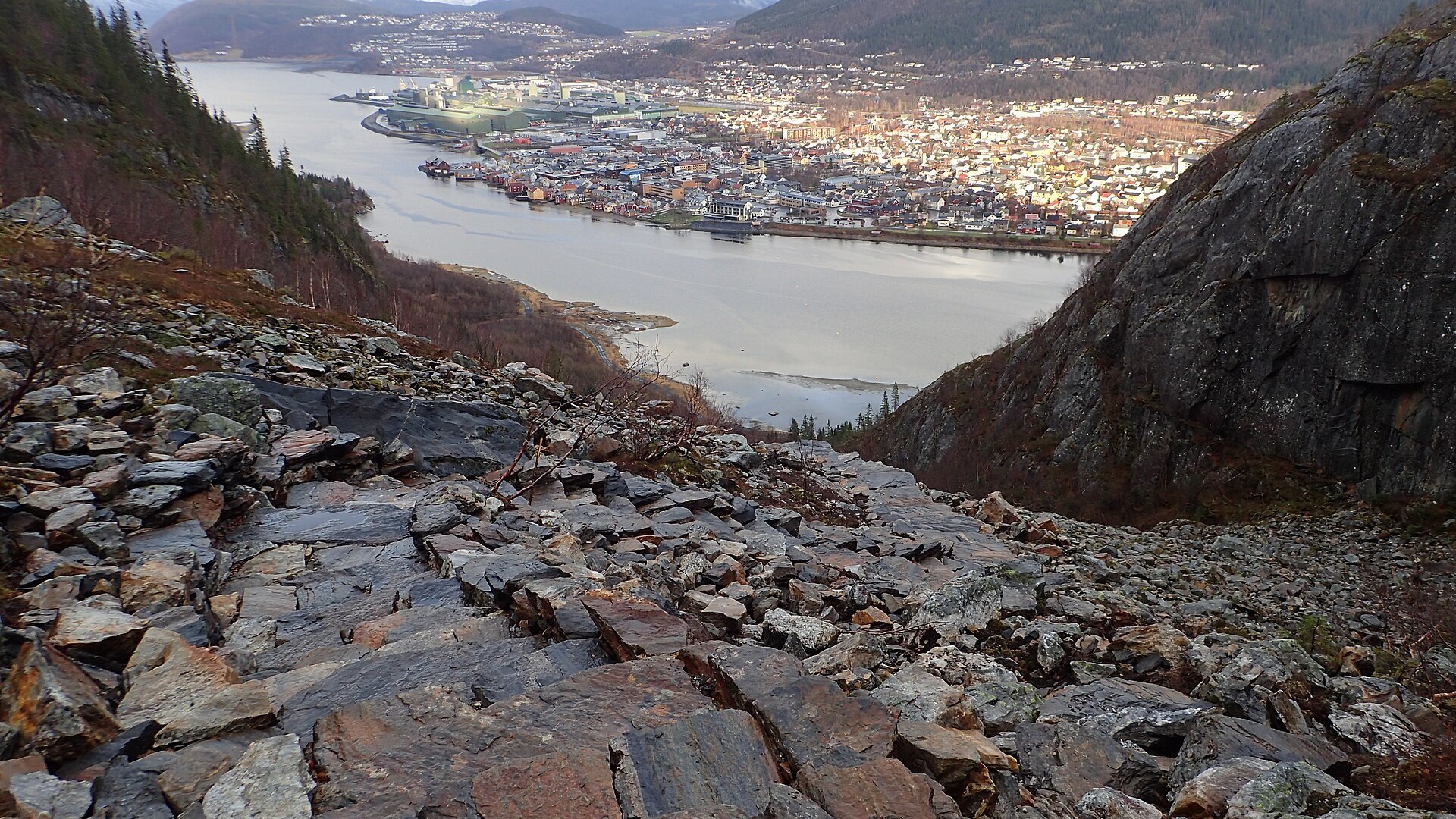
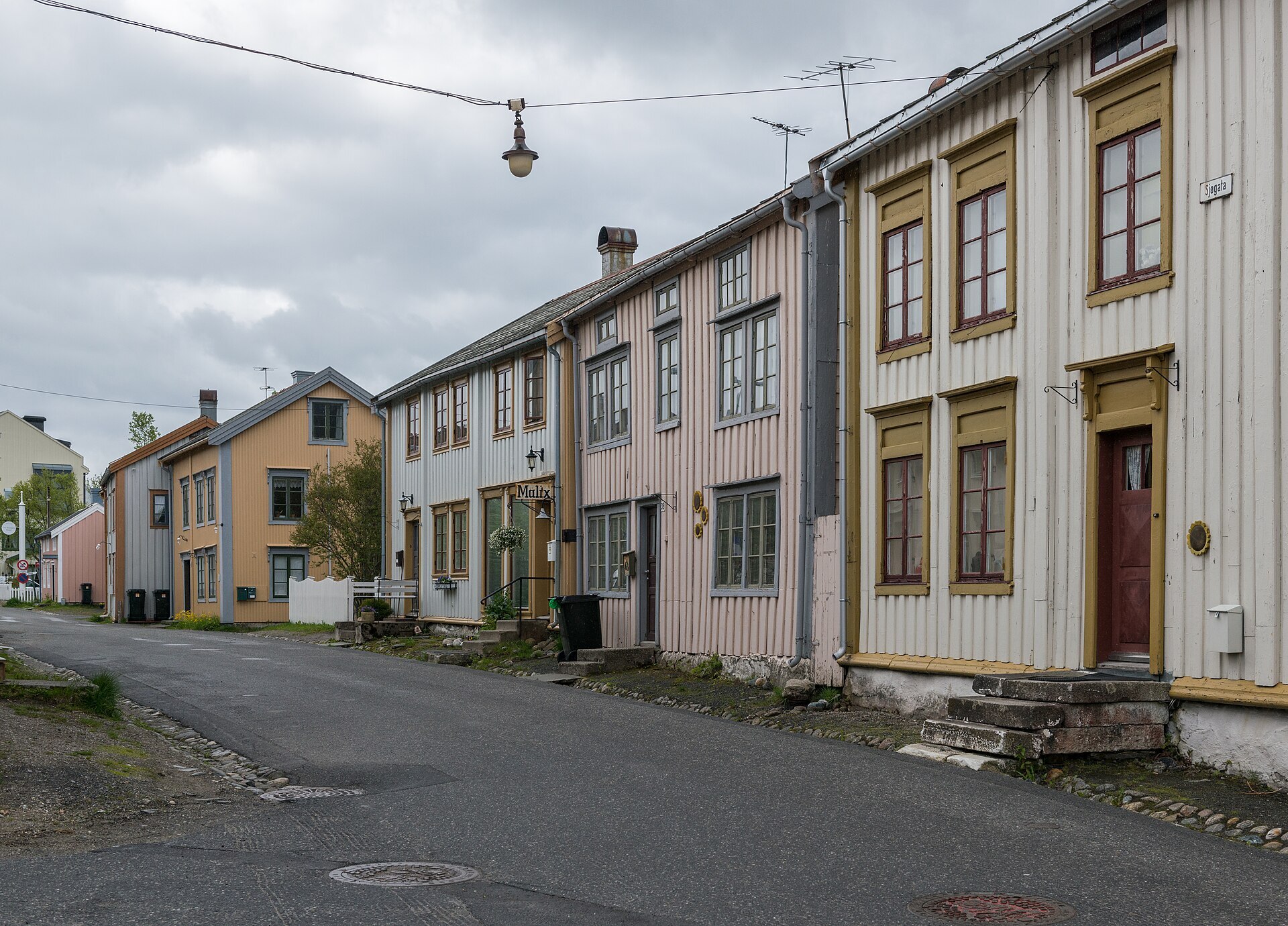
Mosjøen lies on a flat sandy plain at the very end of Vefsnfjorden, where the rivers Vefsna and Skjerva run into the sea. On the west side Øyfjellet climbs steeply to 818 metres, with a painted six-metre rooster, the town's coat of arms, high up on the mountain. Along the Vefsna runs Sjøgata, a long row of wooden houses and wharves from the 1800s, the longest of its kind in Northern Norway, now full of cafés, galleries and small shops.
North of the Skjerva, Mosjøen is an industrial town. The Alcoa aluminium plant has run since 1958, the port beside it is the biggest container port in Northern Norway, and the power company Helgelandskraft has its head office here.
Local knowledge: the name comes from the big farm Mo: the sjø was the seaside where the farmers of Mo kept their boats. In South Sámi the town is Mussere. The town was built on timber: in the 1860s a group of Englishmen bought most of the forests of Vefsn and started a sawmill, people poured in, and the sawmill years are still described as Klondike conditions. On 1 January 1875 Mosjøen became a ladested, the first town in Helgeland. A hundred years later Sjøgata nearly disappeared. Around 1970 the municipality's plan wanted the old, run-down wharves gone to make room for parking, and plenty of people agreed. Others didn't. Residents organised, architects from NTH in Trondheim and the Vefsn Museum joined in, and the houses were restored instead. In 1979 they were protected in the town plan. It helped that Mosjøen was one of the few towns in Nordland that wasn't bombed in the war.
Born here: ski jumper Anette Sagen (born 1985) fought for years for women's right to jump the big hills, and in 2010 she made the very first official jump in the new Holmenkollbakken. South Sámi composer and joiker Frode Fjellheim (born 1959) wrote "Eatnemen Vuelie", the piece that became the opening song of Disney's Frozen.
Visiting: the pin points to Visit Helgeland's tourist information in C. M. Havigs gate, in the same building as Villa Tørrisen and a couple of minutes from Sjøgata. For the view, take Helgelandstrappa, a stone stairway built by Sherpas from Nepal that zigzags up from the centre towards Øyfjellet. On a rainy day there's an indoor pool at Kippermoen, and Dolstad church from 1735, Northern Norway's oldest octagonal church, has a baptism angel that's lowered from the ceiling for christenings. Good to know: the Vefsn Museum's wharf in Sjøgata is closed while a new museum is built. South along the E6, the Vefsna drops through Laksforsen.
Fact sheet
- Other official names: Mussere (South Sámi)
- People: 10.125 in Mosjøen, 13.481 in Vefsn municipality
- County: Nordland
- Town since: 1875 (as a loading place)
- Typical industries: the power company Helgelandskraft, the port and other transport services, car sales and repair
Population on 1 January 2026, from Statistics Norway. Typical industries are the ones with a much bigger share of the jobs here than in Norway as a whole (Statistics Norway, 2025).
Weather & Northern Lights
Now
In 24 hours
Northern Lights Chances
Weather forecast from MET Norway (yr.no). An indication, not a promise: aurora activity over this place (NOAA) times the clear sky in the best three-hour window of the night (MET Norway). The next nights rest on the Kp forecast only. More: our Northern Lights Forecast and the Northern Lights Map.
Getting there
C. M. Havigs gate 11, 8656 Mosjøen, Norway
Nearby
- Bunnpris & Gourmet MosjøenNearest shop · 200 m
- Uno-X MosjøenFuel400 m
- Toilets200 m
- MosjøenNearest town100 m
- Vinmonopolet MosjøenNearest Vinmonopolet · 200 m
- Mosjøen Ferry QuayNearest ferry1,3 km
- Mosjøen Camping ASNearest campsite1,4 km
Data from OpenStreetMap (ODbL)
On the way
Road reports within 40 km and the nearest road cameras, from Statens vegvesen (NLOD). The pictures refresh every few minutes; the reports are put into English word by word. All road cameras
Reviews
Rate this place
You are, or have been here? Give it your stars.
Comments
Thank you! Your comment is shown once we have read it.
No comments yet.
Write a comment
Let us know your experience with this place -- did something change? Your comment is shown once we have read it.
Please write a few words.
Thank you -- that is enough for now. Please try again in an hour.