

Tønsberg
About
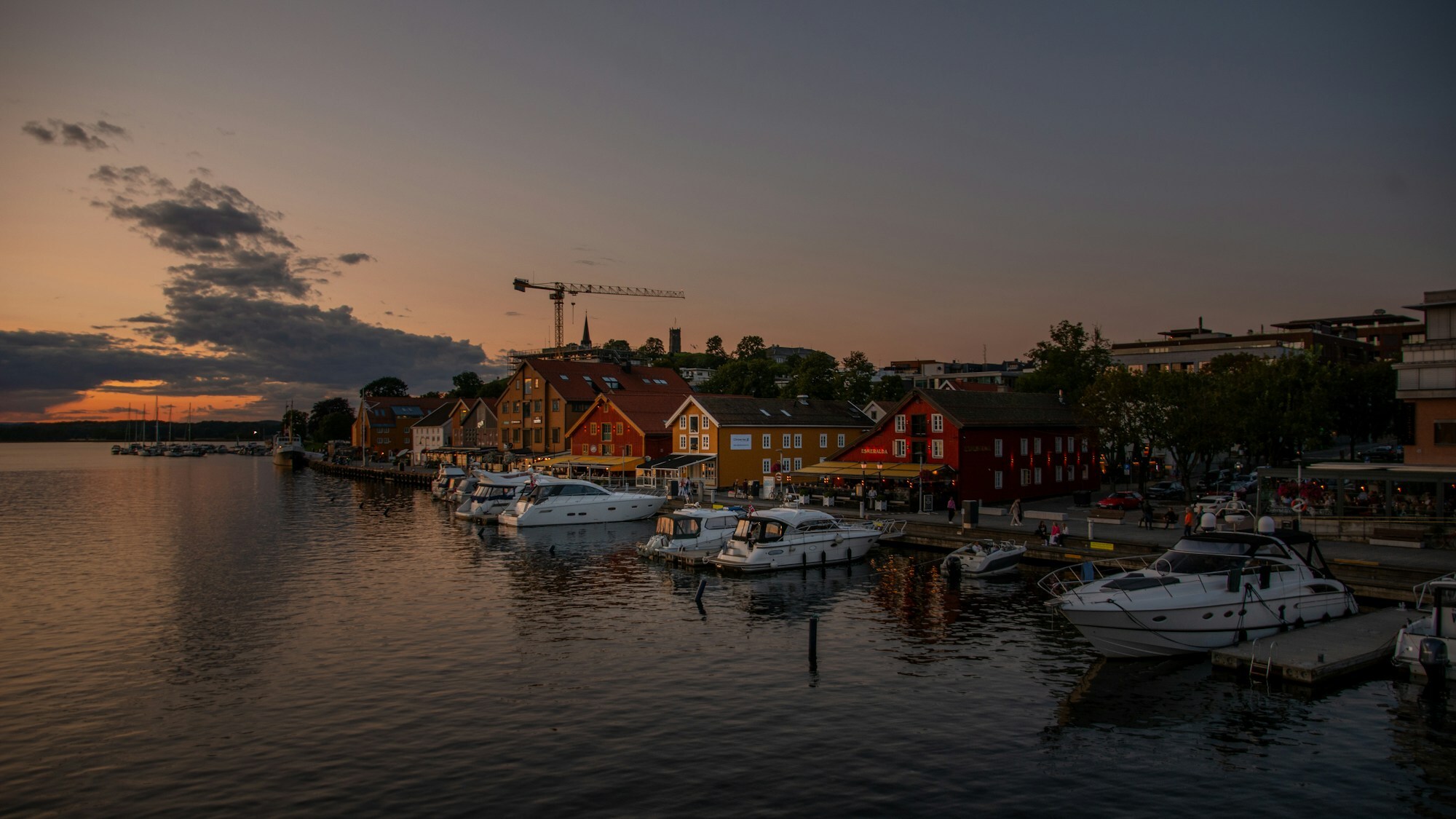
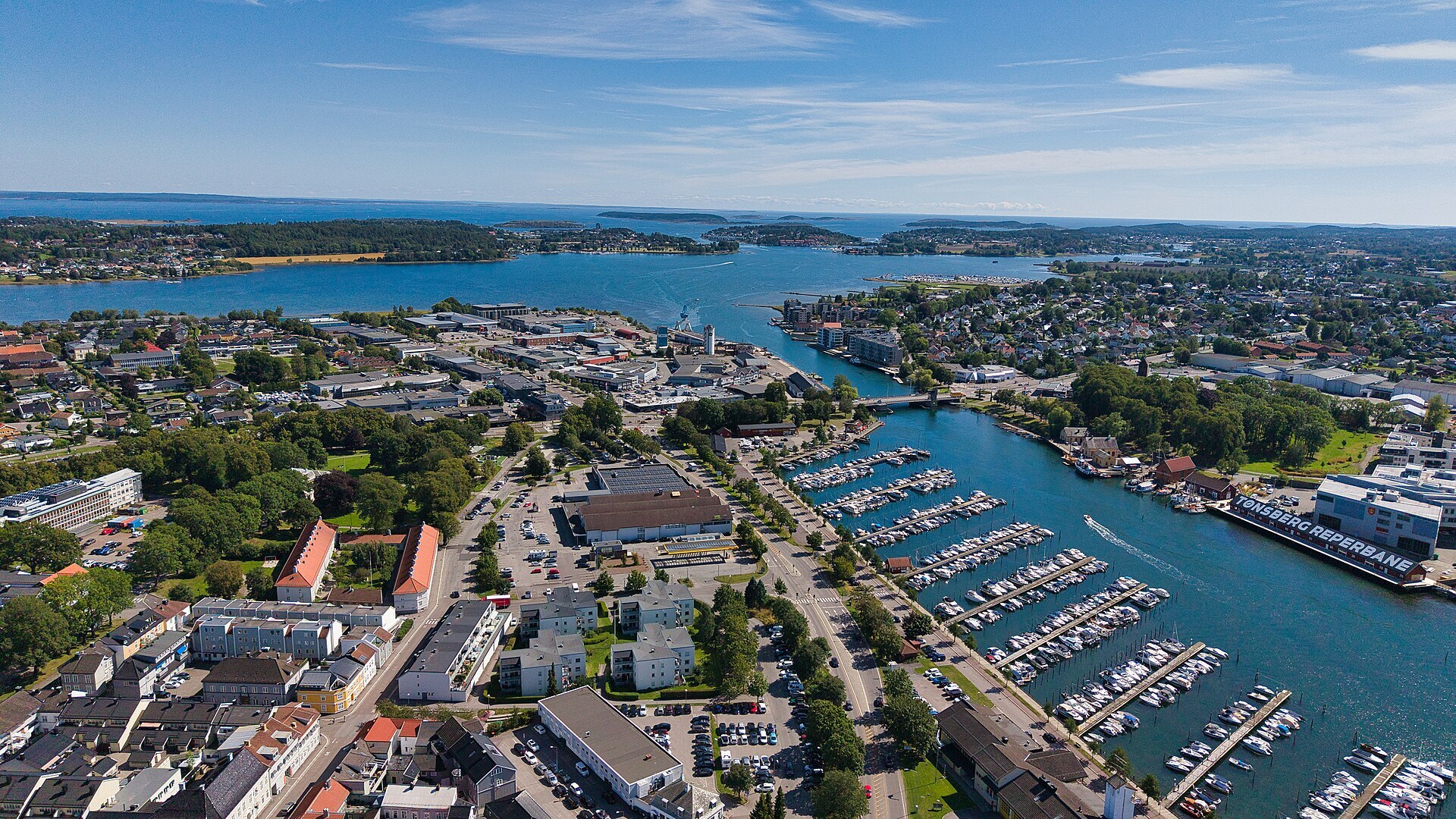
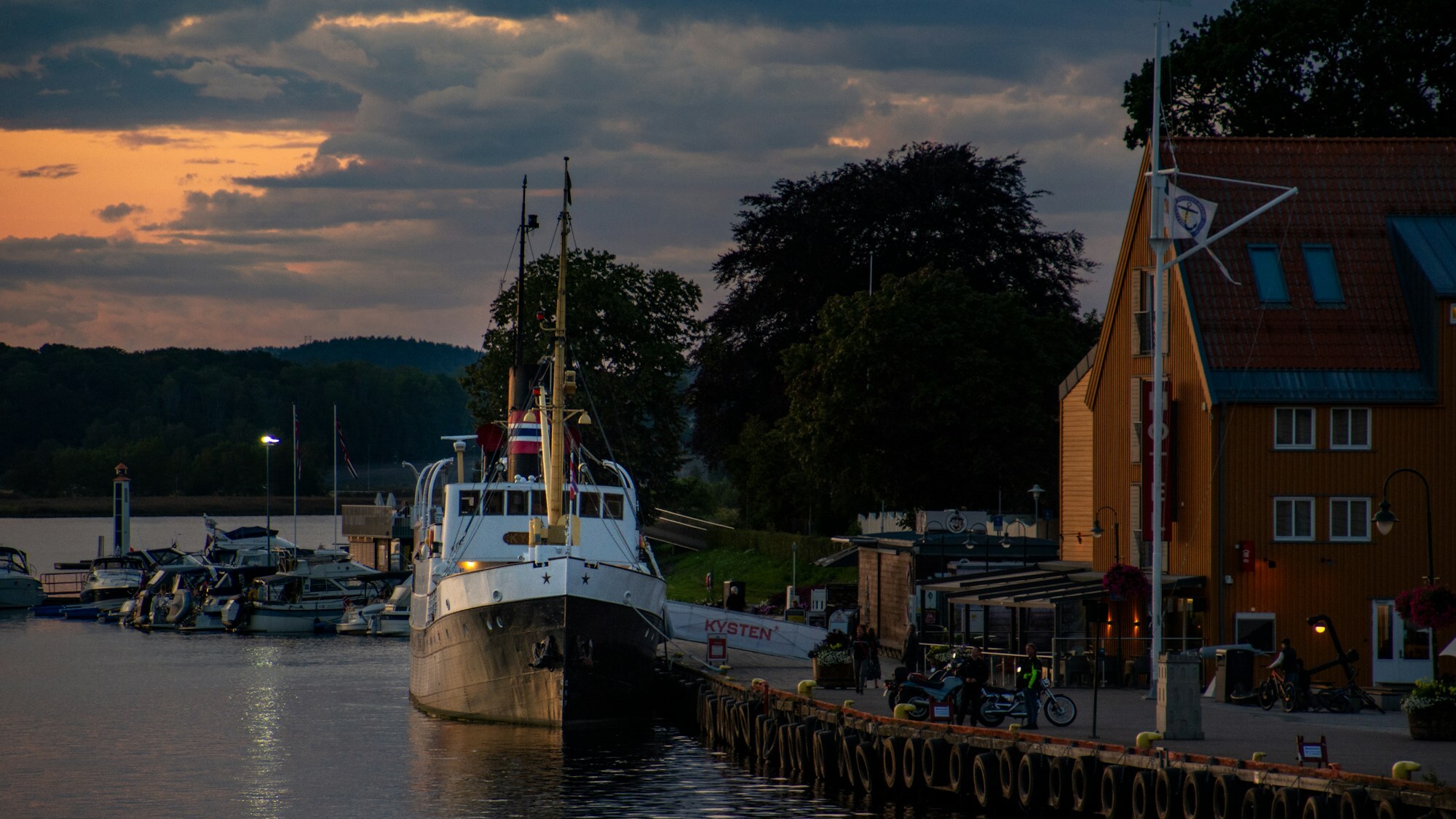
Tønsberg grew up between a hill and the fjord. Slottsfjellet rises 63 metres right behind the centre with a stone tower on top, and below it the old town still follows its medieval plan: three long streets along the shore, Storgaten in the middle with Øvre and Nedre Langgate on either side. The old sea warehouses on the quay are restaurants and bars now, and on summer evenings the guest harbour fills up with boats from the cabins on Nøtterøy and Tjøme.
About 57.000 people live here, the main town of Vestfold, with the county hospital and several state agencies. The name comes from Old Norse Túnsberg: tún first meant a farm or a fence, here probably a stronghold, and berg is Slottsfjellet itself.
Local knowledge: Tønsberg calls itself Norway's oldest town, because Snorri Sturluson wrote that Harald Fairhair was here, "where there was a market town", before the battle of Hafrsfjord. Archaeologists haven't found anything to back that up, but the town probably grew up around the year 1000, and an English chronicler writes about it in 1135. Its great time was the 1200s, when King Håkon Håkonsson made it a royal residence and built Tunsberghus on the hill in stone. It was the largest castle in medieval Norway. Then it went fast. In 1503 Swedish troops, helped by farmers from Sande, burned the castle, and nobody rebuilt it. In 1536 a fire laid much of the town in ashes and the merchants moved away. Tønsberg only came back in the 1800s, with shipping, shipyards and whaling.
Born here: Svend Foyn (1809–1894) had the world's first steam-powered whale catcher built in 1863 and was the first to shoot whales with a grenade harpoon, which started modern whaling. Magnus Carlsen (born 1990), five times world chess champion and world number one since 2011, was born here but grew up in Bærum.
Visiting: the pin is on Nedre Langgate by the harbour. From there it's a short climb to the castle ruins on Slottsfjellet and the view over the fjord. The tower on top is open in summer. At the foot of the hill, Slottsfjellsmuseet is the rainy-day tip, open all year except Mondays outside summer. It holds the Klåstad ship, Norway's fourth Viking ship find and the only one on show outside Oslo. The famous one came from just outside town: the Oseberg ship, the richest Viking Age grave in Europe, was found in a mound in Slagen in 1903. The ship is in Oslo, but you can visit the mound. In summer a boat runs from Tønsberg out to Bolærne, islands in Færder National Park.
Fact sheet
- People: 57.011 in Tønsberg, 60.246 in Tønsberg municipality
- County: Vestfold
- Town since: about 1000
- Typical industries: food production, with Nortura's slaughterhouse and Tine's dairy at Sem, hospital and health care, with Sykehuset i Vestfold, public administration: county offices, DSB, the Election Directorate and the police district
Population on 1 January 2026, from Statistics Norway. Typical industries are the ones with a much bigger share of the jobs here than in Norway as a whole (Statistics Norway, 2025).
Weather & Northern Lights
Now
In 24 hours
Northern Lights Chances
Weather forecast from MET Norway (yr.no). An indication, not a promise: aurora activity over this place (NOAA) times the clear sky in the best three-hour window of the night (MET Norway). The next nights rest on the Kp forecast only. More: our Northern Lights Forecast and the Northern Lights Map.
Getting there
Nedre Langgate, 3126 Tønsberg, Norway
Nearby
- Kiwi FoynNearest shop · 100 m
- Uno-X TønsbergFuel200 m
- Toilets100 m
- TønsbergNearest town200 m
- Vinmonopolet TønsbergNearest Vinmonopolet · 400 m
- Horten Ferry QuayNearest ferry17 km
- Gunnarsbø bobilparkeringNearest motorhome park600 m
Data from OpenStreetMap (ODbL)
On the way
Road reports within 40 km and the nearest road cameras, from Statens vegvesen (NLOD). The pictures refresh every few minutes; the reports are put into English word by word. All road cameras
Reviews
Rate this place
You are, or have been here? Give it your stars.
Comments
Thank you! Your comment is shown once we have read it.
No comments yet.
Write a comment
Let us know your experience with this place -- did something change? Your comment is shown once we have read it.
Please write a few words.
Thank you -- that is enough for now. Please try again in an hour.