

Odda
About
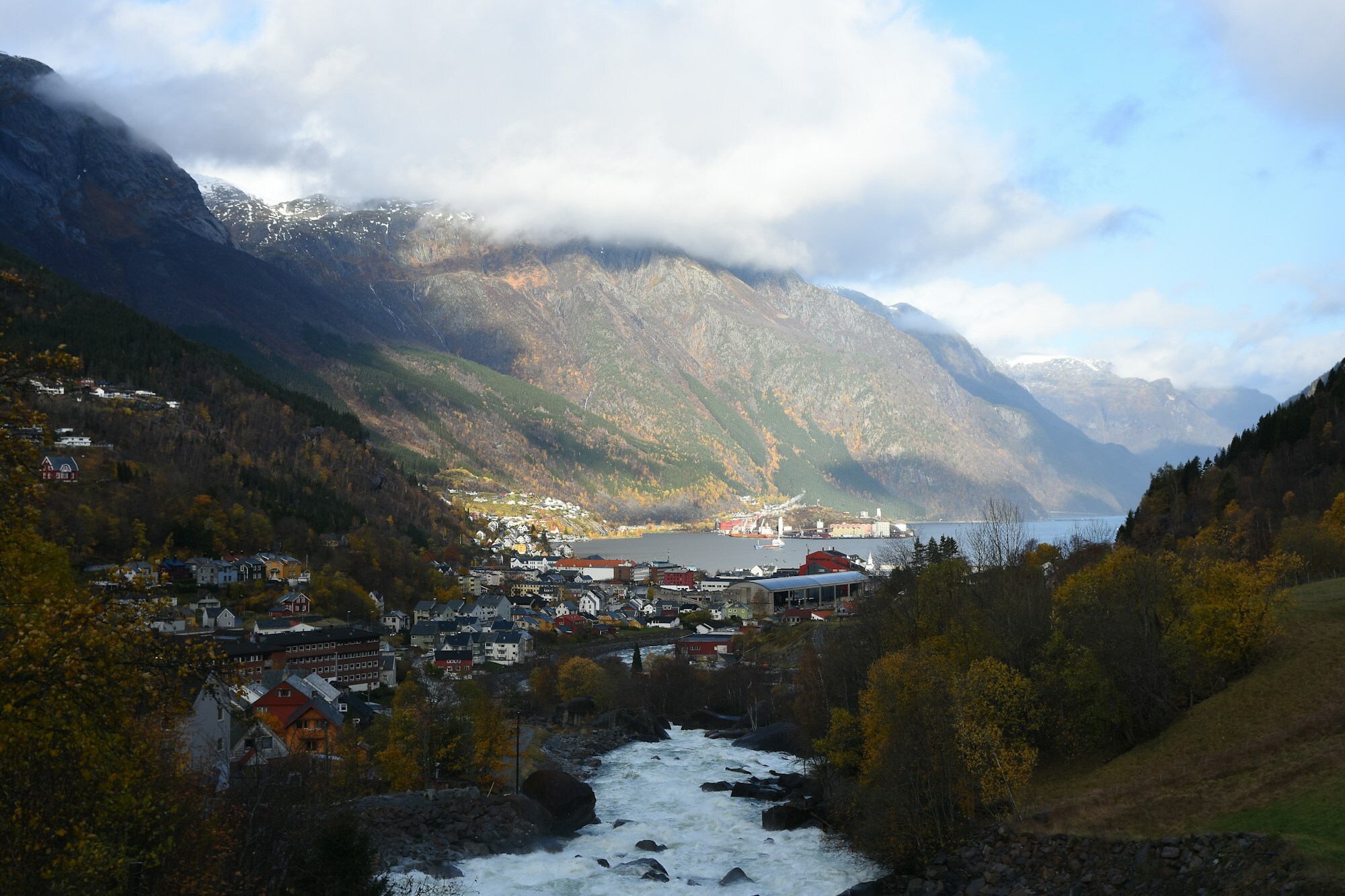
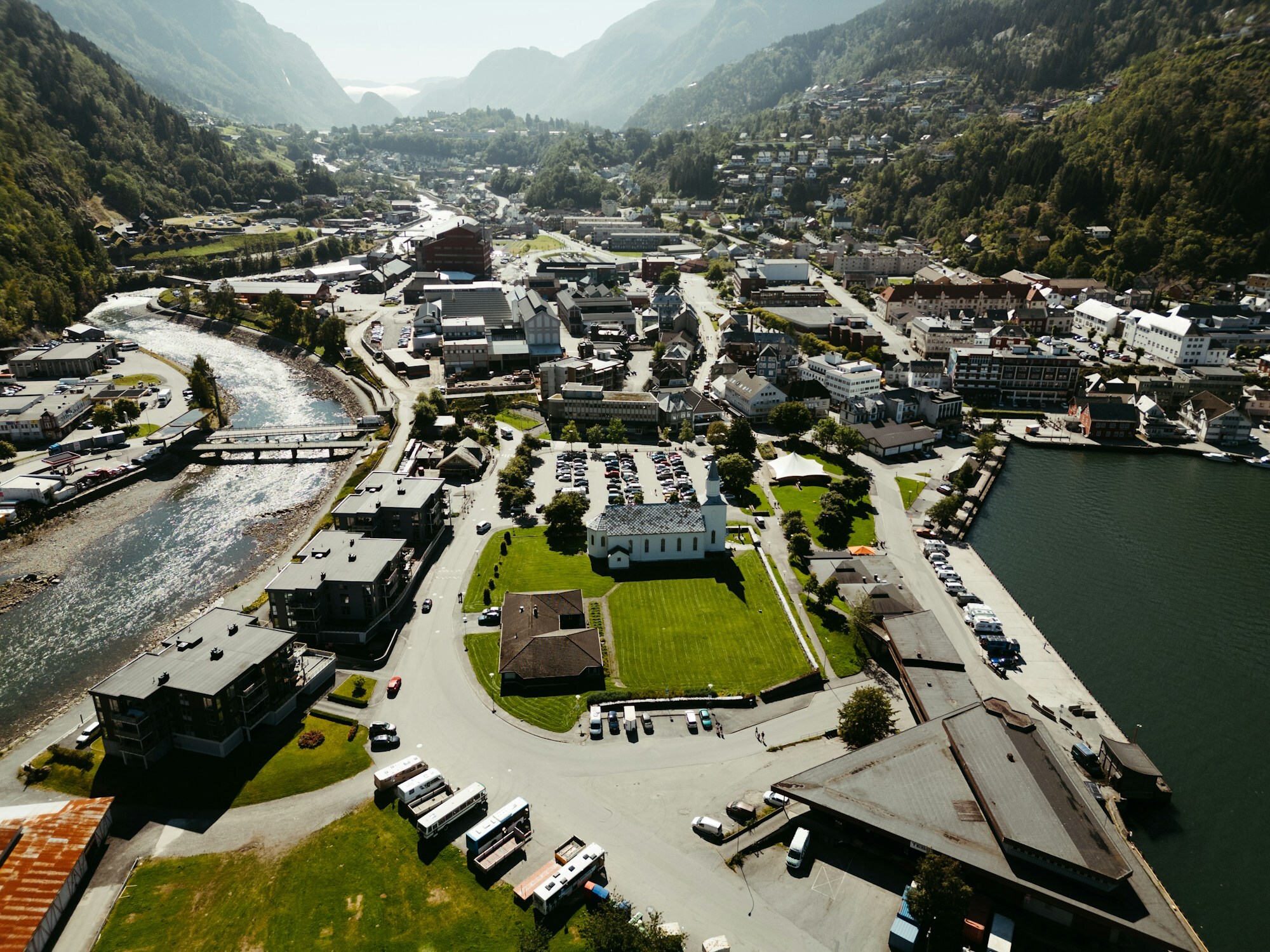
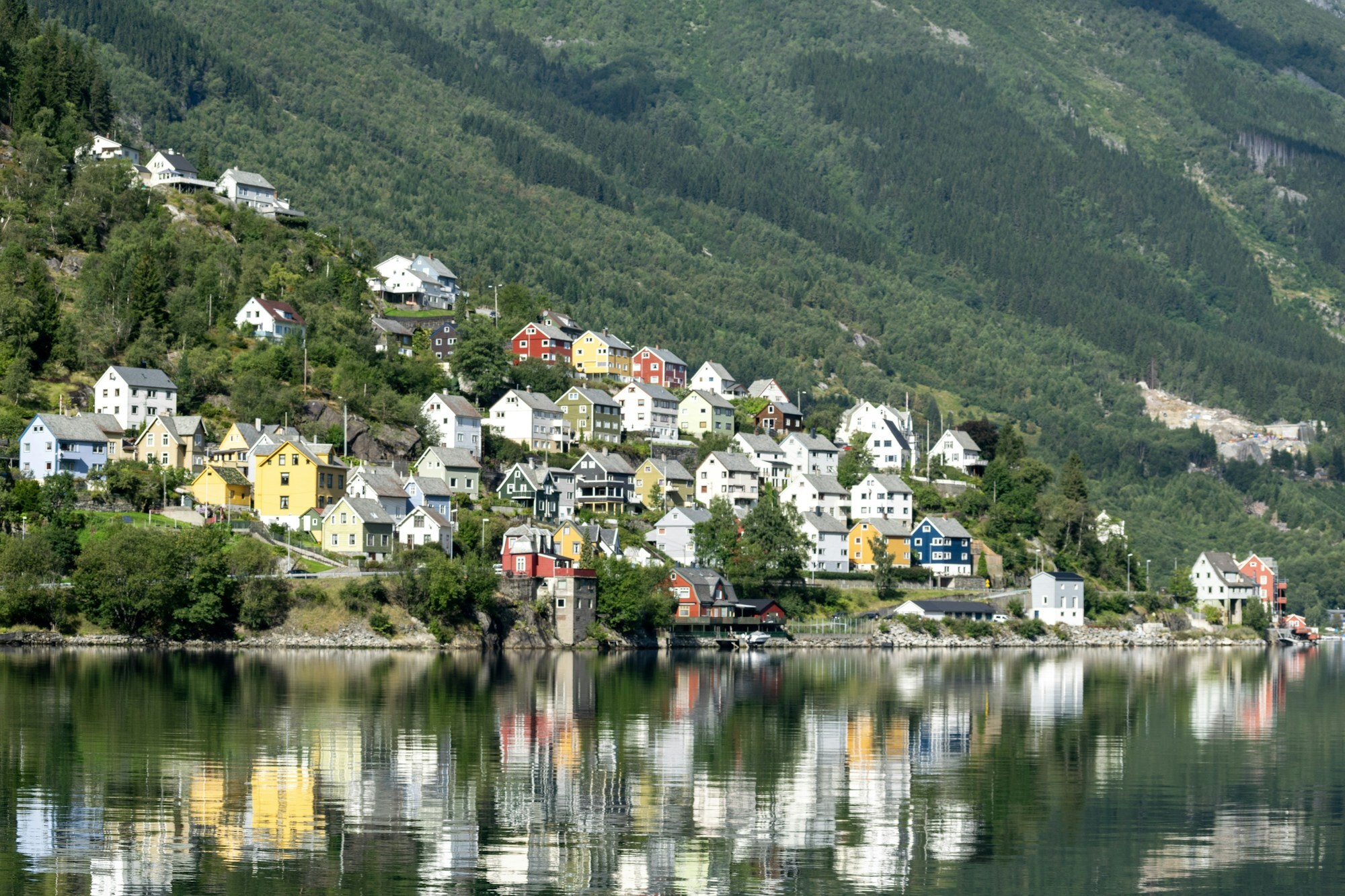
Odda sits at the very end of Sørfjorden, the long southern arm of the Hardangerfjord. The river Opo rushes down from the lake Sandvinvatnet through the middle of town, the mountains go almost straight up on both sides, and the Folgefonna glacier lies up on the plateau to the west. It's the biggest town in Hardanger. Across the water at Eitrheimsneset stand the sheds of Boliden's zinc plant, the largest industry left.
Most visitors come for one rock. Trolltunga juts out about 1.180 metres above sea level, high over the lake Ringedalsvatnet. The usual route starts in Tyssedal just north of town and follows a winding road up to Skjeggedal. From there it's 28 km there and back, 10 to 11 hours of walking. Before 2010 fewer than 1.000 people a year walked out to it. In 2019 it was 81.000.
Local knowledge: the name comes from the old farm Odda, Old Norse Oddi, which simply means headland. Odda was a tourist town first, one of the most visited places in Norway in the late 1800s. Then Sam Eyde got hold of the waterfalls in Tyssedal, and in 1908 a British company opened a carbide factory right in the centre, at the time the largest in the world. Smoke and smell drove the tourists away. In 1913 the owner of Hotel Hardanger took the factories to court and won compensation for his losses, but not for Odda being less idyllic. By 1917 his hotel stood almost empty all year, and the municipality bought it for a town hall. The smelter, Odda Smelteverk, carried the town until it went bankrupt in 2003, and the year after, Odda gave itself town status.
Born here: Knud Knudsen (1832–1915), one of Norway's first professional photographers, spent more than 30 years photographing the country and always came home to grow fruit on the family farm Tokheim. Writer Marit Eikemo (born 1971) was the first head of the Litteratursymposiet, and with Frode Grytten she got an old workers' building on the smelter site turned into a literature house.
Visiting: the pin is at the square in the centre, a short walk from the quay and the white wooden church. Much of the old smelter site is protected, and its Lindehuset is used for concerts and theatre. Sentralbadet Litteraturhus is here too, the home of the literature festival every autumn. On a rainy day, go to Kraftmuseet in Tyssedal, the old Tysso power station that sent electricity to the smelter, now a museum of hydropower and industry. South along the road, Låtefossen was already a favourite outing for the hotel guests of the 1800s, and the glacier belongs to Folgefonna National Park.
Fact sheet
- People: 4.744 in Odda, 10.929 in Ullensvang municipality
- County: Vestland
- Town since: 2004
- Typical industries: metal workshops (fabricated metal products), hotels and other accommodation
Population on 1 January 2026, from Statistics Norway. Typical industries are the ones with a much bigger share of the jobs here than in Norway as a whole (Statistics Norway, 2025).
Weather & Northern Lights
Now
In 24 hours
Northern Lights Chances
Weather forecast from MET Norway (yr.no). An indication, not a promise: aurora activity over this place (NOAA) times the clear sky in the best three-hour window of the night (MET Norway). The next nights rest on the Kp forecast only. More: our Northern Lights Forecast and the Northern Lights Map.
Getting there
Torget, 5750 Odda, Norway
Nearby
- Rema 1000 SørfjordsenteretNearest shop · 200 m
- Esso Express OddaFuel300 m
- Toilets200 m
- OddaNearest town200 m
- Vinmonopolet OddaNearest Vinmonopolet · 200 m
- Jondal Ferry QuayNearest ferry28 km
- Camp Lothepus BobilcampNearest motorhome park300 m
Data from OpenStreetMap (ODbL)
On the way
Road reports within 40 km and the nearest road cameras, from Statens vegvesen (NLOD). The pictures refresh every few minutes; the reports are put into English word by word. All road cameras
Reviews
Rate this place
You are, or have been here? Give it your stars.
Comments
Thank you! Your comment is shown once we have read it.
No comments yet.
Write a comment
Let us know your experience with this place -- did something change? Your comment is shown once we have read it.
Please write a few words.
Thank you -- that is enough for now. Please try again in an hour.