

Winter camping in Norway: tips from Tromsø
We rent campers in Tromsø all winter, and every season we see the same few mistakes. None of them is dangerous if you know about it – winter camping in Norway is safe, quiet and beautiful when you take your time. Here is what we tell our own guests.
In short
- Allow far more time than in summer – and wait out storms instead of driving in them.
- Studded tyres, a full tank (fill up at half) and the heater always on.
- Every morning: road reports, the weather on yr.no and avalanche warnings on varsom.no.
- Keep the exhaust and the heater outlet free of snow.
- Emergency: 112 police, 113 ambulance, 110 fire. Road information: 175.
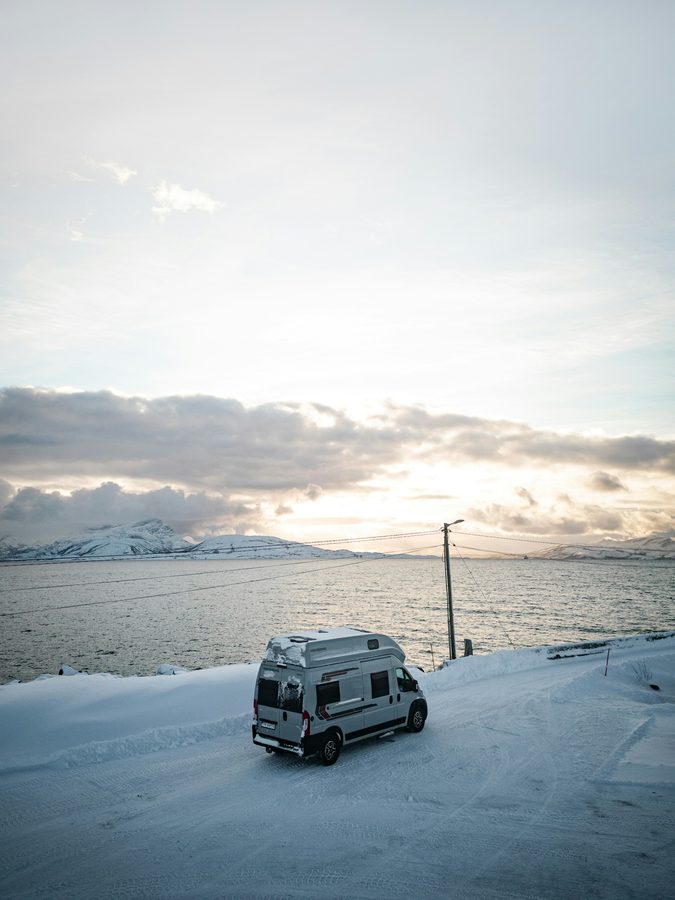
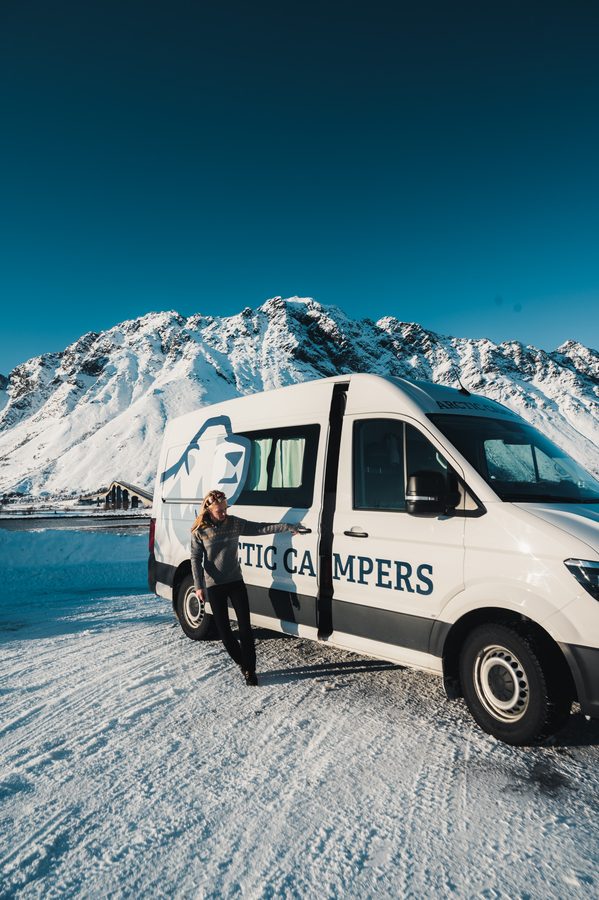
Part 1: Camping in winter
Warmth, power, water and where to stay – life in the camper when it is cold outside.
Can you sleep in a camper in winter?
Yes – and comfortably. Most of our campers have a diesel or gas parking heater, a small, powerful stove under the vehicle. It takes its fuel from the main tank and uses only about 0.5 litres an hour on full power, so the engine does not need to run. Its fan spreads warm air through the living area.
The heater needs electricity, so our campers carry an extra battery – some two – that charges while you drive. When you switch off the engine, the system disconnects the extra battery, so there is always enough power left to start in the morning. The same battery runs the fridge, the lights and the USB sockets.
Will the battery last?
If you drive two to three hours a day, the heater runs for your whole trip. In more than ten years only one guest has drained the battery completely – after two days in one spot with the fridge on and a whole season of Game of Thrones. On very cold days, plug in at a campsite and the heater runs on mains power.
How cold can it get?
That depends on you – the heater is easy to adjust, and some guests even find it too warm. We have camped at −18 °C in Finland with our children, and at −34 °C in Finnmark in a Norway Explorer with the heater on full power: inside it stayed at 17 to 19 °C. Between Tromsø, Senja and Lofoten you will be fine even if you are used to a warmer climate; for the coldest nights in Lapland, around −30 °C, prepare well or book a hotel.
Cooking and gas in the cold
Cooking outside under the Northern Lights works fine in warm clothes. Gas cartridges lose pressure in the cold: bring two or three spares, swap when the flame gets weak and keep the cold one for later – it works again once it is warm. On very cold days keep gas cartridges and water bottles in the driver's cab while you drive.
Winter camping mistakes we see most
Keep the living-area heater on – also while driving
The camper stays warm and cosy, and in the end it uses less fuel than you think. Warming up a cold camper takes far more.
Take the key with you
Whenever you step out, take the key. Locking yourself out in the cold can become dangerous quickly.
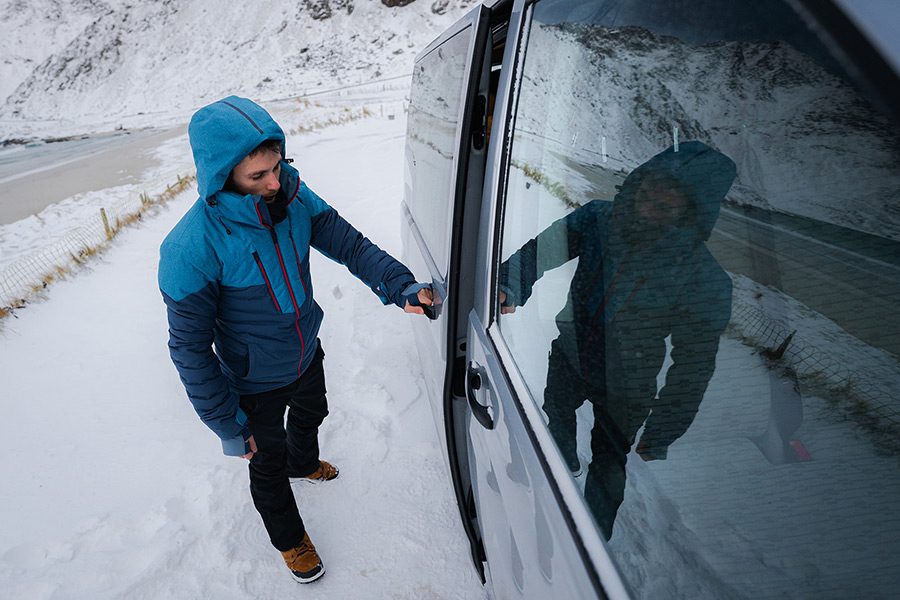
Photo: Florian Riou Keep the water from freezing
Water freezes fast in campervans and motorhomes alike. Keep the heater on; in a campervan, bring small water canisters into the front cabin during the day. In a motorhome, keep heating so that the frost valve stays closed – otherwise it drains the water.
Watch the battery in hard frost
At −15 °C or colder, check the battery voltage now and then. Plug in to electricity at a campsite, or in a campervan drive enough during the day (or let the engine run for a while) to keep the battery charged.
Never sleep below a snowy slope
Avalanches are a real danger in the mountains and steep fjords. Check the avalanche warnings on varsom.no and park away from steep slopes.
Expect short days – and long Northern Lights nights
In November, December and January the daylight is short, so your window for sightseeing is small. In return the chances of seeing the Northern Lights are very good.
Daylight and the polar night
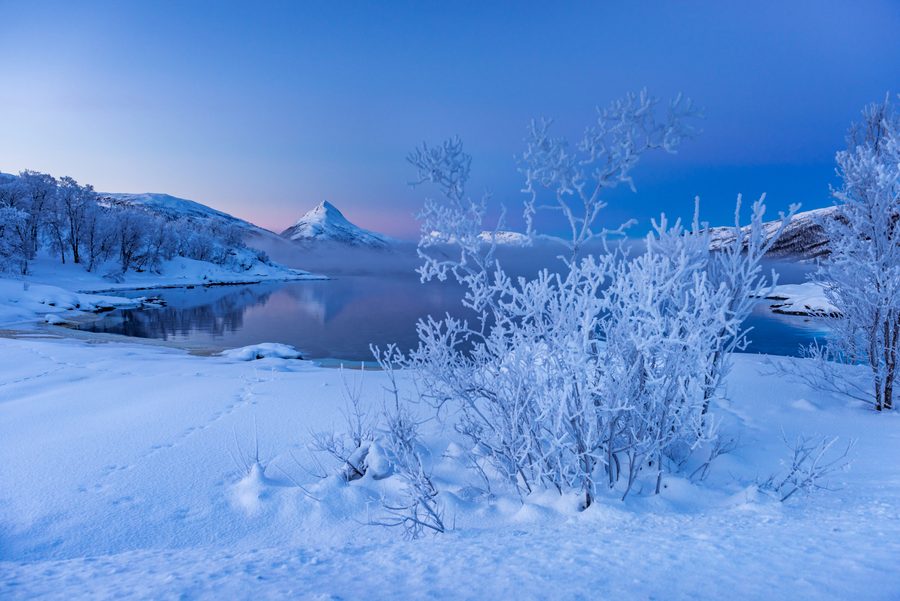
In Tromsø the sun stays below the horizon from late November to mid-January. There is still a few hours of soft blue twilight around midday. From late January the days grow fast, and March is often the best winter month: long days, deep snow and still dark nights for the Northern Lights.
Campsites open all year 29
These campsites in our guide say they are open all year – with power for the heater, showers and somewhere to fill water. Many more open for the winter season; check with the campsite before you go.
Agder 1 All campsites in Agder ›
Rogaland 3 All campsites in Rogaland ›
-
 HaugesundHaraldshaugen Camping Open all year
-
 SaudaSauda Fjord Camping Open all year
- StrandWathne Camping Open all year
Telemark 1 All campsites in Telemark ›
Vestland 1 All campsites in Vestland ›
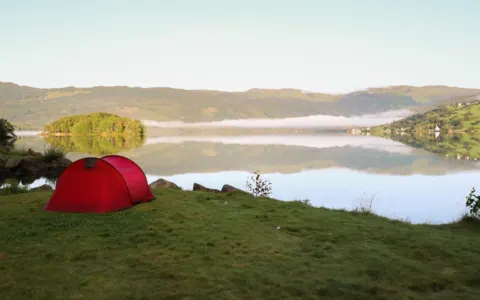
Innlandet 4 All campsites in Innlandet ›
-
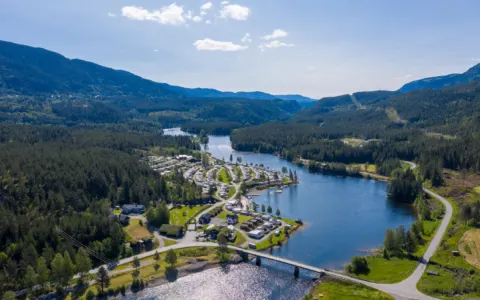 Nord-AurdalAurdal Fjordcamping og Hytter Open all year
-
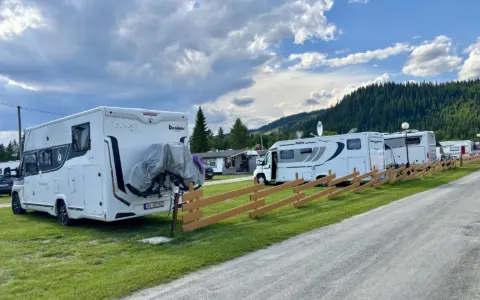 Nord-AurdalBjørkestølen Helårscamping AS Open all year
-
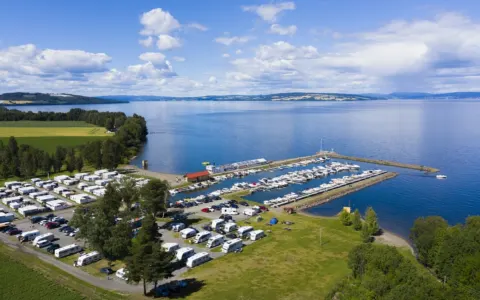 Østre TotenEvjua Strandpark Open all year
-
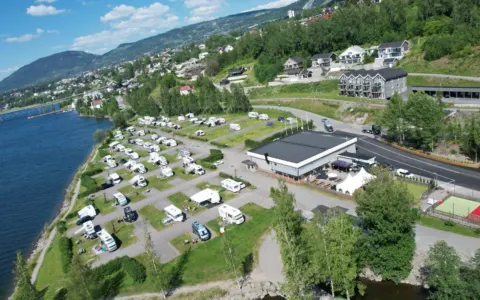 LillehammerLillehammer Camping Open all year
Møre og Romsdal 1 All campsites in Møre og Romsdal ›
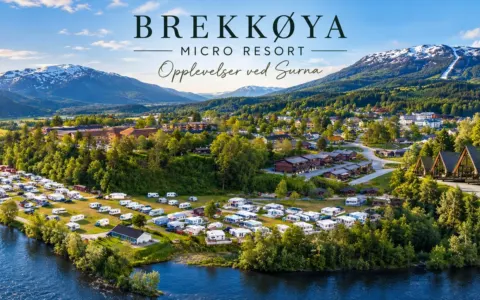
Trøndelag 5 All campsites in Trøndelag ›
-
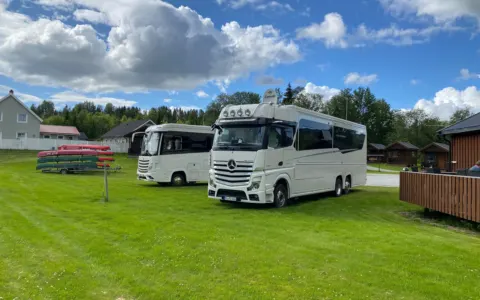 OverhallaBjøra Camping Open all year
-
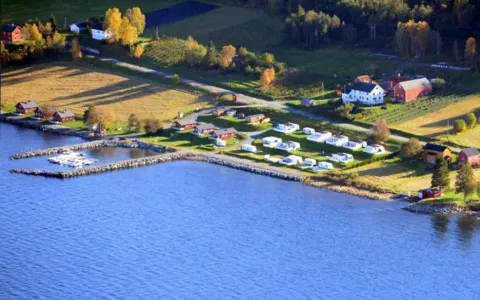 FrostaHellberg Gård/Frosta Fjordbuer Open all year
-
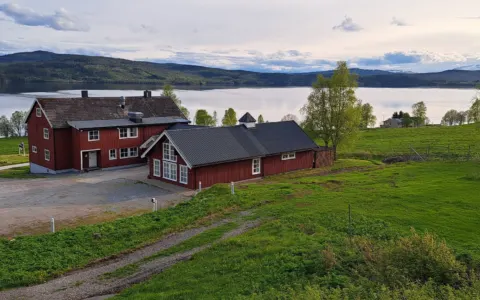 LierneLierne Gjestegård Open all year
- NamsskoganNamsskogan Hotell og Campingplass Open all year
-
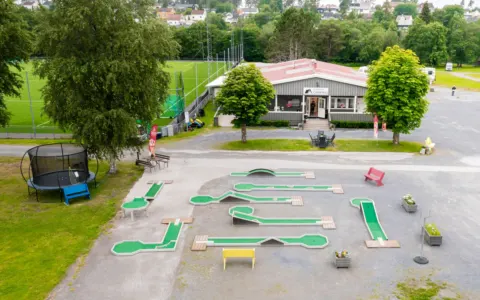 SteinkjerSteinkjer Camping Open all year
Nordland 4 All campsites in Nordland ›
-
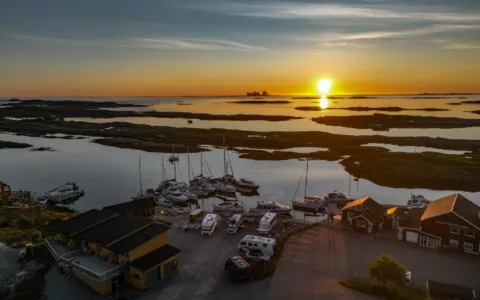 LurøyLovund Arkipel Gjestehavn & Bobilparkering Open all year
- HadselMelbu båtforening bobilcamp Open all year
-
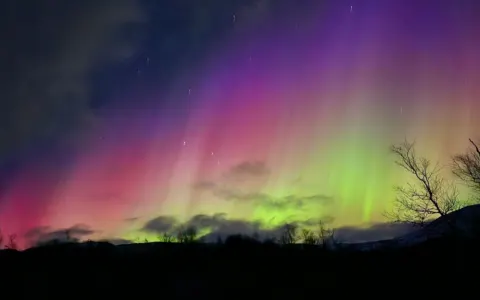 FauskeSulitjelma Turistsenter Open all year
-
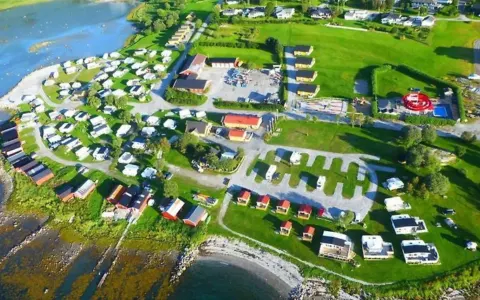 NesnaTopcamp Havblikk Camping Open all year
Lofoten 2 All campsites in Lofoten ›
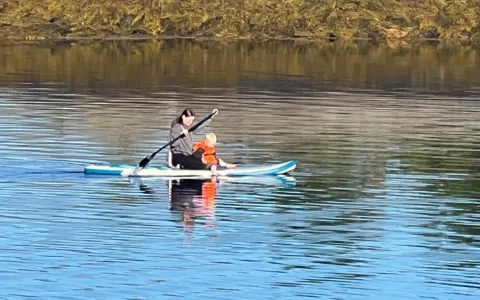
Senja 1 All campsites in Senja ›
Troms 2 All campsites in Troms ›
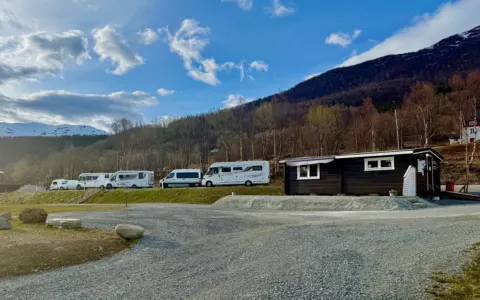
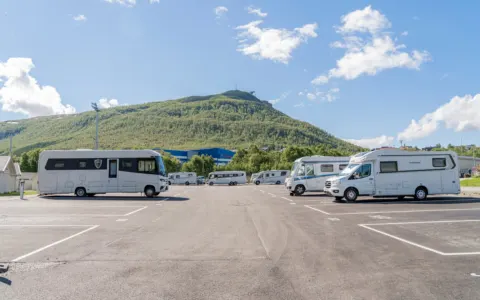
Finnmark 4 All campsites in Finnmark ›
Part 2: Driving in winter
Studded tyres, ice, wind and darkness – getting from place to place safely.
Winter driving mistakes we see most
Plan more time than you think
In winter everything is slower: you drive slower, the weather can stop you for a while, and the days are short. Do not make a long list of what to see each day – travel calmly and enjoy a real winter.
Defrost the windows with the heater, not the scraper
Start the engine and the front heater 15 to 20 minutes before you drive in the morning. It is easier for you and better for the windscreen than scraping.
Slow down in roundabouts
Roundabouts are where you slide the most. Take care too when the weather changes and the road turns to slush – it makes the vehicle unstable.
Drive on studded tyres
If you have not rented from us, make sure your vehicle has studded tyres. We rent campers in winter only with studded tyres – anything else is hard driving, especially if you are new to icy roads.
Park only where the snow is cleared
Stop only where you can see that the ground is cleared and firm, so the camper does not get stuck. Roadsides hide ditches and steep slopes under the snow – you sink in deep.
Wear a reflective vest outside the vehicle
It is very dark in winter. If something happens and you step out on the road, put on a reflective vest so others see you. Every Arctic Campers camper carries yellow vests.
Read the weather – and wait if needed
Follow the forecast on yr.no. Before Lofoten or the North Cape, check that the roads are open and no storm or heavy snowfall is coming. Nothing is dangerous as long as you do not drive in those conditions – you just need to know when it is fine to move.
Winter driving is tiring
Driving on snow and ice takes much more concentration. Distances feel longer and your energy drains faster – plan shorter days and more breaks.
Before you set off
- Fill up when the tank is half empty. The heater runs on the vehicle's own tank, and in Finnmark, on Senja and in the mountains petrol stations are far apart – many are unmanned and take cards only.
- Check the road reports for your whole route (vegvesen.no/trafikk or the road layer on our map), the weather on yr.no and the avalanche warnings on varsom.no.
- Pack warm layers, boots with good grip or ice grippers, a head torch, sunglasses for the snow glare, a snow shovel, water and something to eat.
- Charge your phone and bring a power bank. Save the roadside assistance number of your rental.
- Check the tyres and clear all windows, lights and the roof of snow before you drive.
If you get stuck or something happens
- Stay with the vehicle – it is your shelter. Put on the reflective vest, set up the warning triangle and switch on the hazard lights.
- Keep the exhaust and the heater outlet free of snow. If you sit in a stuck vehicle with the engine or heater running, snow around the exhaust can let carbon monoxide into the vehicle. Clear it regularly and let fresh air in.
- Call for help: 112 police, 113 ambulance, 110 fire. For a rental, call its roadside assistance.
- Road information and closures: 175, around the clock (from a foreign phone: +47 22 175 175).
More winter driving tips
- Hold the door in strong wind. On the coasts of Lofoten, Senja and Finnmark a gust can tear a door open – keep a hand on it when you get out.
- Black ice. It often forms in the early morning and after rain on frozen ground. Keep a longer distance; a sign saying "Glatt kjørebane" warns of a slippery road.
- Reindeer and moose. They stand on the road, especially in Finnmark and in the dark. Slow down when you see one – there are often more.
- The rules in short. Dipped headlights on at all times, also in daylight; the alcohol limit is 0.2 per mille; no phone in your hand while driving; on narrow roads use the passing places marked with an "M".
Roads and weather
Roads in winter
The main roads are open all year and well cleared, but mountain passes and exposed coastal roads – on the way to the North Cape, for example – can close in storms or run with convoy driving, where a snowplough leads the cars across at set times. Some mountain roads are closed all winter. Our map shows closures, convoys and live road cameras from the Norwegian Public Roads Administration, updated every 10 minutes.
Weather and avalanches
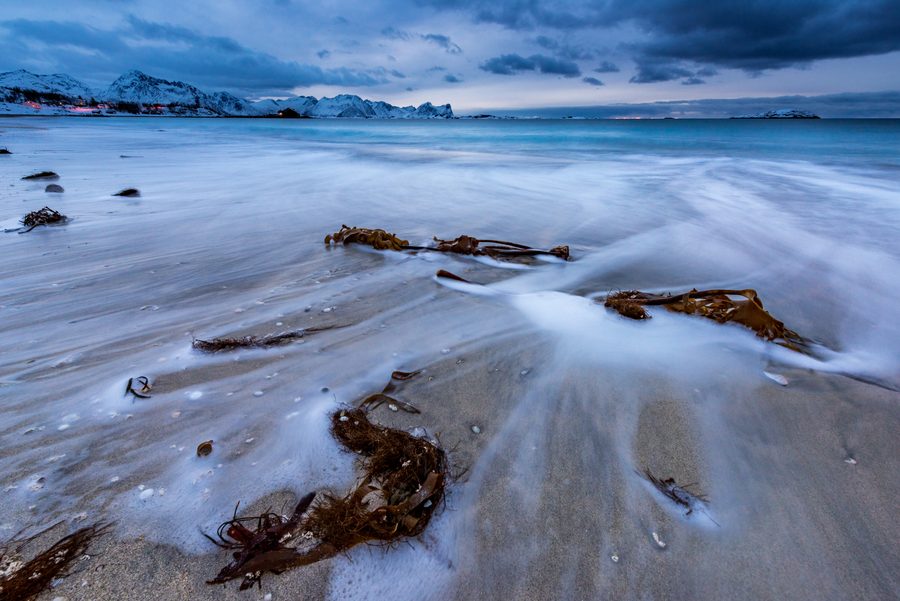
Use yr.no for the weather and varsom.no for avalanche warnings. Storms in the north often pass within a day – waiting is usually the best plan.
Road conditions on the map › · Road cameras › · Northern Lights map › · Driving in Norway by camper ›
Questions about winter camping in Norway
Can you go camping in Norway in winter?
Yes. With a heated camper or motorhome, studded tyres and time to spare, winter camping in Norway is safe and very beautiful. Many campsites are open all year and have power for your heater.
Can you sleep in a camper van in winter?
Yes – a diesel or gas heater keeps the living area warm, and an extra battery runs it through the night. Keep it on, also while driving, and plug in at a campsite in hard frost.
Do I need studded tyres in Norway in winter?
Tyres suited to snow and ice are required in winter. Studded tyres give much better grip on icy roads, especially if you are not used to them – we rent campers in winter only with studded tyres.
Are the roads to Lofoten and the North Cape open in winter?
Yes, the main roads are open all year, but storms can close them for a while or lead to convoy driving. Check the forecast on yr.no and the road reports before you set off.
When is the best time for winter camping in northern Norway?
February and March: the days are longer, the snow is good and the nights are still dark enough for the Northern Lights. November to January is darkest – short days, but great aurora chances.